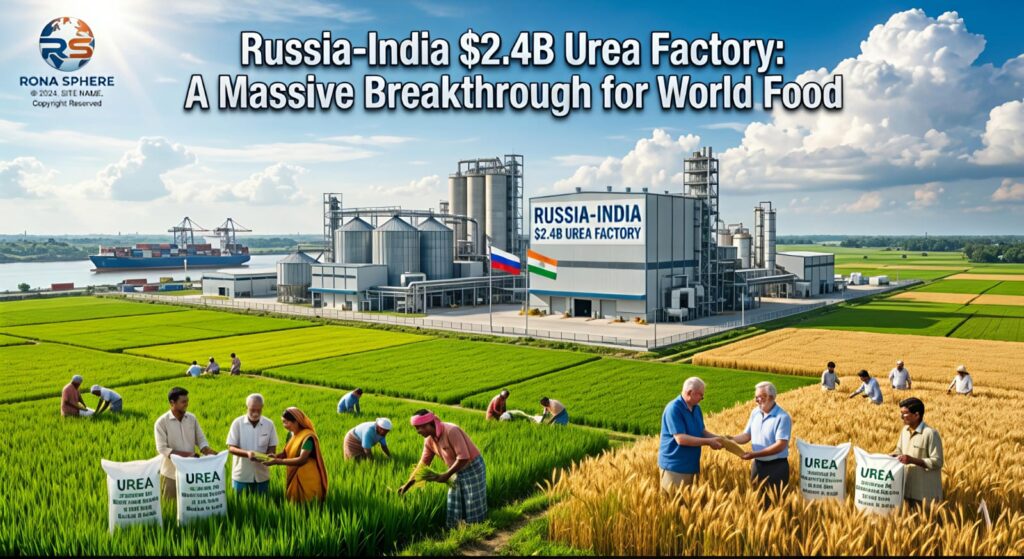
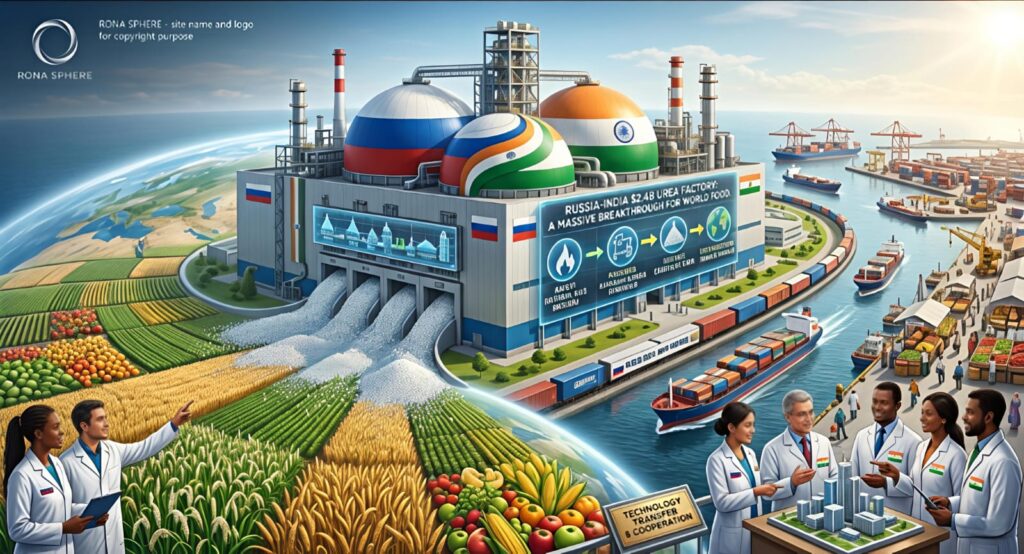
Feeding the world is a very big job. However, two countries are working together to make it easier. The Russia and India urea factory project is a massive plan to grow more food. Furthermore, this deal is worth $2.4 billion. It is not just about money, though. Specifically, it is about making sure farmers have what they need to grow crops.
Consequently, people in India and Russia are excited about this news. But why is a factory so important? Well, plants need food just like humans do. Fertilizer is the food for plants. Without it, wheat and rice would not grow well. Therefore, the Russia and India urea factory is a hero in the world of farming.
Why Does This Factory Matter So Much?
India has many farmers who work very hard. In fact, more than half of the people in India rely on farming. But, these farmers need urea to keep their soil healthy. Currently, India has to buy a lot of urea from other countries. This is expensive. Moreover, sometimes the ships take a long time to arrive.
Consequently, the government of India decided to do something different. They teamed up with Russia to build the Russia and India urea factory. This factory will produce 2 million tonnes of urea every single year. Furthermore, that is enough to fill thousands of big trucks. Because the factory is a joint venture, both countries share the work and the rewards.
The Problem with High Prices
In the past few years, the price of fertilizer went up a lot. This happened because of wars and shipping problems. Many farmers were worried. They could not afford the “white gold” they needed for their fields. However, the Russia and India urea factory changes the game. By making urea in a stable place, the price stays lower. Resultantly, the Indian government saves money on subsidies. Specifically, they can use that money for schools and roads instead.
The Big Money Behind the Deal
Building a giant factory is not cheap. It takes a lot of steel, machines, and smart people. The Russia and India urea factory costs about ₹20,000 crore. If you think that is a lot, you are right! Furthermore, the money is split right down the middle.
Russia’s Share: They are putting in roughly ₹10,000 crore. This money goes toward the parts of the factory that make ammonia.
India’s Share: Three Indian companies are putting in the other ₹10,000 crore. This money builds the parts that turn ammonia into urea.
Consequently, this is a fair deal for everyone. Because both sides pay, both sides have a reason to make it work. In addition, they are using their own currencies, like the Rupee and the Ruble. This means they do not have to worry about the US dollar. Therefore, the Russia and India urea factory is safe from global financial drama.
Where is the Russia and India Urea Factory?
You might wonder why they are building it in Russia. Specifically, the factory is in a place called Samara. This is a very smart choice. Furthermore, Samara is famous for its big factories and skilled workers.
The Secret Ingredient: Natural Gas
To make urea, you need a lot of natural gas. In India, natural gas can be hard to find and expensive to buy. However, Russia has some of the biggest gas reserves on Earth. Consequently, building the Russia and India urea factory right on top of the gas source makes sense. It is like building a bakery inside a flour mill. You save time and money on moving the ingredients.
A Hub of Industry
Samara is also near the Volga River. This is a giant river that helps move big machines. Furthermore, the city of Togliatti in Samara is already a leader in making chemicals. Therefore, the Russia and India urea factory fits right in. The local people already know how to run these types of machines. Resultantly, the factory can start working faster and with fewer mistakes.
Meet the Players: Who is Building This?
This project is a team effort. Specifically, four main companies are working together on the Russia and India urea factory.
Uralchem (Russia)
This is a giant company from Russia. They are experts at making chemicals for farms. Furthermore, they provide the raw materials and the land for the project. Because they have been doing this for a long time, they know all the best tricks.
The Indian “Big Three”
India sent three of its best state-run companies to help.
RCF (Rashtriya Chemicals and Fertilizers): They are the tech experts.
NFL (National Fertilizers Limited): They know how to sell and move the urea.
IPL (Indian Potash Limited): They handle the shipping and buying.
Consequently, these four companies make a “Dream Team.” Each one brings a special skill to the Russia and India urea factory. Moreover, they meet regularly to make sure everything is on track. Instead of fighting, they are helping each other succeed.
The Journey of a Urea Bag: From Samara to Punjab
How does a bag of urea get from a cold factory in Russia to a hot farm in India? This is where the story gets exciting. Historically, ships had to go all the way around Europe and through the Suez Canal. But that takes too long. Furthermore, it is very expensive.
The Shortcut: The INSTC Route
The Russia and India urea factory will use a special shortcut. It is called the International North-South Transport Corridor (INSTC). Specifically, the urea travels like this:
Train: The urea leaves the Russia and India urea factory on a train.
Ship: It goes across the Caspian Sea.
Truck or Train: It travels through the country of Iran.
Ship Again: Finally, it crosses the ocean to reach an Indian port like Mumbai.
Consequently, this route is much faster. It saves about 15 days of travel time. Furthermore, it costs 30% less than the old way. Therefore, the urea from the Russia and India urea factory stays fresh and cheap for the farmer.
How This Factory Fights High Prices
When you go to the store, sometimes the price of milk goes up. This usually happens because it cost more to feed the cows. Farming is the same way. If fertilizer is expensive, the price of bread goes up. However, the Russia and India urea factory helps stop this.
Cutting the Middleman
Usually, India buys urea from many different traders. Each trader wants to make a profit. Consequently, the price goes up at every step. But with the Russia and India urea factory, there are no middlemen. India is making its own urea in a partner’s house. Furthermore, because they have a long-term contract, the price stays the same for years. This makes life much easier for the people who plan the national budget.
A Day in the Life: Story of a Factory Worker
Imagine you are Alexei. You live in Samara and work at the Russia and India urea factory. Your job is to make sure the machines are running smoothly. Furthermore, you work alongside an engineer named Rahul from India.
Alexei speaks Russian and Rahul speaks Hindi. However, they both speak the language of science. Specifically, they look at the same pressure gauges and computer screens. When a machine needs fixing, they work together to find the solution. Consequently, they have become good friends.
This is the real power of the Russia and India urea factory. It brings people together. While the world might see numbers and contracts, Alexei and Rahul see a shared future. They know that the work they do today will help a family in India have a good dinner next month.
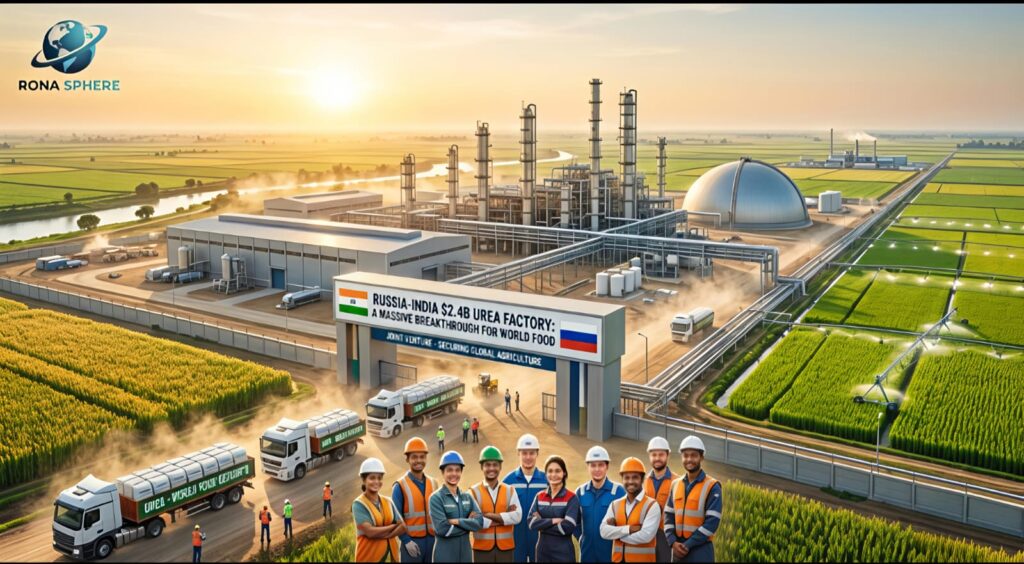
Simple Science: How Urea is Made
You don’t need to be a scientist to understand the Russia and India urea factory. But it is fun to know how it works! Basically, urea is made from air and gas.
Taking Nitrogen: Machines pull nitrogen from the air around us.
Adding Gas: They mix that nitrogen with natural gas to make ammonia.
The Big Mix: Then, they add carbon dioxide to the ammonia.
Drying it Out: Finally, they turn it into little white pellets that look like salt.
Furthermore, the Russia and India urea factory uses very new technology. This makes the process very fast. Resultantly, they can make millions of bags without wasting any energy. Specifically, they use a method called “Granulation.” This makes the urea pellets strong so they don’t break during the long trip to India.
Why the Indian Farmer is the Real Winner
Everything about the Russia and India urea factory is for the farmer. Let’s look at why they should be happy.
No More Waiting
In the past, farmers sometimes had to wait in long lines for fertilizer. Sometimes, there wasn’t enough for everyone. However, the Russia and India urea factory provides a steady stream of supply. Consequently, the farmer can plant their seeds exactly when the rain starts. They don’t have to worry about a ship being stuck in a far-off ocean.
Better Quality
The urea from the Russia and India urea factory is high-grade. Furthermore, it is coated with special oils that help it dissolve slowly in the soil. Specifically, this means the plants get food for a longer time. Therefore, the farmer gets a bigger harvest from the same amount of work.
A Greener Future for Fertilizers
Many people worry about the environment. Factories can sometimes be dirty. However, the leaders of the Russia and India urea factory are thinking ahead. Specifically, they are using “Carbon Capture” technology.
Reusing Waste
When you make ammonia, you create carbon dioxide. Usually, this gas goes into the air and causes problems. But at the Russia and India urea factory, they catch that gas. Then, they put it back into the process to make the urea. Consequently, the factory is much cleaner than older ones. Furthermore, they are planning to use wind and solar power for some of the machines in the future.
Resultantly, this project shows that we can feed the world and protect the planet at the same time. It is a “Green Win” for everyone involved.
Global Impact: The World is Watching
The Russia and India urea factory is a big deal in global politics. Other countries are watching closely. Specifically, they want to see if two big nations can really work together this well.
A New Way of Trading
For a long time, most trade was done in the West. But now, the East is rising. Furthermore, the Russia and India urea factory proves that countries can solve their own problems. They don’t always need to rely on the global market. Consequently, this might lead to more partnerships between other countries.
For example, Brazil and China might build a factory together. Or maybe countries in Africa will follow the Russia and India urea factory model. Therefore, this project is a pioneer for a new kind of world economy.
Practical Advice: How to Support Local Farming
Even if you don’t work at the Russia and India urea factory, you can help. Supporting agriculture is everyone’s job.
Buy Local: When you buy food grown by local farmers, you help them stay in business.
Learn About Food: Understanding where your food comes from is important.
Waste Less: When you throw away food, you are wasting the fertilizer and hard work that went into it.
Furthermore, we should encourage more projects like the Russia and India urea factory. Specifically, we need more cooperation and less competition. Because when we work together, everyone has enough to eat.
Step-by-Step: How a Joint Venture Works
Building a Russia and India urea factory is like a giant puzzle. Here is how they put it together:
The Agreement: The leaders of both countries sign a paper. They promise to be partners.
The Site Visit: Engineers from India fly to Russia to look at the land.
The Money: Both sides put their money into a shared bank account.
The Construction: Thousands of workers start building. Specifically, they use a lot of concrete and steel.
The Testing: Before making real urea, they test every pipe and button.
Full Speed Ahead: The factory starts running 24 hours a day.
Consequently, each step takes a lot of time and patience. But the result is worth it. The Russia and India urea factory is a monument to what people can do when they have a plan.
Breaking Down the Subsidy Bill
In India, the government pays for part of the fertilizer cost. This is called a subsidy. Furthermore, this bill is huge. Specifically, it can be more than $20 billion a year.
Because the Russia and India urea factory makes urea cheaper, that bill goes down. Resultantly, the government has more money for things like:
Hospitals: Better care for everyone.
Digital India: Faster internet in villages.
Defense: Keeping the country safe.
Therefore, the Russia and India urea factory helps the whole country, not just the farmers. It is a win-win situation for every citizen.
Expert Insights: The Power of Strategic Autonomy
Strategic autonomy sounds like a big word. But it is actually simple. It means a country has the power to make its own choices. Furthermore, the Russia and India urea factory is a great example of this.
Instead of waiting for the world to change, India and Russia took action. They built something that belongs to them. Consequently, they are not afraid of what happens in other parts of the world. They have their own supply of “White Gold.” Specifically, this makes both nations stronger and more independent.
Comparison: The Old Way vs. The New Factory Way
Let’s look at how things are changing.
| Feature | The Old Way | The Russia and India Urea Factory |
|---|---|---|
| Price | Very high and changes often | Stable and predictable |
| Travel Time | 45 days by ship | 25 days by train and ship |
| Supply | Sometimes runs out | Always available |
| Partnership | Just buyer and seller | True partners who own the factory |
Resultantly, you can see why everyone is so excited. The Russia and India urea factory is simply better in every way.
Looking Ahead: What Happens in 2030?
The Russia and India urea factory is just the beginning. Furthermore, there are plans to make the partnership even bigger.
Expanding the Family
By 2030, the factory might start making other things. Specifically, they want to make Potash and Phosphate fertilizers. These are also very important for crops like potatoes and fruits. Consequently, the Russia and India urea factory could become a “One-Stop Shop” for all of India’s farm needs.
More Jobs for Youth
This factory also creates a lot of jobs. Not just in Russia, but in India too. Specifically, we need people to handle the logistics, the sales, and the science. Therefore, the Russia and India urea factory is providing a bright future for the next generation of workers.
Detailed Analysis: The Physics of High-Pressure Production
In the Russia and India urea factory, something amazing happens. You take invisible gases and turn them into solid rocks. Furthermore, this happens inside a giant metal tank called a “Reactor.”
Inside the reactor, the pressure is very high. It is like being at the bottom of the ocean. Specifically, this high pressure forces the molecules to stick together. If the pressure isn’t high enough, the urea won’t form. Consequently, the engineers must be very careful. They use computers to watch the pressure every second. Therefore, the Russia and India urea factory is one of the most high-tech places on Earth.
The Cultural Bridge: Russia and India
Russia and India have been friends for a long time. People in Russia love Indian movies. People in India respect Russian science. Furthermore, this friendship makes the Russia and India urea factory easier to build.
When people like each other, they work better together. Instead of arguing about rules, they find ways to help. Specifically, the Russian managers have started learning a little Hindi. Similarly, the Indian workers are enjoying Russian food. This cultural mix makes the Russia and India urea factory a happy place to work.
Summary: A Giant Leap for Agriculture
To wrap it up, the Russia and India urea factory is a massive success story.
Money: $2.4 billion invested into the future.
Food: 2 million tonnes of urea to help plants grow.
Safety: A stable supply that doesn’t depend on global drama.
Partnership: Two old friends working as equals.
Furthermore, this is a story about hope. It shows that even in a world with many problems, we can find solutions. Consequently, the Russia and India urea factory will be remembered as the project that helped feed a billion people. Therefore, the next time you eat a piece of bread or a bowl of rice, think of the factory in Samara. It might have played a part in putting that food on your plate.
How-To Guide: Understanding Fertilizer for Beginners
If you are a student or a new gardener, here is a quick guide. Specifically, this explains why the Russia and India urea factory is relevant to you.
Check Your Soil: Plants need Nitrogen, Phosphorus, and Potassium (NPK).
Understand Nitrogen: This is what urea provides. It makes the leaves green and strong.
Apply Correct Amounts: Too much fertilizer can hurt the plant. Specifically, follow the instructions on the bag.
Watch the Growth: With urea from the Russia and India urea factory, you will see your plants grow faster and taller.
Furthermore, always remember that healthy soil leads to healthy people. The Russia and India urea factory is simply a tool to help nature do its best work.
Conclusion: The Legacy of Samara
The Russia and India urea factory is now a reality. Specifically, it stands as a symbol of 21st-century cooperation. Furthermore, it reminds us that food is the most important thing we have. Without it, nothing else matters.
Consequently, we should celebrate this $2.4 billion handshake. It is a big win for the farmer in India and a big win for the engineer in Russia. Resultantly, the world is a little bit safer and a little bit more full today. The Russia and India urea factory is truly a landmark of our time.
Frequently Asked Questions (FAQs)
Q1: What is the main goal of the Russia and India urea factory?
The main goal is to provide a steady and cheap supply of urea fertilizer to Indian farmers while using Russia’s natural gas.
Q2: How much did the Russia and India urea factory cost?
The project cost about $2.4 billion, or ₹20,000 crore. Both countries paid half of the cost.
Q3: Where can I find the Russia and India urea factory?
It is located in the Samara region of Russia. This area was chosen because it has lots of natural gas.
Q4: Why is urea called “White Gold”?
Urea looks like small white pellets. It is called “gold” because it is very valuable to farmers. Without it, they cannot grow enough food to make a living.
Q5: How does the urea get to India from the factory?
It uses a shortcut called the INSTC. This involves trains and ships moving through Iran and the Caspian Sea.
Q6: Is the Russia and India urea factory good for the environment?
Yes, it uses new technology to catch carbon dioxide and reuse it. This makes it cleaner than many old factories.
Q7: Will this factory create jobs?
Absolutely. It creates thousands of jobs for builders, engineers, and truck drivers in both Russia and India.
Q8: When will the factory be finished?
The Russia and India urea factory is expected to be fully running by the year 2028.
Q9: Who owns the factory?
It is a joint venture. This means it is owned together by the Russian company Uralchem and three Indian companies (RCF, NFL, and IPL).
Q10: Does this help with the price of food?
Yes. By making fertilizer cheaper, it helps keep the price of crops like wheat and rice stable for everyone.
About the Author