Step back in time over 11,000 years. Also, imagine a wild world completely without farms. People hunt wild animals to survive day by day. Then, they somehow build a massive stone monument. Naturally, this grand sight baffles experts today. Göbekli Tepe is exactly that impossible, mind-bending place. Consequently, it breaks all our old history rules. In fact, it forces us to ask new questions about our past. Clearly, Göbekli Tepe stands as the world’s oldest temple. Therefore, we must explore its great secrets.
What Exactly is Göbekli Tepe?
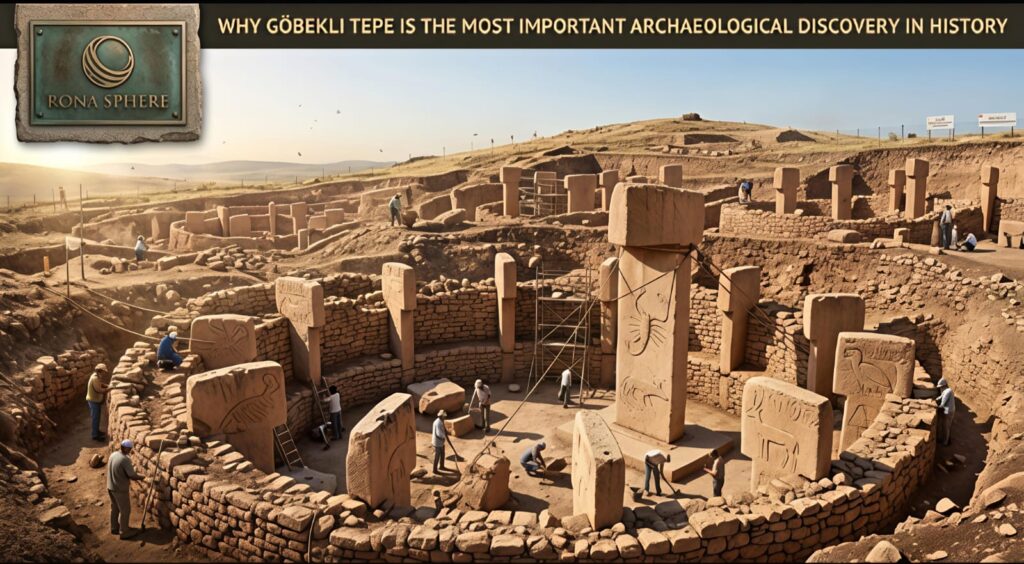
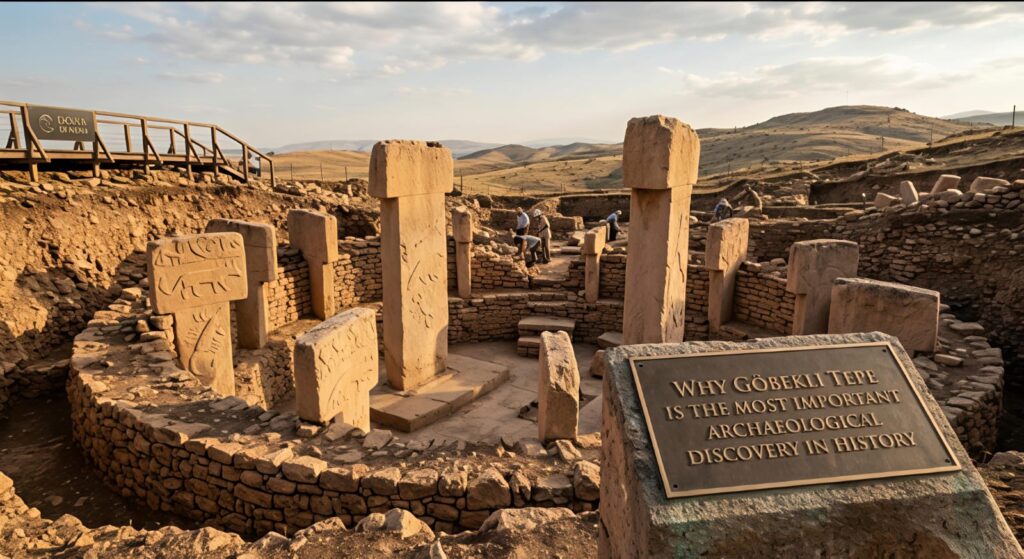
First, let us look at the site itself. Göbekli Tepe is a huge ancient dig site in Turkey. The name means “Potbelly Hill” in Turkish. Specifically, it features huge rings of tall stone pillars. Moreover, the builders carved them from solid rock. The giant pillars stand up to 20 feet tall. Additionally, some stones weigh up to ten tons. Yet, ancient people moved them without metal tools or wheels. As a result, the sheer size of Göbekli Tepe stuns everyone.
The Geography: Where is Göbekli Tepe Located?
Finding this wonder takes a special trip. Namely, Göbekli Tepe sits in southeast Turkey. Furthermore, it rests near the historic city of Şanlıurfa. This area belongs to the famous “Fertile Crescent.” Historically, this green land birthed many early cultures. However, the temple sits on a dry, high ridge. It looks out over a massive flat plain. Undoubtedly, the builders chose this high spot on purpose. Thus, wandering tribes could see it from miles away.
The Timeline: When Was Göbekli Tepe Built?
Age is the most shocking fact here. Indeed, Göbekli Tepe dates back to 9600 BC. Consequently, it is about 11,600 years old. This makes it older than the invention of writing. Furthermore, it outdates the wheel. Amazingly, Göbekli Tepe beats Stonehenge by 7,000 years. It also beats the Great Pyramids by a huge gap. Ultimately, this timeline truly spins your head.
The Astonishing Discovery of Göbekli Tepe
How a Simple Hill Hid a Massive Secret
For ages, the site looked like a grassy hill. Previously, local farmers grew wheat right on top. They often hit large rocks with their plows. Sadly, they just moved the heavy stones aside. They thought the stones were normal boulders. Meanwhile, American researchers visited in the 1960s. However, they completely missed its real worth. They wrongly guessed it was just an old graveyard. Therefore, the great secret of Göbekli Tepe stayed safely buried.
Klaus Schmidt and the Dig That Changed Everything
Everything changed in the year 1994. Specifically, a smart German expert named Klaus Schmidt visited. He quickly noticed sharp flint pieces on the ground. Also, he saw the hill looked man-made. Consequently, Schmidt knew humans built this giant mound. He soon gathered a team to dig. Suddenly, the tops of T-shaped pillars appeared. Indeed, Schmidt found the greatest prize of our time. He died in 2014, but his vital work continues today.
Why Göbekli Tepe Rewrites the Timeline of Humanity
The Old Story of Human History
Before this find, experts shared one simple timeline. First, humans lived as wandering hunters for ages. Next, they slowly invented farming. Consequently, steady food let them build towns. Then, they created rules and organized religions. They finally built massive temples. Therefore, experts thought farming came before religion. Undoubtedly, this logic made perfect sense for years.
The New Reality Introduced by Göbekli Tepe
However, this old timeline is now dead. The builders of Göbekli Tepe were clearly hunters. In fact, no farm crops exist at the lowest levels. Yet, these wild hunters built a mega-structure. Therefore, religion and teamwork came first. Consequently, this huge gathering forced them to invent farming. They simply needed to feed the workers. Ultimately, Göbekli Tepe proves shared beliefs sparked human society.
Exploring the Architecture of Göbekli Tepe
The Massive T-Shaped Pillars
The stones tell a wildly cool story. Specifically, the builders cut them into a distinct “T” shape. Experts believe these giant T-shapes represent humans. For example, some pillars feature carved arms and hands. Furthermore, you can spot ancient belts carved near the base. However, these stone people have no faces. Thus, they might represent faceless gods or wise ancestors. Regardless, standing near them makes you feel tiny.
The Circular Enclosures of Göbekli Tepe
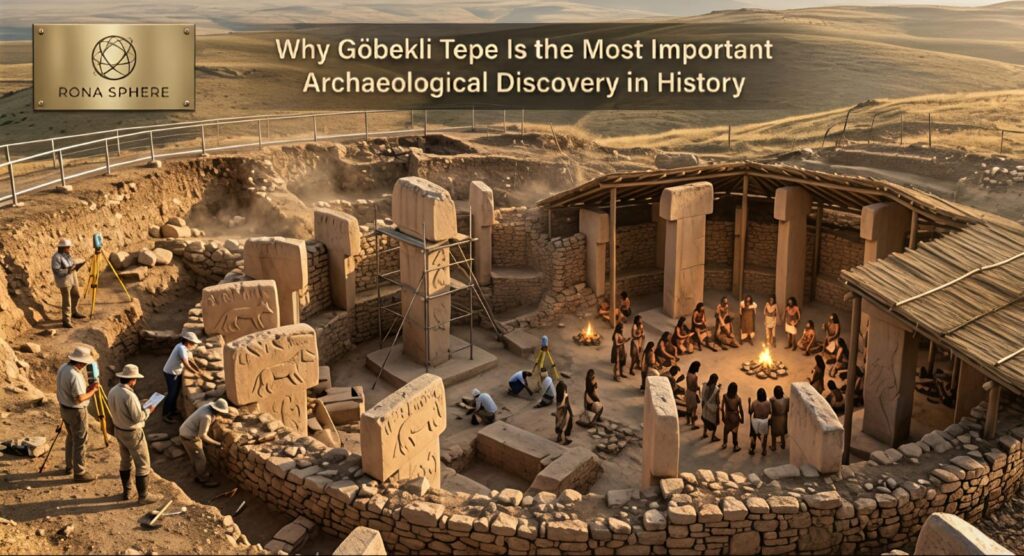
The layout is very neat and planned. First, builders placed the pillars in big circles. Next, they put two huge pillars in the very center. Then, they built a thick stone wall. This wall connects the outer ring of pillars. Additionally, experts found stone benches built into these walls. Consequently, ancient people likely sat inside during rituals. When a ring lost its magic, they buried it. Afterward, they just built a new ring on top.
Decoding the Animal Carvings at Göbekli Tepe
Predators and Protectors
The art here is creepy and wild. Specifically, artists carved dangerous beasts on the pillars. You will clearly see angry boars and leaping foxes. Additionally, thick scorpions and deadly snakes decorate the stones. You rarely see common food animals like deer. Instead, the builders focused on scary predators. Therefore, these beasts might have guarded the temple. Alternatively, they could represent different animal spirits.
The Meaning Behind the Vulture Symbols
One bird shows up very often at Göbekli Tepe. Namely, the vulture holds a dark, special place. Historically, ancient people used “sky burials.” First, they left dead bodies out in the open air. Next, wild vultures flew down to eat the remains. Consequently, early humans thought birds carried souls to the sky. Carving vultures honored this deep link to the afterlife. Thus, Göbekli Tepe heavily focused on life and death.
Who Exactly Built Göbekli Tepe?
The Hunter-Gatherer Revolution
Picturing the builders is very tough. Initially, you might imagine confused cavemen. However, the creators of Göbekli Tepe were highly smart. They deeply understood basic math, art, and teamwork. In fact, they used sharp flint to carve soft rock. Moreover, they knew how to balance heavy weights. The giant pillars stood up perfectly straight. Undoubtedly, these people had a very rich culture.
The Logistics of Building an Ancient Temple
Moving these rocks was a total nightmare. First, workers cut giant stones from a local quarry. Then, they dragged them up the dusty hill. Importantly, they had no horses or wheeled carts. Therefore, everything relied on pure human muscle. Consequently, hundreds of people worked together to move one pillar. Wandering tribes simply had to cooperate to finish the temple.
The Big Debate: Religion First or Farming First?
The Agricultural Spark at Göbekli Tepe
This topic causes massive arguments today. Previously, we thought humans settled down to farm easily. However, Göbekli Tepe tells a much cooler story. Gathering hundreds of workers created a huge problem. Namely, all those tired people needed extra food. Consequently, hunting wild gazelles was not enough anymore. Therefore, humans had to learn to grow wild wheat. Indeed, the world’s oldest grown wheat sits just miles away!
Feasting and Gathering at the Temple
The ancient builders loved a good party. For example, experts found thousands of crushed animal bones. These are leftover bones of wild gazelles and pigs. Moreover, researchers found giant stone vats for liquids. Interestingly, tests show clear signs of early beer inside. Thus, Göbekli Tepe hosted massive, loud feasts. People came from far away to worship and eat.
The Intentional Burial of Göbekli Tepe
Why Hide a Masterpiece?
Here is the weirdest fact of all. Eventually, the ancient builders completely abandoned the temple. However, they did not just leave it to rot. Instead, they spent huge effort perfectly burying it. Specifically, they filled the rings with tons of dirt. Consequently, the site vanished under a fake hill. Naturally, experts constantly argue about why they did this.
Theories on the Great Cover-Up
There are several fun theories about this mystery. First, some think the temple lost its holy magic. Therefore, burying it respectfully “killed” the old temple. Alternatively, maybe a new religion entirely took over. They wanted to hide the old gods forever. Regardless of the reason, this act saved the site. The deep dirt protected the holy stones from bad weather. Consequently, Göbekli Tepe waited safely for 10,000 years.
7 Incredible Facts About Göbekli Tepe
To clearly summarize its greatness, here are seven vital facts:
It is incredibly old. The site outdates Stonehenge by at least 7,000 years.
Hunters built it. No farmers lived nearby when construction began.
It holds the first art. The 3D animal carvings are the oldest complex art pieces.
Only a tiny fraction is visible. Currently, experts have only dug up 5% of the site.
It lacks normal homes. Nobody actually lived inside the temple rings.
It has human shapes. The massive T-shaped pillars represent tall, faceless humans.
It forced farming. The need to feed workers sparked the global farming revolution.
Practical Travel Guide: How to Visit Göbekli Tepe Today
Planning Your Trip to Turkey
Visiting this wonder is a huge thrill. Fortunately, Turkey makes it very easy for tourists. First, you fly into the country of Turkey. Next, you take a short flight to Şanlıurfa. This city is deeply famous for spicy food and history. Therefore, plan to stay there for two days. Additionally, spring and autumn are the best times to visit. Otherwise, the fierce summer sun makes walking dangerously hot.
Getting to the Site
The trip to the ruins is very short. Specifically, Göbekli Tepe sits just 12 miles away. Consequently, you can easily hire a cheap taxi. Moreover, the government built a modern visitor center. First, you buy your tickets at this clean building. Then, you ride a free bus to the top. Ultimately, the whole process is safe and easy.
What to Expect When You Arrive at Göbekli Tepe
Walking up to the stones is highly moving. Nowadays, a large fabric roof covers the dig site. Importantly, this roof protects the ancient rock from rain. You cannot walk directly on the dirt. Instead, a raised wooden path circles the whole pit. Consequently, you can look down into the deep rings. Bring a good camera with a zoom lens. Thus, you can closely capture the tiny animal carvings.
Essential Packing List for the Ruins
To truly enjoy your trip, you must pack smart. Therefore, here is a quick list of needed items:
Comfortable walking shoes: The paths around the ruins are very rocky.
A wide-brimmed hat: The sun beats down aggressively on the hill.
A large water bottle: The dry, dusty air makes you thirsty quickly.
Sunscreen: You will quickly burn without thick protective lotion.
A local guidebook: Having notes helps you understand the ancient stones.
The Şanlıurfa Archaeology Museum
Your adventure strictly does not end at the site. In fact, you must visit the Şanlıurfa Archaeology Museum. Undoubtedly, this is an incredible, highly modern museum. Specifically, it holds fragile statues found near Göbekli Tepe. For example, you can see the famous “Urfa Man.” He is the oldest known life-sized human statue. Furthermore, the museum has a full-scale replica of the temple. Consequently, you can walk next to fake pillars to feel their size.
The Future of Göbekli Tepe Excavations
What Lies Beneath the Surface
We have barely scratched the top of this mystery. Currently, visitors only see four large stone circles. However, ground radar shows a much bigger picture. Specifically, radar proves 15 more rings sit buried underground. Furthermore, these hidden rings hold hundreds of unseen pillars. Therefore, experts will likely dig here for a century. Indeed, every new scoop of dirt can change history.
Preserving Göbekli Tepe for Future Generations
Protecting these stones is a massive challenge. Naturally, 11,000-year-old rock is soft and weak. Consequently, scientists must work slowly and with extreme care. Moreover, the sudden spike in tourism brings risks. For instance, large crowds create extra dust and trash. Thus, the government strictly limits where people can walk. Ultimately, keeping the site totally safe is a top priority.
New Discoveries: The Rise of Karahan Tepe
Göbekli Tepe is not totally alone. Recently, experts started digging at a nearby site. It is called Karahan Tepe. Interestingly, this new spot might be slightly older. Furthermore, Karahan Tepe has weird, 3D carved heads. Additionally, it has a strange room filled with tall pillars. Consequently, historians realize a whole network of temples exists here. Therefore, human history will probably change again very soon.
Conclusion: The Enduring Legacy of Göbekli Tepe
Our deep past is very complex. Ultimately, Göbekli Tepe proves ancient humans were highly smart. Furthermore, they built massive projects long before they farmed. Consequently, the textbook story of human history is forever changed. Indeed, a dry hill in Turkey holds our deepest secrets. Therefore, we eagerly wait to learn more. Soon, Göbekli Tepe will surely whisper new, exciting clues to us.
About the Author