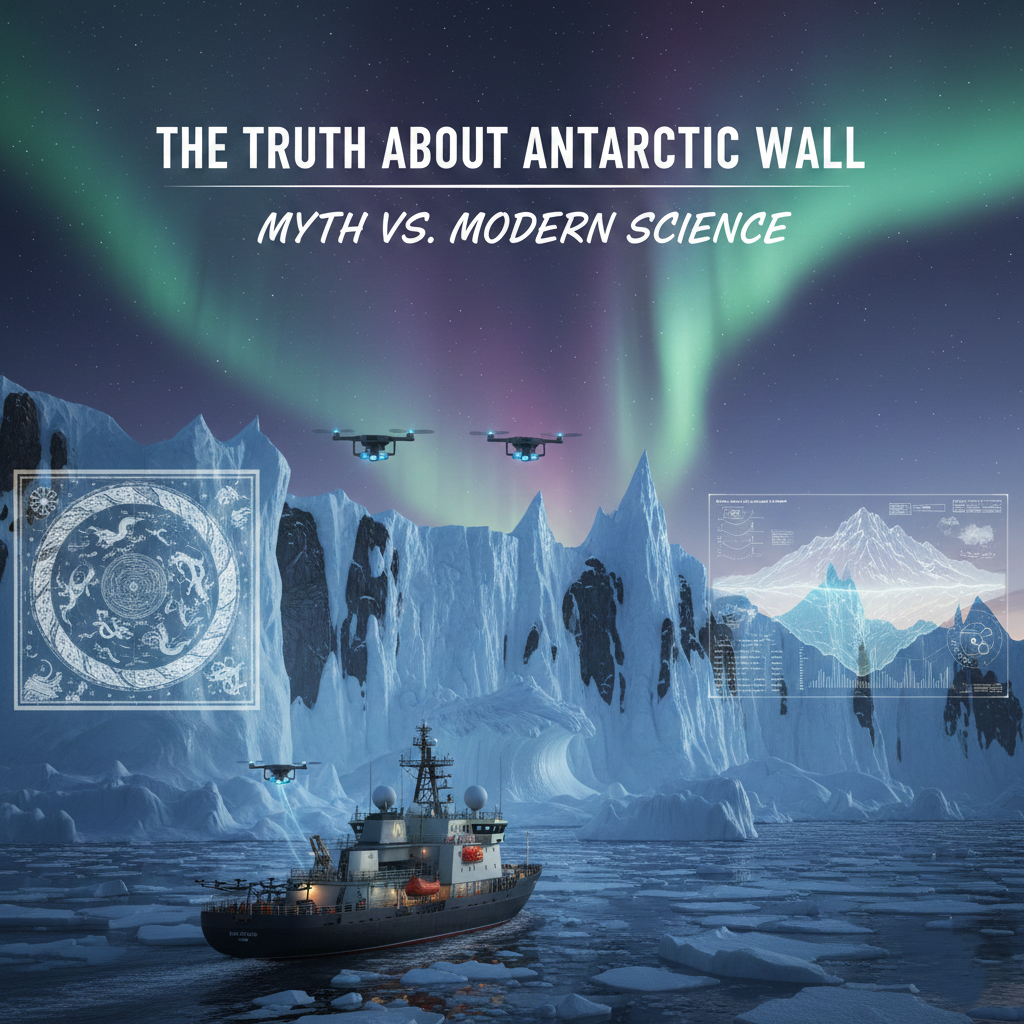
Humans possess a deep desire to explore the unknown. Consequently, this drive leads to many questions about our world. One topic creates more high curiosity than most others today. Specifically, people often discuss the Antarctic Wall theory. Many believe a giant ice barrier surrounds our world. In contrast, modern science describes Antarctica as a frozen continent. This article dives deep into the mystery. We will use facts and history to find the truth. Therefore, let us look at the evidence together.
The Mystery of the Antarctic Wall
Initially, the idea of an Antarctic Wall sounds like a fantasy movie. However, many people take this theory very seriously. Supporters suggest that the earth is not a globe. Instead, they believe it is a flat plane. Consequently, they argue that the Antarctic Wall holds the oceans in place. This idea sparks high curiosity across the internet. Furthermore, people share photos of massive ice cliffs as proof.
Why Do We Feel High Curiosity?
Firstly, humans love a good mystery. Moreover, we often feel skeptical of big institutions. Because of this, alternative theories gain a lot of followers. Furthermore, the Antarctic Wall offers a sense of hidden knowledge. People want to feel like they see the “real” world. Consequently, they look for clues that others might miss. However, modern science provides a different perspective. It uses tools like satellites and physics to explain the ice.
What Does Modern Science Say?
In contrast to the wall theory, modern science views Antarctica as a landmass. It sits at the bottom of our rotating planet. Therefore, the ice is not a border for the entire world. Instead, it is a massive sheet of frozen water. This ice covers a rocky continent. Furthermore, the “walls” people see are actually ice shelves.
The Truth About Ice Shelves
Specifically, an ice shelf is a floating platform of ice. These form when glaciers slide into the ocean. Consequently, they create tall, flat cliffs. Therefore, a sailor might look up and see a 200-foot wall. This sight creates high curiosity for any observer. However, these cliffs do not go on forever. In fact, they are only found in certain parts of the coastline. Furthermore, modern science maps these shelves with great detail.
The Ross Ice Shelf: This is the largest shelf. It is about the size of France.
The Ronne-Filchner Shelf: This is another massive barrier.
The Larsen Ice Shelf: This shelf has changed a lot recently due to heat.
The Role of Historical Exploration
To understand the Antarctic Wall, we must look back in time. Long ago, sailors had no maps of the south. Therefore, they sailed into the unknown with fear. Consequently, their journals are full of amazing stories.
James Clark Ross and the “Great Barrier”
In 1841, James Clark Ross sailed south. Eventually, he found a massive wall of ice. He called it the “Great Barrier” because he could not sail through it. Furthermore, his ship looked tiny next to the cliffs. This account fuels the high curiosity of modern theorists. They point to Ross as a witness to the Antarctic Wall. However, Ross also mapped the open sea. He knew the ice was a feature of a landmass. Therefore, his journals support modern science as much as they spark mystery.
Captain Cook’s Southern Journey
Similarly, Captain James Cook tried to find the southern land. He sailed around the world at very high latitudes. Consequently, he saw many icebergs. However, he never found a solid wall that encircled the earth. Instead, he found paths through the ice. Therefore, his voyage proved that the sea continues. Furthermore, he helped prove the earth was a sphere.
How Modern Science Maps the Ice
Today, we do not need wooden ships to see the ice. Instead, we use technology. Specifically, satellites give us a view from space. Consequently, we can see the entire shape of the Antarctic Wall.
The Power of Satellite Imagery
Satellites orbit the earth every day. They take high-resolution photos of the poles. Therefore, we have a complete map of Antarctica. These images show a continent surrounded by water. In contrast, proponents of the Antarctic Wall claim these photos are fake. However, thousands of independent satellites show the same thing. Furthermore, weather satellites show clouds moving across the continent. This data confirms the findings of modern science.
Using GPS to Track Movement
Furthermore, scientists use GPS on the ice. They place sensors on the Antarctic Wall. Consequently, they track how the ice moves toward the sea. These sensors show that the ice is flowing. It is not a static, unmoving border. Therefore, the physical evidence supports a dynamic continent. Similarly, gravity measurements show the mass of the land beneath the ice.
The Antarctic Treaty and Its Secrets
Many people with high curiosity talk about the Antarctic Treaty. They believe it is a secret law. Specifically, they think it stops people from seeing the Antarctic Wall. Consequently, this leads to many conspiracy theories.
What is the Treaty?
Initially, the treaty was signed in 1959. Its main goal is peace. Therefore, no country can claim Antarctica as its own. Furthermore, the treaty bans military tests. It also stops people from mining for oil. Consequently, the continent stays clean for modern science. Therefore, the “guards” people imagine are actually researchers. They work to protect the environment.
Can You Visit the Ice?
In contrast to the myths, you can visit Antarctica. Many people go there every year. Specifically, cruise ships take tourists to the Antarctic Wall. Therefore, it is not a forbidden zone. You can take photos and walk on the ice. Furthermore, you can see the wildlife. Consequently, the idea of a secret barrier fails when you look at real travel data.
Common Myths vs. Modern Science
There are several myths that keep high curiosity alive. Let us look at them through the lens of modern science.
Myth 1: The “No-Fly Zone”
Supporters of the Antarctic Wall say planes never fly over the pole. They claim pilots would see the edge of the world. However, the truth is simpler. Specifically, it is very cold and dangerous. Most planes stay near airports in case of trouble. Therefore, they avoid the center of Antarctica for safety. Furthermore, some special flights do cross the continent. They use GPS to stay on track.
Myth 2: The Compass Problem
Some say compasses stop working at the Antarctic Wall. Consequently, they think the magnetic field is a lie. However, modern science explains the magnetic poles. When you are at the pole, the needle wants to point down. Therefore, it is hard to use a standard compass. This is a known fact of physics. It does not prove a wall exists.
Myth 3: The Secret Military Guard
Many believe the navy guards the Antarctic Wall. They think they will sink any ship that gets too close. In contrast, many sailors visit the area safely. Furthermore, there are no military bases in Antarctica. The treaty makes them illegal. Consequently, the only people there are scientists and support staff.
The Physics of a Global Ice Barrier
If the Antarctic Wall truly surrounded the earth, physics would change. Specifically, the way water moves would be different.
Tides and the Ice
The moon’s gravity pulls on our oceans. Consequently, we have tides. These tides happen all over the world. If there were an Antarctic Wall holding everything in, the tides would behave strangely. However, we see the same tidal patterns everywhere. Furthermore, the ice shelves themselves rise and fall with the tide. This proves they are floating in water. Therefore, they cannot be the solid foundation of the world.
The Curvature of the Horizon
Moreover, you can see the curve of the earth at the coast. If you watch a ship sail away from the Antarctic Wall, it disappears from the bottom up. This happens because the earth is round. In contrast, on a flat plane, the ship would just get smaller. Therefore, simple observation supports modern science. Furthermore, high-altitude balloons show the curve of the horizon clearly.
High Curiosity: Why It Matters
We should not discourage high curiosity. Instead, we should use it to learn. When we ask questions about the Antarctic Wall, we learn about our planet. We learn about ice, gravity, and history. Consequently, we become smarter.
How to Be a Good Researcher
Firstly, always look for evidence. Moreover, check who is providing the facts. In the case of the Antarctic Wall, modern science provides data from many sources. This includes universities, space agencies, and private explorers. Therefore, the evidence is strong. Furthermore, be willing to change your mind when you see new facts. This is the heart of modern science.
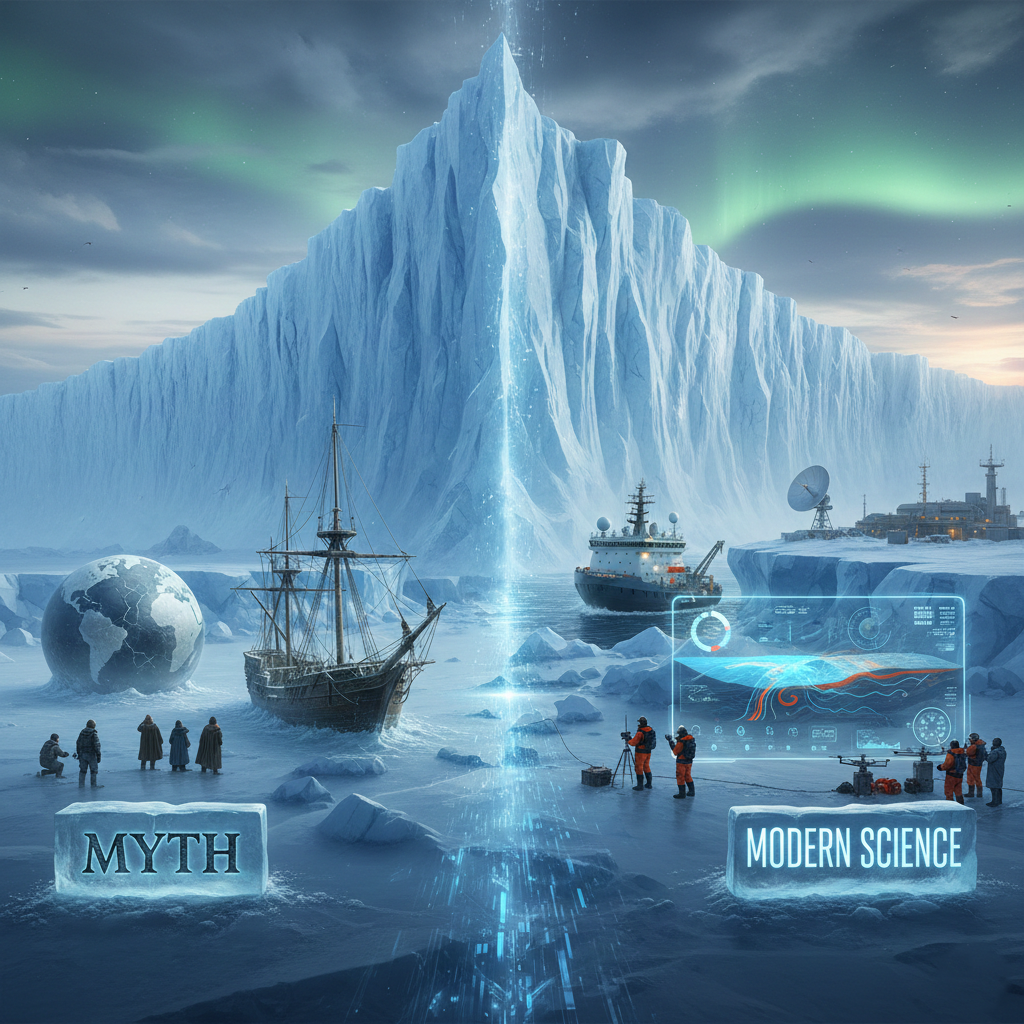
The Real “Wall” is Changing
While people debate the Antarctic Wall theory, the real ice is in trouble. Specifically, global warming is melting the ice shelves. Consequently, this creates a real problem for the world.
The Threat of Melting Ice
The Antarctic Wall of ice helps keep the ocean levels stable. If these shelves melt, sea levels will rise. Therefore, coastal cities could flood. This is a major focus for modern science today. Furthermore, the melting ice changes the salt levels in the water. Consequently, this affects ocean currents and weather.
Protecting the Frozen Continent
Because the ice is so important, we must protect it. The Antarctic Treaty helps with this. Furthermore, scientists study the ice to understand our future. They look at the Antarctic Wall to see how fast it is changing. Therefore, our high curiosity should focus on saving the ice, not just debating its shape.
Expert Insights: Life on the Ice
To get a deep view, we can look at the lives of experts. Many scientists spend years living near the Antarctic Wall.
The Experience of the South Pole Station
At the Amundsen-Scott station, people live at the very bottom of the world. During the winter, the sun does not rise for months. Consequently, they see the stars move in a circle overhead. This only happens on a globe. Furthermore, they can walk in any direction and eventually reach the coast. Therefore, their daily lives prove that the Antarctic Wall is just a coastline.
The Logistics of Survival
Survival on the ice is hard. Everything must be flown in or brought by ship. Because of this, life is very expensive. Furthermore, the cold can break machines. Consequently, the people there are very skilled. They use modern science to stay alive. Therefore, they are the best witnesses to the truth of the continent.
Navigating the Information Age
In today’s world, it is easy to find theories about the Antarctic Wall. However, it is also easy to find facts. Consequently, we must be careful about what we believe.
The Role of Social Media
Social media often spreads mystery to get views. Therefore, videos about the Antarctic Wall go viral quickly. They use scary music and dark images to create high curiosity. In contrast, scientific reports are often long and dry. However, the reports contain the truth. Furthermore, they are checked by other experts. This is why modern science is more reliable than a random video.
Building Trust in Science
To trust modern science, we must understand how it works. It is not about one person saying something is true. Instead, it is about thousands of people testing the same idea. Consequently, when everyone finds the same result, we can trust it. Therefore, the global agreement on Antarctica is a sign of its truth. Furthermore, you can participate in science yourself by looking at public data.
Deep-Sea Exploration Near the Ice
The mystery of the Antarctic Wall also goes below the surface. Specifically, what is under the ice?
Subglacial Lakes and Life
Modern science has found huge lakes under the ice. One example is Lake Vostok. It has been sealed for millions of years. Consequently, it may contain life forms we have never seen. Therefore, the Antarctic Wall hides many real secrets. These secrets are more exciting than the myths. Furthermore, robots are now exploring the water under the ice shelves.
The Sea Floor Mapping
Similarly, we have mapped the ocean floor around Antarctica. These maps show deep canyons and mountains. Therefore, we know the Antarctic Wall does not go down forever. It sits on top of the ocean. Consequently, the water flows underneath it in many places. This proves the ice is a layer, not a world-ending barrier.
Storytelling: A Journey to the Edge
Imagine you are an explorer today. You travel south to see the Antarctic Wall. Initially, the boat ride is rough. Eventually, the air turns freezing. Then, you see it. A massive, blue-white cliff rises from the waves. This is the Ross Ice Shelf.
The Feeling of the Ice
Standing near the ice, you feel very small. The wind howls across the top. Consequently, you understand why people feel high curiosity. It looks like a wall from a legend. However, you also see your GPS. It shows your exact spot on a round earth. Furthermore, you see a research plane fly overhead. You realize that this “wall” is part of a beautiful, complex system. It is not a prison for the world. Instead, it is a treasure.
Summary of Modern Science Facts
| Feature | Myth: The Antarctic Wall | Fact: Modern Science |
| Shape | A ring around the earth. | A continent at the South Pole. |
| Height | Thousands of feet tall. | Average 100-200 feet for shelves. |
| Purpose | To keep the ocean in. | Part of the global water cycle. |
| Access | Secret and forbidden. | Open to science and tourism. |
| Evidence | Stories and low-res photos. | Satellites, GPS, and direct visits. |
Conclusion: The End of the Wall?
In conclusion, the Antarctic Wall theory is a product of high curiosity. It reflects our love for mystery and our desire to quest. However, modern science provides a much clearer picture. Antarctica is a continent of ice and rock. It is a place of peace and research. Consequently, we do not need a mythical wall to find wonder. The reality of the ice is amazing enough on its own.
Therefore, we should keep exploring. Furthermore, we should trust the data that thousands of people have worked to find. The Antarctic Wall might not be a border to the world, but it is a vital part of our home. Let your high curiosity lead you to the facts. Similarly, let it lead you to a deeper respect for our planet.
Ultimately, the truth about Antarctica is found in its beauty and its science. Consequently, we can look at the ice and see the history of our world. We can also see the challenges of our future. Therefore, the next time you hear about the Antarctic Wall, remember the real story. It is a story of ice, discovery, and the power of the human mind to find the truth.
About the Author