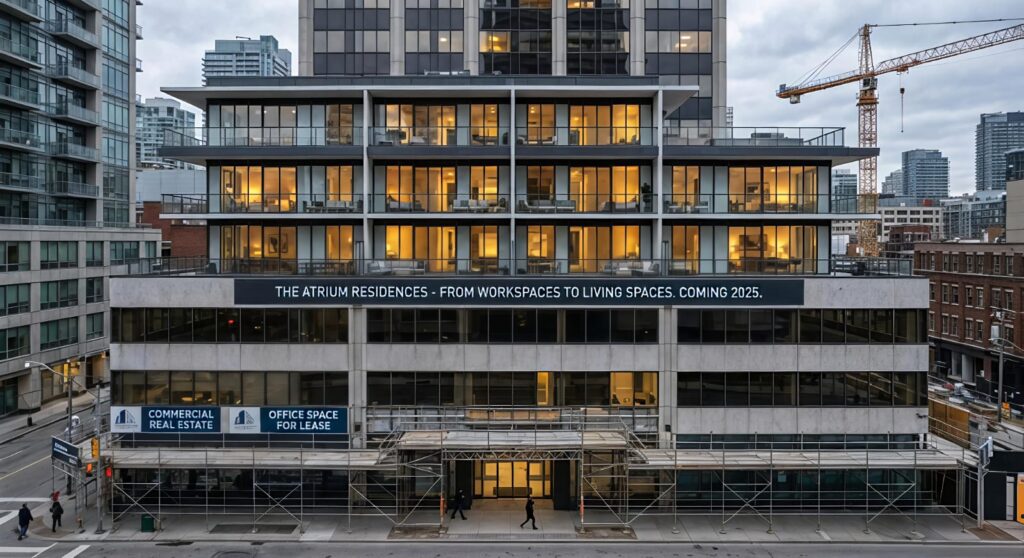
Imagine standing in the center of a major city at midnight. You look up at the tall towers. Once, these buildings were full of desks. Now, however, many of them are dark. This silence marks a massive shift in our world. We are witnessing a historic rebirth. We call it the journey From Cubicles to Courtyards: The Multi-Billion Dollar Transformation of Vacant Downtown Offices into Residential Sanctuaries. Specifically, developers are spending billions to turn empty desks into warm homes.
In the past, cities were split into parts. People worked downtown but lived far away. Consequently, the city center died every evening at 5 PM. Nevertheless, the pandemic changed our habits. Today, remote work is very common. Companies do not need as much space anymore. This left cities with a huge problem. But where some see empty rooms, others see a grand opportunity.
This article explores this massive shift. We will look at the complex engineering. We will discuss the huge costs. Furthermore, we will see why these “sanctuaries” are the future of our cities.
The Birth of a New Urban Era
We are living through a historic change. For decades, downtowns were for business only. Now, that old model is failing. People want to live near the action. They want to walk to cafes and theaters. Furthermore, they want to avoid long commutes.
The End of the “Office Only” Zone
The traditional office district is a relic of the past. Nowadays, people value flexibility. Consequently, old office buildings are becoming useless. Many owners are seeing their property values drop. However, the demand for housing is higher than ever. Therefore, it makes sense to put people where the desks used to be.
The Scale of the Movement
This is not a small trend. It is a multi-billion dollar industry. Specifically, major banks and investors are moving their money into residential projects. They know that a full apartment building is worth more than an empty office. Thus, the transformation is a smart financial move.
Defining the Sanctuary
What makes a home a “sanctuary”? An office is a place of stress. A home should be a place of peace. Therefore, designers are adding green spaces and quiet rooms. They are turning cold glass boxes into warm living spaces. This is the heart of the movement From Cubicles to Courtyards: The Multi-Billion Dollar Transformation of Vacant Downtown Offices into Residential Sanctuaries.
The Economic Drivers: Why the Billions are Flowing
You might wonder why developers spend so much money. The answer is simple: profit and survival.
The Commercial Real Estate Crisis
Many office buildings are currently “underwater.” This means the owner owes more than the building is worth. Consequently, they must act fast. If they do nothing, they will lose the building. But if they convert it to homes, they can find new tenants. This is why so much money is flowing into these projects right now.
The Housing Crisis
Almost every major city lacks enough homes. This shortage keeps rents high. Specifically, young workers are looking for places to live downtown. They cannot find them because the land is full of offices. Therefore, conversions solve two problems at once. They fix empty buildings and house more people.
Government Incentives and Tax Breaks
Cities want people to live downtown. If the center is empty, the city loses tax money. To fix this, mayors are offering huge rewards. For example, some cities give developers cash grants for every unit they build. Furthermore, they are making it easier to get building permits. This help makes the multi-billion dollar price tag easier to handle.
The Architecture of Change: Performing “Skyscraper Surgery”
Turning an office into a home is like a giant puzzle. You cannot just put a bed in a cubicle. You must change the whole building. This is the most difficult part of moving From Cubicles to Courtyards: The Multi-Billion Dollar Transformation of Vacant Downtown Offices into Residential Sanctuaries.
1. The Light Well Problem
Office buildings are often very wide. The middle of the floor is usually dark. However, every bedroom needs a window by law.
The Strategy: Architects use a “core-out” method. They cut a giant hole through the center of the building.
The Result: This creates an internal courtyard. Now, the units in the middle have light and air.
The Benefit: This courtyard becomes a private park for the residents.
2. Plumbing for a Thousand People
In an office, you have one big bathroom per floor. In an apartment, everyone wants their own. Therefore, workers must install miles of new pipes. Specifically, they have to drill through thick concrete. This is a very noisy and expensive task. Furthermore, they must do it without weakening the building. Consequently, plumbing is often the biggest cost in these projects.
3. Windows and Air Flow
Most office windows are sealed shut. But residents want to open their windows. Consequently, developers must often remove all the glass. They install new windows that open and close. Furthermore, they add balconies where possible. This makes the building feel less like a box and more like a home.
The Cost of the Transformation
Is it cheaper to fix an old building or build a new one? The answer is complex.
Saving Time and Materials
Building a new tower is slow. You have to dig a deep hole. You have to pour a new foundation. In contrast, an office building already exists. The skeleton is there. Therefore, you save a lot of time. Specifically, a conversion can be done in half the time of a new build. Furthermore, you save money on steel and concrete.
Hidden Costs of Age
However, old buildings have secrets. Specifically, you might find asbestos or old wiring. These things are dangerous and expensive to remove. Therefore, developers must be very careful. They need to have extra money ready for surprises. Regardless, the speed of these projects usually makes them a good deal.
| Feature | New Building | Conversion |
| Foundation | Needs to be built | Already exists |
| Speed | 3 to 4 years | 1 to 2 years |
| Ceiling Height | Standard | Very high |
| Eco-Friendly | Low | High |
Designing the Residential Sanctuary
What makes these buildings special? It is the focus on the “courtyard” experience. In the theme From Cubicles to Courtyards: The Multi-Billion Dollar Transformation of Vacant Downtown Offices into Residential Sanctuaries, the courtyard is essential.
Bringing Nature In
Cities can feel hard and gray. A courtyard adds green space. Specifically, architects add trees, grass, and water features. Consequently, residents feel more relaxed. This improves mental health. Furthermore, it makes the building more beautiful.
Luxury Amenities
Converted offices often have great features. Specifically, they have high ceilings. These ceilings were meant for office air ducts. When you remove the ducts, you get a giant space. Furthermore, old rooftops are being turned into pools and gyms. This is a luxury you rarely find in standard apartments.
Soundproofing the City
Office buildings are built to be strong. They have thick concrete floors. Consequently, they are very quiet. Specifically, you will not hear your neighbor walking upstairs. This is a huge benefit for people living in a “sanctuary.”
The Sustainability Factor: A Win for the Planet
This movement is also a “green” revolution. Reusing a building is very good for the earth.
Saving Embodied Carbon
Building a new skyscraper creates a lot of pollution. Specifically, making new cement and steel releases a lot of carbon. However, when you reuse an office, you keep the original structure. Consequently, you save thousands of tons of carbon. This is the most eco-friendly way to build.
Energy Efficiency Upgrades
Old offices use a lot of power. They have old lights and heaters. During the conversion, developers install smart systems. Specifically, they use LED lights and better insulation. Therefore, the new homes use much less energy. Furthermore, many buildings now include solar panels on the roof.
Reducing Urban Sprawl
When people live downtown, they do not need to drive as much. Specifically, they walk to the store or take the train. Consequently, there are fewer cars on the road. This helps keep the air clean. Therefore, the move From Cubicles to Courtyards: The Multi-Billion Dollar Transformation of Vacant Downtown Offices into Residential Sanctuaries helps the whole planet.
Real World Success Stories: Where It Is Working
This is happening all over the globe. Let’s look at some examples.
Calgary’s Big Bet
Calgary had too many empty offices. Therefore, the city decided to help. They gave millions of dollars to developers to turn towers into homes. As a result, they have already added thousands of new residents. This has made the city center vibrant again. Above all, it has saved the city’s economy.
New York’s Financial District
In New York, many old bank buildings are now apartments. Specifically, One Wall Street is a famous project. It is a beautiful tower that now houses hundreds of people. Consequently, the area is no longer just for bankers. It is a real neighborhood with families and shops.
London’s Modern Lofts
London is also moving From Cubicles to Courtyards: The Multi-Billion Dollar Transformation of Vacant Downtown Offices into Residential Sanctuaries. They are taking old government offices and turning them into lofts. Specifically, they are using modern designs to preserve the historic look. Consequently, these buildings are very popular with young professionals.
The Human Impact: Why People Move In
Who wants to live in an old office? Actually, many people do. Specifically, it offers a lifestyle you cannot get elsewhere.
The 15-Minute City
People love being near everything. If you live in a converted tower, your grocery store is next door. Your gym is downstairs. Consequently, you save hours every week. You do not need a car. Therefore, your life is less stressful.
A Sense of Community
In an office, people do not talk to each other much. In a residential sanctuary, the courtyard brings people together. Specifically, neighbors meet while sitting outside. This builds a sense of belonging. Consequently, people stay longer and are happier.
Unique Architectural Details
These buildings are not boring boxes. Specifically, they often have marble floors or brass elevators from the past. Living there feels special. Furthermore, the high ceilings allow for big windows and great views. Consequently, these homes feel more artistic than new apartments.
The Technical Steps to a Successful Conversion
How do developers manage these multi-billion dollar projects? They follow a specific plan.
Selection: First, they find a building with good “bones.”
Stripping: Next, they remove all the old cubicles and carpets.
Structural Work: They cut the light wells and strengthen the floors.
Systems: They install new plumbing and electrical lines for every room.
Finishing: Finally, they add the kitchens and the courtyard plants.
Furthermore, they must work with the city to change the zoning. Consequently, the legal work is just as important as the construction. This ensures the building is safe for people to live in.
Challenges on the Road to Transformation
It is not always easy. There are many obstacles in the way.
1. Zoning and Red Tape
In some cities, it is still illegal to live in an office zone. Therefore, the laws must change. This can take a long time. Furthermore, it requires the city council to agree. Consequently, some projects get stuck in the legal stage.
2. Building Shapes
Not every building can be a home. Specifically, some are too wide to cut a light well into. Therefore, developers must be very picky. They only choose the best buildings for the move From Cubicles to Courtyards: The Multi-Billion Dollar Transformation of Vacant Downtown Offices into Residential Sanctuaries.
3. Financing Risks
Banks are sometimes afraid to lend money for these projects. Specifically, they worry that the costs will go too high. Furthermore, they are not sure if people will want to live in certain areas. Consequently, developers must have very strong plans to get the money they need.
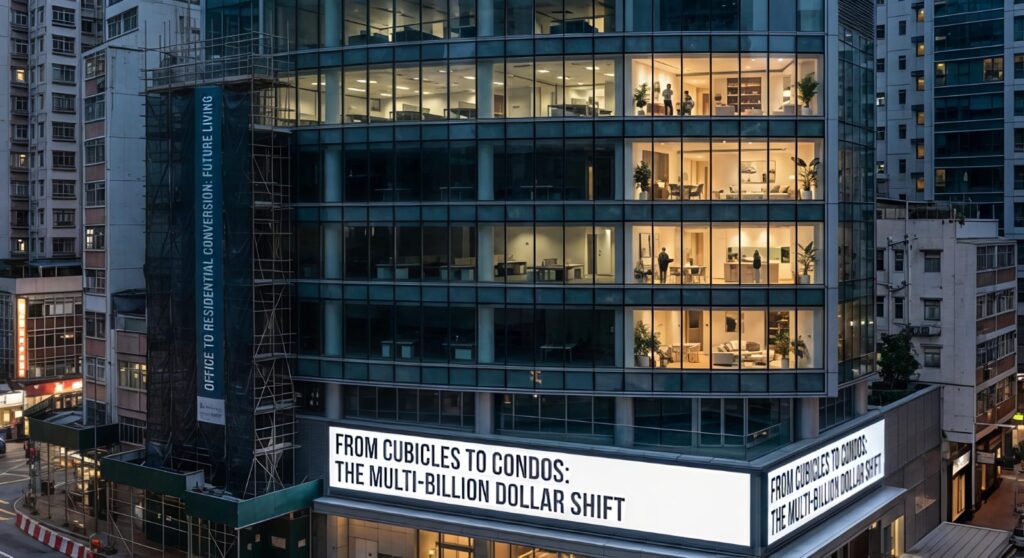
The Future of the Urban Sanctuary: 2026 and Beyond
As we look ahead, this trend is only getting stronger. We are entering a new age of urban living.
AI and Smart Design
In 2026, we are using Artificial Intelligence to plan these projects. Specifically, AI can find the best way to run pipes to save money. Furthermore, it can simulate light to see how the courtyard should look. Consequently, conversions are becoming faster and cheaper.
Vertical Villages
We will see more “multi-use” buildings. Specifically, a tower might have a cafe on the bottom, offices in the middle, and homes on top. Therefore, the building is always full of life. This is the ultimate goal of moving From Cubicles to Courtyards: The Multi-Billion Dollar Transformation of Vacant Downtown Offices into Residential Sanctuaries.
Reclaiming the Streets
When people live downtown, we need fewer parking lots. Therefore, cities can turn old garages into parks. Similarly, they can widen the sidewalks for cafes. This makes the city more human. Consequently, the entire downtown becomes a sanctuary, not just the building.
The Economic Ripple Effect
These projects help more than just the developers. They help the entire city.
Job Creation
These transformations are huge construction projects. Specifically, they need hundreds of workers. Therefore, they create many local jobs. Plumbers, architects, and designers all find work. Furthermore, these workers spend their money in the city.
Boosting Small Business
New residents need to buy things. They need coffee, haircuts, and dinner. Consequently, new small businesses open up nearby. This creates a “cycle of life” that keeps the city healthy. Furthermore, it creates even more jobs for the community.
Increasing Property Taxes
An empty office building does not pay much in taxes. However, a full residential tower pays a lot. Consequently, the city gets more money for schools and roads. This helps everyone, even if they do not live in the building. Therefore, the multi-billion dollar investment pays off for the public too.
Why the “Courtyard” is the Hero
Let’s focus on the word “Courtyard.” In our theme From Cubicles to Courtyards: The Multi-Billion Dollar Transformation of Vacant Downtown Offices into Residential Sanctuaries, the courtyard is the key.
A Place to Breathe
City life can be loud. A courtyard is a quiet escape. Specifically, it blocks the sound of the street. Consequently, you can hear birds and the wind. This is a luxury that many city dwellers want. Therefore, it is a major reason people choose these homes.
Connection to Nature
Humans need to see green things. Specifically, plants reduce stress and improve air quality. A courtyard brings nature into the heart of the building. Consequently, residents feel more connected to the world. This is the “sanctuary” feel we keep talking about.
Shared Experiences
A courtyard is a social space. Specifically, it is where you meet your neighbors. This builds a strong community. Furthermore, it makes the building feel like a village. Consequently, people are less lonely. This is a big win for urban mental health.
Technical Specs: The Physics of the Light Well
How do you get light into the middle of a 20-story tower? It takes careful planning.
The Angle of the Sun
Architects must study how the sun moves. Specifically, they use computers to map the light. They cut the hole at the perfect angle. Consequently, even the bottom floors get some sunlight. Furthermore, they use reflective materials on the walls to bounce the light around.
Managing Rain and Snow
When you cut a hole in a roof, you must manage the weather. Specifically, you need great drainage. Developers install large pipes to carry rain away. Furthermore, they use heated floors in the courtyard to melt snow. Consequently, the space stays beautiful and safe all year round.
Structural Integrity
Removing part of a floor makes the building weaker. Therefore, engineers must add new steel beams. Specifically, they reinforce the area around the cut. This ensures the tower is safe from wind and earthquakes. This is the hidden work behind From Cubicles to Courtyards: The Multi-Billion Dollar Transformation of Vacant Downtown Offices into Residential Sanctuaries.
Detailed Financial Modeling for Investors
If you want to join this multi-billion dollar trend, you must know the math.
The Acquisition Cost
First, you must buy the building at the right price. Specifically, you want to pay for the “bones,” not the business value. If the building is half-empty, you can often get a good deal. Therefore, timing is everything in this market.
The Hard Costs vs. Soft Costs
“Hard costs” are for materials and labor. “Soft costs” are for permits and architects. Specifically, hard costs for a conversion are usually $300 to $500 per square foot. Furthermore, you must factor in the cost of the courtyard. Consequently, you need a large amount of capital to start.
The Yield on Cost (YOC)
Investors look at the Yield on Cost. Specifically, they compare the future rent to the total money spent.
$$YOC = \frac{Net Annual Rent}{Total Investment Cost}$$
If the YOC is high, the project is a success. Nowadays, residential YOC is often higher than office YOC. Consequently, the multi-billion dollar shift makes perfect sense for the bottom line.
The Role of Acoustic Engineering
In an office, noise travels easily. In a home, you want silence. Specifically, acoustic engineering is a key part of building a sanctuary.
Thick Concrete Slabs
Most office towers have thick concrete floors. This is a huge advantage. Specifically, concrete blocks sound very well. Consequently, you will not hear your neighbor’s TV. Furthermore, developers add extra insulation to the walls.
Decoupling the Walls
Architects use “staggered studs” or “resilient channels” in the walls. Specifically, this means the wall on your side does not touch the wall on your neighbor’s side. Consequently, vibrations cannot travel through. This creates a truly private space. Therefore, the cubicle is finally dead, and the sanctuary is alive.
Windows and the Street
Street noise is a big problem in cities. Specifically, sirens and buses are loud. Developers use triple-pane glass in these conversions. Consequently, the inside stays perfectly quiet. This is part of the move From Cubicles to Courtyards: The Multi-Billion Dollar Transformation of Vacant Downtown Offices into Residential Sanctuaries.
Cultural Shifts: The Death of the Commute
The way we live is changing. We no longer want to spend two hours a day in a car.
Reclaiming Our Time
When you live where you work, you get your life back. Specifically, you gain 10 to 15 hours a week. Therefore, you have more time for family and hobbies. Consequently, people are much happier. This is the main reason these apartments are so popular.
The Rise of the Digital Nomad
Many people can work from anywhere. They want a home that feels like a resort. Specifically, they want a “sanctuary” with high-speed internet and a courtyard. Consequently, they are moving into these converted towers. Therefore, the city center is becoming a hub for creative talent.
The Global Perspective
This is not just an American trend. Specifically, cities in Asia and Europe are doing the same. They are all moving From Cubicles to Courtyards: The Multi-Billion Dollar Transformation of Vacant Downtown Offices into Residential Sanctuaries. Consequently, the urban experience is becoming more human across the whole world.
Step-by-Step Construction Guide
If you were to watch a conversion, here is what you would see over two years.
Month 1-4: The Demolition
Workers take everything out. Specifically, they remove the old cubicles, carpets, and ceiling tiles. By the end, the building looks like a giant, empty concrete frame.
Month 5-8: The Surgical Cuts
This is the most exciting part. Specifically, giant saws cut the hole for the courtyard. This takes several months of careful work. Consequently, the building finally starts to feel open.
Month 9-14: The Systems
Plumbers and electricians install the new lines. Specifically, they run pipes to every new apartment. This is the most complex part of the engineering. Furthermore, they install the new elevator systems.
Month 15-20: The Build-Out
Now, the apartments take shape. Specifically, workers add the walls, kitchens, and bathrooms. Consequently, the space finally looks like a home.
Month 21-24: The Sanctuary Touches
Finally, the courtyard is planted. Specifically, the trees and grass are added. The rooftop pool is filled. Consequently, the building is ready for its new residents.
Why “Sanctuaries” Matter for Mental Health
Living in a city can be hard on the mind. Specifically, noise and crowds cause stress.
The Power of Greenery
Seeing plants helps people calm down. Specifically, science shows that nature lowers cortisol levels. A courtyard provides this “green therapy” every day. Consequently, residents feel more at peace.
Private Space vs. Public Space
In a big city, it is hard to find a place to be alone. Specifically, parks are often crowded. A residential sanctuary provides a private outdoor space. Consequently, you can relax without being bothered. Therefore, these buildings are essential for urban wellness.
The Light Effect
Natural light is key for a good mood. Specifically, it helps you sleep better and feel more awake. By cutting light wells, architects ensure that every resident gets sunlight. Consequently, the “dark office” is a thing of the past. This is the heart of From Cubicles to Courtyards: The Multi-Billion Dollar Transformation of Vacant Downtown Offices into Residential Sanctuaries.
The Role of Modular Construction in 2026
To save time, developers are using “modular” parts.
Pre-Made Bathrooms
Some builders create entire bathrooms in a factory. Specifically, they are perfectly built and tested. Then, they are shipped to the site and slid into the building. Consequently, construction is much faster. Furthermore, there are fewer mistakes.
Modular Kitchens
Similarly, kitchens can be pre-made. Specifically, the cabinets and appliances are already installed. Consequently, workers just have to plug them in. This helps keep the multi-billion dollar projects on schedule. Therefore, people can move in sooner.
Future Flexibility
Modular design also makes the building easier to change later. Specifically, if a resident wants a bigger room, the walls can be moved more easily. Consequently, the sanctuary can grow with the people. This is the next level of urban design.
Urban Resilience: Adapting to Change
The move From Cubicles to Courtyards: The Multi-Billion Dollar Transformation of Vacant Downtown Offices into Residential Sanctuaries makes our cities stronger.
Responding to Market Shifts
A city that only has offices is brittle. Specifically, if companies leave, the city dies. But a city with many types of buildings is resilient. Consequently, if one industry fails, the city still has its residents. This makes the economy more stable.
The Rebirth of the Historic Center
Many offices are in beautiful old buildings. Specifically, these buildings were rotting because they were not good for modern business. By turning them into homes, we save our history. Consequently, the city keeps its character while moving into the future.
Long-Term Value
Residential property usually holds its value better than office property. Specifically, people always need a place to live. Consequently, these projects are a safe bet for the next 50 years. Therefore, the multi-billion dollar investment is a vote of confidence in the city’s future.
Conclusion: The New Heartbeat of the City
The transformation From Cubicles to Courtyards: The Multi-Billion Dollar Transformation of Vacant Downtown Offices into Residential Sanctuaries is a story of hope. We are taking the cold, gray spaces of the past and making them warm and green.
This movement is not just about real estate. Specifically, it is about how we want to live. We want cities that are for people, not just for paperwork. We want sunlight, trees, and quiet homes. This costs billions of dollars. But the result—a living, breathing, happy city—is worth every penny.
The next time you see an empty office building, don’t see a ruin. Instead, imagine a courtyard full of life. Imagine a sanctuary in the sky. The future is here, and it is beautiful.
Frequently Asked Questions (FAQ)
Q: Is it safe to live in an old office building?
A: Yes. During the conversion, developers must meet all modern residential safety codes. Specifically, they add new fire sprinklers and strengthen the floors.
Q: Why are these projects so expensive?
A: The main costs are plumbing and cutting the light well. Specifically, drilling through concrete is very labor-intensive. Furthermore, upgrading the windows costs a lot of money.
Q: Are these apartments quiet?
A: Yes. Most office buildings have thick concrete floors. Consequently, they provide much better soundproofing than standard wood-frame apartments.
Q: Do these buildings have parking?
A: Many old offices have underground garages. Specifically, these are kept for the residents. Furthermore, because they are downtown, many people choose not to own a car.
Q: How do they get light into the middle floors?
A: They cut a “light well” from the roof to the bottom. Specifically, this allows natural light to reach every apartment, even the ones in the center.
Q: What happens to the old cubicles?
A: Developers usually recycle the metal and plastic. Specifically, they want to keep the process as “green” as possible.
About the Author