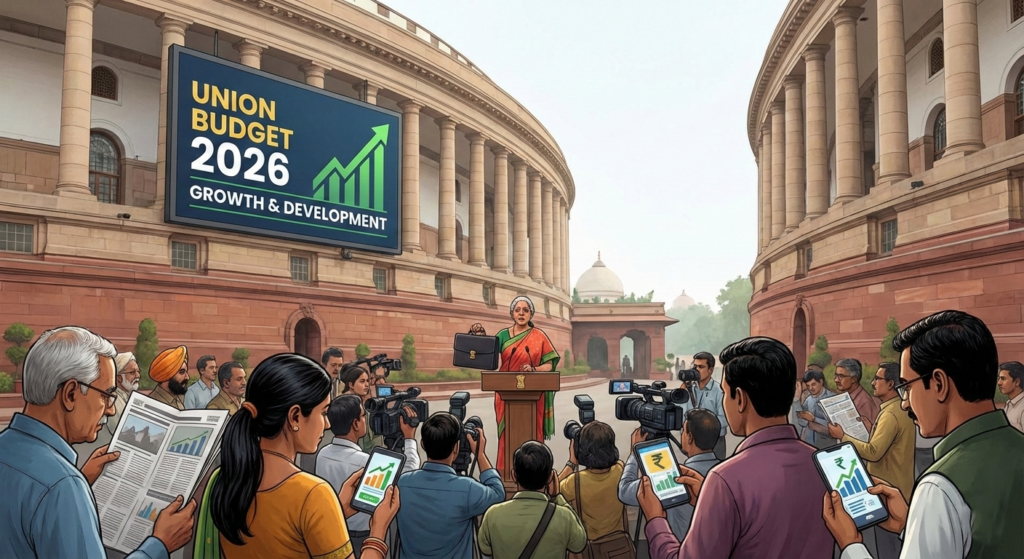
Imagine you are sitting at your kitchen table on a quiet morning. You are looking at your monthly bills and your salary. You decide how much to spend on food and how much to save for a rainy day. Consequently, the Indian Union Budget is essentially this exact process for the whole country. It is the most important financial event for over 1.4 billion people. Specifically, the Indian Union Budget shows how the government earns money and where it spends it to keep the nation running.
Furthermore, this document is not just for experts or rich investors. It affects the price of your milk and the tax you pay on your salary. Therefore, understanding the Indian Union Budget is key to managing your own money. In this guide, we will break down the complex parts into simple ideas. Also, we will use clear words to explain everything. We will reveal how the Indian Union Budget keeps the country moving forward toward a brighter future.
Why the Indian Union Budget Matters to Your Daily Life
Every year on February 1st, the Finance Minister gives a big speech in Parliament. Most people wait to hear about income tax. However, the impact of the Indian Union Budget is much wider than just taxes.
The Effect on Your Job and Costs
When the government builds new roads, it creates many jobs for engineers and laborers. Consequently, more people have money to spend at local shops and services. This helps the whole economy grow. In contrast, if the Indian Union Budget raises taxes on fuel, everything becomes more expensive. This is because trucks need fuel to carry food to the market. So, the budget can change the price of your lunch in a very short time.
The Impact on Your Savings
Moreover, the stock market usually moves a lot during the Indian Union Budget. Investors like to see clear plans for the future. If the Indian Union Budget supports new technology, tech stocks might go up. Similarly, a focus on farming can help companies that make tractors or seeds. Thus, your small savings in mutual funds can grow or shrink based on these rules. Indeed, you should watch the budget to see where to put your money safely.
Decoding the Two Main Parts of the Indian Union Budget
To understand the Indian Union Budget, you must know about the two big buckets the government uses. Specifically, these are the Revenue Budget and the Capital Budget.
1. The Revenue Budget: Daily Running Costs
Think of this as the “maintenance” money for the country. First, let’s look at Revenue Receipts. This is the money the government gets from taxes like GST and Income Tax. Second, we have Revenue Expenditure. This is the money spent on salaries for teachers and police. Also, it pays for subsidies on food and gas. Consequently, this money is spent to keep things running every day. However, it does not build new things that last for many years.
2. The Capital Budget: Building the Future
In contrast, the Capital Budget is about long-term growth. First, it includes Capital Receipts. This is money the government borrows or gets from selling shares in big companies. Second, we have Capital Expenditure (CapEx). Specifically, this money builds big things like airports, power plants, and railways. Furthermore, recent versions of the Indian Union Budget have focused a lot on CapEx. Therefore, the government is trying to build a stronger India for the next generation.
A Quick History: How the Indian Union Budget Changed Over Time
The Indian Union Budget has a very long and interesting story. Initially, it started during the British rule in 1860. However, it changed a lot after India became free in 1947.
The Early Years of Freedom
Initially, the budget focused on making India self-reliant. Then, in 1950, the government started Five-Year Plans. Consequently, the Indian Union Budget was used to build big factories and dams. Also, the Railway Budget used to be separate from the main one. But, in 2017, the government merged it into the main Indian Union Budget. Thus, now we have one big plan for everything.
The Big Change in 1991
Furthermore, we must talk about the year 1991. At that time, India was running out of money. So, the Indian Union Budget opened up the economy to the world. Consequently, global brands started coming to India. Indeed, this was the moment India started to become a global leader. Now, the Indian Union Budget is watched by the whole world every year.
The Secret Process of Making the Indian Union Budget
Making the Indian Union Budget is a very secret task. Actually, it takes many months of hard work behind closed doors.
1. Asking for Money
First, every department tells the Finance Ministry how much money they need. Then, the Finance Minister meets with different groups. Specifically, they talk to farmers, business owners, and teachers. Consequently, they try to balance everyone’s needs.
2. The Halwa Ceremony
Next, there is a famous tradition called the Halwa Ceremony. Specifically, the staff eats a sweet dish to celebrate the start of printing. Following this, about 100 officials are locked in a basement in the North Block. Furthermore, they cannot go home or call anyone for several days. This is done to prevent any leaks of the Indian Union Budget before the big day. Truly, it is like a high-security mission.
3. The Big Speech
Finally, on February 1st, the speech happens in Parliament. Initially, the Minister talks about the big goals for the year. Then, they announce the new tax rules. As soon as the speech ends, the Indian Union Budget is put online for everyone to read. Consequently, you can check the details on your phone immediately.
Understanding the Fiscal Deficit in Simple Terms
You might hear the term “Fiscal Deficit” on the news during the Indian Union Budget. So, what does it actually mean for you?
The Simple Math
Specifically, it is the gap between what the government earns and what it spends. For example, if the government earns ₹100 but spends ₹105, the deficit is ₹5. Therefore, the government must borrow that ₹5 from banks or the public.
Why It Matters
However, borrowing too much can be bad. Specifically, it can lead to higher prices for everything. Also, if the government takes all the loans, there is less money for private businesses. Thus, the Indian Union Budget tries to keep this deficit low. Indeed, a low deficit means the country is in good financial health. Consequently, foreign companies feel safer investing in India.
Your Taxes and the Indian Union Budget
For most people, the Indian Union Budget is all about tax. Specifically, there are now two ways to pay your income tax.
The Old Tax Regime
First, we have the Old Regime. This allows you to reduce your tax if you save money. For example, you can save on tax by paying for life insurance. Also, you can get benefits for your home loan. However, the tax rates in this system are a bit higher.
The New Tax Regime
Second, we have the New Regime. This system has much lower tax rates. But, you cannot claim most deductions or savings. Specifically, the recent Indian Union Budget has made the New Regime the default choice. So, if you don’t want to deal with a lot of paperwork, this might be better for you. Consequently, you should compare both before you choose.
How Different Sectors Win in the Indian Union Budget
Each year, the Indian Union Budget picks certain areas to support. Specifically, these are called “priority sectors.”
1. Helping Farmers
First, agriculture is always a big part of the plan. Specifically, the government provides cheap loans and better seeds. Also, they spend money on digital tools for villages. Consequently, farmers can sell their crops for better prices online. Indeed, this helps half of India’s population earn more.
2. Boosting Technology and AI
Second, the budget focuses a lot on startups and AI. Specifically, the government gives tax breaks to new tech companies. Furthermore, they are building “Digital Public Infrastructure.” This includes things like UPI, which makes paying for tea easy. Thus, the Indian Union Budget is making India a tech superpower.
3. Green Energy Goals
Third, there is a big push for “Green Growth.” Specifically, the government gives subsidies for electric cars. Also, they support solar power for homes. Consequently, this helps protect the environment and creates new “green” jobs. So, if you want a job in the future, look at the solar sector.
How to Read the Indian Union Budget Like an Expert
The Indian Union Budget can be hundreds of pages long. However, you don’t need to read all of it. Specifically, you can follow these three easy steps to find what you need.
1. Check the “Budget at a Glance”
First, look for a small document called “Budget at a Glance.” This has simple charts and big numbers. Specifically, it shows the “Rupee Comes From” and “Rupee Goes To” circles. Consequently, you can see where the most money is spent in just one minute.
2. Look for Sector Allocations
Second, find the part about your industry or job. For example, if you are a teacher, look for the “Education” section. If the budget for your sector goes up, it usually means more growth and better jobs. In contrast, if the budget is cut, you might need to be careful with your spending.
3. Read the Tax Highlights
Third, look for the “Key Features” of the tax proposals. Specifically, check if the tax-free limit has gone up. Also, look for any new rules on GST. Consequently, you will know exactly how much money will stay in your pocket next year.
Unique Insights: What Most People Miss in the Budget
There are often small things in the Indian Union Budget that are very important. Specifically, these are hidden gems for smart people who want to grow their money.
Support for Small Businesses
Furthermore, the budget often helps MSMEs (small shops and factories). For instance, the government might make it easier to get a loan without security. Also, they might reduce the number of forms you need to fill. Thus, if you want to start a shop, the Indian Union Budget can be your best friend.
Improving Life in Cities
Similarly, the budget often allocates money for clean water and better waste management. Specifically, this makes your city a better place to live. Indeed, good infrastructure increases the value of your home. So, the Indian Union Budget even helps you grow your property wealth over time.
Practical Tips to Prepare for the Indian Union Budget
You should not wait for the budget to happen. Instead, you should be ready for it. Specifically, here is what you can do.
1. Review Your Current Tax Saving
First, look at your current investments. If the Indian Union Budget changes the rules, you might need to move your money. Also, talk to a financial advisor about the “New Tax Regime.” Consequently, you will be ready to act as soon as the speech ends.
2. Keep an Eye on Interest Rates
Second, the Indian Union Budget affects how much the government borrows. If they borrow too much, interest rates on home loans might go up. Therefore, you should plan your big purchases like a car or house carefully. Indeed, a well-timed loan can save you lakhs of rupees.
The Social Side: Helping Every Citizen
The Indian Union Budget is not just about numbers and business. Actually, it is about people and their well-being.
Healthcare for All
Specifically, the budget funds big health schemes like Ayushman Bharat. This helps poor families get free treatment in hospitals. Also, it helps build new clinics in small villages. Consequently, the Indian Union Budget saves lives every single day.
Education and Skills
Furthermore, the budget spends a lot on the “Skill India” mission. Specifically, it teaches young people how to code or fix machines. So, they can find better jobs in modern factories. Thus, the Indian Union Budget is building a smarter workforce for the future.

Why the Indian Union Budget is a Tool for National Security
The Indian Union Budget also plays a big role in protecting our borders. Specifically, a large portion of the money goes to the Defense Ministry.
Buying Modern Equipment
Furthermore, the government uses this money to buy new jets and submarines. Also, they spend it on making weapons in India. Consequently, we don’t have to rely on other countries as much. Therefore, the Indian Union Budget makes our country safer.
Helping Soldiers
Moreover, the budget pays for the salaries and pensions of our brave soldiers. Specifically, it ensures that they and their families are well taken care of. So, when you see the budget numbers, remember they also mean a stronger army. Indeed, the safety of the nation depends on these financial plans.
The Role of States in the Indian Union Budget
Most people forget that the Indian Union Budget is not just about the Central Government. Actually, it helps every state in India grow.
Sharing the Tax Money
Specifically, the Center gives a large share of its taxes to the State Governments. Consequently, states like Karnataka or Bihar get money for their own roads and schools. Furthermore, the Finance Commission decides how this money is split. Thus, the Indian Union Budget is a partnership for progress.
Special Loans for States
Also, the budget often gives interest-free loans to states for 50 years. Specifically, these loans are for big infrastructure projects. Consequently, this encourages states to build things that help the local economy. Indeed, this is how the whole country moves forward together.
Looking to 2030: The Future of the Indian Union Budget
As we go forward, the Indian Union Budget will change even more. Initially, it was a paper document. Now, it is fully digital.
AI and Data Integration
Specifically, the government is using AI to find tax cheats. Consequently, honest people might pay less tax in the future. Also, the government can see exactly which projects are working and which are not. Therefore, your tax money will be used much better.
A Global Economic Leader
Moreover, India wants to be a “Developed Nation” by 2047. So, every Indian Union Budget from now on will focus on high-speed growth. Specifically, this means more airports, better trains, and world-class cities. Truly, it is an exciting time to be an Indian citizen.
Common Myths About the Indian Union Budget
There are many things people get wrong about the budget. Specifically, let’s clear up a few myths.
Myth 1: It Only Affects the Rich
In contrast, the budget touches everyone. Specifically, even if you don’t pay income tax, you pay GST on everything you buy. Consequently, a change in the budget affects your monthly grocery bill.
Myth 2: Everything Becomes Expensive
Actually, that is not always true. Furthermore, the government often reduces taxes on things they want people to buy. For example, they might make electric cars or solar panels cheaper. Therefore, some things might actually become more affordable after the Indian Union Budget.
Summary of Key Terms to Know
| Term | Simple Meaning |
| Fiscal Deficit | The extra money the government needs to borrow. |
| Direct Tax | Tax you pay on your income. |
| Indirect Tax | Tax you pay when you buy a chocolate or a phone (like GST). |
| CapEx | Spending money on big things like roads and bridges. |
| Subsidy | Financial help from the government to keep prices low. |
Final Thoughts: Staying Informed
In summary, the Indian Union Budget is the master plan for India’s growth. It tells us how the country will spend its money and reach its goals. Specifically, it affects your job, your taxes, and your daily costs. By understanding this document, you can make better choices for your own family.
Furthermore, remember that:
The Budget is a guide: It shows where the new jobs will be.
The Budget is a tool: It helps you save more tax.
The Budget is for everyone: From the farmer to the CEO, everyone is included.
Ultimately, being an informed citizen is your biggest strength. So, next time the Finance Minister stands up on February 1st, you will know exactly what to look for. Use this knowledge to build a secure and happy financial life.
About the Author