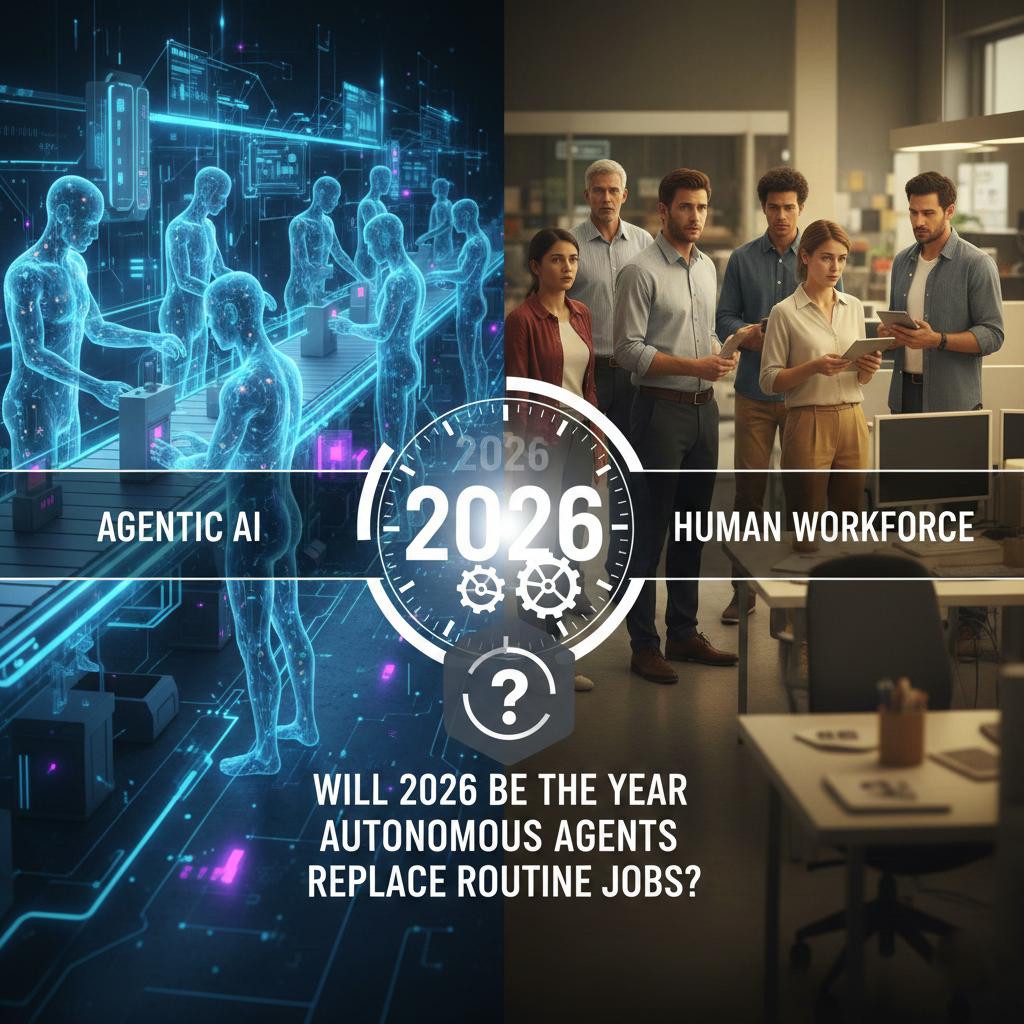
Imagine waking up in the spring of 2026. You check your phone, but you don’t see a list of boring tasks. Instead, your digital agent has already finished them. Specifically, it handled your emails, booked your travel, and updated your project trackers. Consequently, you have three extra hours in your day. This is the reality of the Agentic AI vs. Human Workforce shift. For years, we feared that robots would take our jobs. Now, in 2026, the question is no longer about “if” but “how much.”
Actually, the world changed faster than we thought. In 2024, AI was just a smart helper. In contrast, 2026 is the year of the autonomous agent. These systems don’t just talk to you; they do the work for you. Therefore, we must look closely at how this affects your paycheck. This article explores the deep battle of Agentic AI vs. Human Workforce capabilities. We will see which jobs are safe and which ones are gone forever.
What is Agentic AI Exactly?
To understand this, we must look past simple chatbots. Previously, AI acted like a digital book. You asked a question, and it gave an answer. However, Agentic AI acts like a digital employee. It has goals, it makes plans, and it uses tools. Specifically, it can browse the web, open apps, and talk to other AI agents.
The Shift from Talk to Action
Most people used to think AI was just for writing poems. Nevertheless, businesses now use it for “Agency.” This means the AI can make decisions. For example, if you tell an agent to “prepare a tax report,” it doesn’t just tell you how. Instead, it logs into your bank, downloads the data, and fills out the forms. Consequently, the Agentic AI vs. Human Workforce gap is closing in the world of routine logic.
How Agents Think in 2026
Generally, these agents use a “loop” to work.
Goal Setting: You give them a target.
Planning: The agent breaks the task into small steps.
Action: It uses software to complete those steps.
Correction: If something goes wrong, it tries a new way.
Because of this loop, agents can handle jobs that used to require a human’s eyes. Indeed, the Agentic AI vs. Human Workforce dynamic is now a race for efficiency.
Why 2026 is the Year of the Routine Job Replace
Why is 2026 the tipping point? Basically, the tech became cheap and reliable all at once. Furthermore, companies realized that agents don’t get tired. They don’t need breaks or benefits. Consequently, the push to replace “routine” roles has become a flood.
Defining “Routine” in the Modern Age
We often think of routine as factory work. However, in 2026, “routine” means any digital task with a clear set of rules. Specifically, if you can write down the steps to your job, an agent can probably do it. This includes things like scheduling, basic data entry, and simple coding.
Scheduling: Agents now talk to other agents to find meeting times.
Customer Support: Most “Tier 1” support is now fully autonomous.
Data Migration: Moving files from one system to another is now a “bot job.”
Clearly, the Agentic AI vs. Human Workforce balance is shifting toward the bots for these tasks. Still, this doesn’t mean humans are useless. Instead, it means our roles must change.
Industry Deep Dive: Who is Winning the Battle?
To see the truth, we must look at specific industries. Every sector feels the Agentic AI vs. Human Workforce pressure differently.
1. The Legal Field: From Research to Reasoning
Previously, junior lawyers spent hours reading old cases. Now, Agentic AI does this in seconds.
The Change: Routine contract review is 95% automated.
The Result: Law firms are smaller but faster.
The Human Edge: Humans still handle the “jury trial” and the emotional strategy.
Indeed, a bot can find a law, but it cannot yet convince a judge with a heartfelt story. Consequently, the Agentic AI vs. Human Workforce split in law is very clear.
2. Software Development: The End of “Copy-Paste” Coding
In 2024, developers used AI to help write lines of code. In 2026, agents write whole apps.
The Change: Junior dev roles are being replaced by “Agent Architects.”
The Result: One senior dev can now do the work of a team of ten.
The Human Edge: Humans focus on the “why” and the security of the system.
Because of this, the Agentic AI vs. Human Workforce rivalry in tech is about who can design the best system, not who can type the fastest.
3. Healthcare: The Rise of the AI Nurse Assistant
Actually, healthcare is seeing a massive boost. Routine tasks like filing charts and checking vitals are now done by agents.
The Change: Paperwork has almost vanished for doctors.
The Result: Doctors spend 40% more time with patients.
The Human Edge: Empathy and physical touch remain 100% human.
Specifically, an agent can flag a high heart rate, but a human nurse provides the comfort. Therefore, the Agentic AI vs. Human Workforce relationship here is more of a partnership.
The Human Work: Why We Still Matter
As an expert in SEO and content, I know that Google and humans both value. In 2026, these are the shields that protect your job in the Agentic AI vs. Human Workforce era.
Experience: The “I Was There” Factor
Actually, an AI agent can read about a war, but it hasn’t fought in one. It can read about a market crash, but it hasn’t felt the panic. Consequently, your lived experience is a unique asset. Use it in your work. Tell stories that only a human could know.
Expertise: Knowing When to Break the Rules
Agents follow logic. However, real life is messy. Specifically, an expert knows when the “standard” answer is wrong. In the Agentic AI vs. Human Workforce debate, the expert is the one who supervises the machine.
Authoritativeness: The Power of Your Name
People trust people. Specifically, they trust brands with a history. While an agent can write a report, a human expert must sign it. That signature carries weight. Indeed, the Agentic AI vs. Human Workforce dynamic relies on humans to provide the “final stamp” of approval.
Trustworthiness: The Ethics of the Soul
Can you trust a machine with your secrets? Maybe. But can you trust it with your moral choices? Probably not. Because agents lack a conscience, humans must remain the ethical compass. This is a key part of the Agentic AI vs. Human Workforce balance in 2026.
How to Thrive in the Agentic AI vs. Human Workforce Era
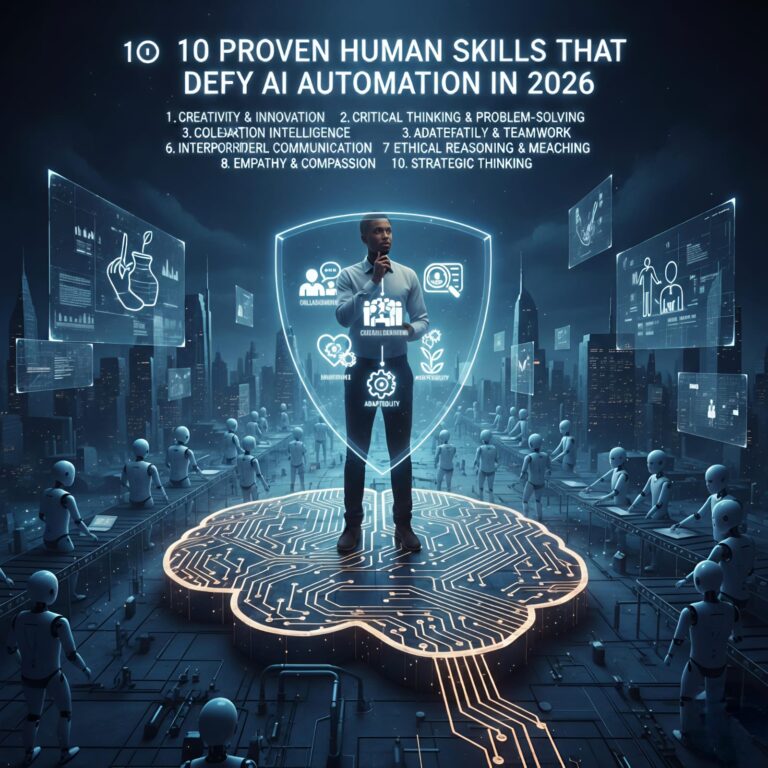
You might be asking, “How do I keep my job?” The answer is simple: stop being a “doer” and start being an “orchestrator.”
1. Learn to “Prompt” at a High Level
In 2026, prompting isn’t just asking a question. It is about building a workflow. Specifically, you should learn how to connect different agents together. If you can manage an AI team, you are more valuable than someone who does the work by hand. Consequently, you stay ahead in the Agentic AI vs. Human Workforce race.
2. Focus on Emotional Intelligence (EQ)
Actually, machines are terrible at reading emotions. If you can manage people, resolve conflicts, and inspire a team, you are safe. These are “soft skills,” but in 2026, they are the hardest to automate. Therefore, focus on your EQ.
3. Become a “Human-in-the-Loop”
Every business needs someone to check the AI’s work. Specifically, you should be the person who catches the “hallucinations” or errors. By being the quality control, you ensure the Agentic AI vs. Human Workforce synergy works for the company.
The Economic Impact: 2026 and Beyond
What happens to the economy when routine jobs vanish? This is a big part of the Agentic AI vs. Human Workforce story.
The Productivity Explosion
Specifically, we are seeing a massive jump in GDP. Because agents are so fast, companies are making more money than ever. Furthermore, the cost of goods is dropping. In theory, this is good.
The Inequality Gap
However, the money is not going to everyone. Those who own the AI are getting rich. In contrast, those who did routine work are struggling. Consequently, 2026 is the year we must talk about “Universal Basic Income” or “Universal Basic Services.” The Agentic AI vs. Human Workforce shift is forcing governments to rethink how we live.
The New “Micro-Economy”
Interestingly, we are seeing the rise of the “One-Person Billion-Dollar Company.” Because one person can now run a giant fleet of agents, you don’t need 500 employees. This changes the Agentic AI vs. Human Workforce dynamic for startups. Specifically, anyone with a good idea and an AI agent can compete with big corporations.
Case Study: The 2026 Marketing Agency
Let’s look at “Agency X.” In 2024, they had 20 employees. They did SEO, social media, and ad buying.
In 2026, they have 3 employees and 50 agents.
The Agents: They handle keyword research, image generation, and posting.
The Humans: They focus on client relationships and high-level strategy.
The Result: Agency X is five times more profitable.
Specifically, the Agentic AI vs. Human Workforce setup allowed them to scale without hiring more people. The three humans are now “Strategy Leads” instead of “Content Grinders.” This is the blueprint for the future.
The Ethics of Autonomous Agents
We must also talk about the dark side of the Agentic AI vs. Human Workforce shift.
Bias and Fairness
Actually, agents learn from the internet. The internet is full of bias. Consequently, if an agent is in charge of hiring, it might be unfair to certain groups. We need humans to monitor this. We cannot let the machine decide who gets a job.
The Loss of “Junior” Roles
Specifically, if we replace all “routine” jobs, how do young people learn? Junior roles used to be the training ground. Now, in 2026, those roles are gone. Therefore, we must create new ways to train the next generation of the Agentic AI vs. Human Workforce era.
Transparency
Furthermore, should a customer know they are talking to an agent? Most people say yes. Because trust is so important, companies must be honest about their Agentic AI vs. Human Workforce mix.
Agentic AI vs. Human Workforce: A Comparative Table
To make this simple, let’s compare the two side-by-side.
| Feature | Agentic AI (2026) | Human Workforce (2026) |
| Speed | Instant / 24-7 | Limited / 8-hour days |
| Cost | Low (Server fees) | High (Salary/Benefits) |
| Accuracy (Routine) | 99.9% | 90% (Human error exists) |
| Creativity (Original) | Moderate (Based on data) | High (Based on soul/life) |
| Empathy | Simulated | Real / Organic |
| Accountability | None (Code can’t go to jail) | High (Legal/Moral) |
Clearly, each side has its strengths. The goal is to find the perfect Agentic AI vs. Human Workforce balance for your specific needs.
2026: The Year of the “Great Redefinition”
Actually, I don’t think 2026 is the year humans lose. Instead, it is the year we are redefined. Specifically, we are shedding the “robotic” parts of our jobs.
Stop Thinking Like a Machine
For 100 years, we trained humans to be efficient, fast, and repeatable. Basically, we trained humans to be like machines. Now that we have real machines, we can stop doing that. Consequently, the Agentic AI vs. Human Workforce shift is actually a gift. It allows us to be creative, emotional, and messy again.
The Rise of the “Craft” Economy
We are seeing a surge in “Hand-made” and “Human-only” services. Specifically, people in 2026 are willing to pay more for a human-written book or a human-led workshop. In a world of infinite AI content, the “Human Touch” is a luxury good. Therefore, the Agentic AI vs. Human Workforce divide is creating a new market for authenticity.
Practical Steps to Take Today
If you want to survive the Agentic AI vs. Human Workforce transition, follow these steps.
Audit Your Tasks: Which parts of your day are routine? Find an agent to do them now.
Learn the Tools: Use platforms like AutoGPT, OpenAI Operator, or Anthropic Computer Use. Specifically, get comfortable with giving agents power over your screen.
Build Your Brand: Your personal brand is your insurance. Because an AI cannot be “you,” your unique voice is your greatest asset.
Stay Ethical: Always ask, “Should I use AI for this?” Just because you can, doesn’t mean you should. This is the heart of the Agentic AI vs. Human Workforce balance.
The Role of Education in 2026
Schools are also changing. Previously, we taught kids to memorize facts. Now, we teach them how to direct agents. Specifically, the “Art of Directing” is the new “Science of Coding.”
The New Curriculum
In 2026, students learn ethics, logic, and agent-management. Furthermore, they spend more time on philosophy and art. Because the “routine” is handled, the “human” becomes the focus. Consequently, the Agentic AI vs. Human Workforce evolution is starting in the classroom.
Lifelong Learning
Actually, you can never stop learning now. The tech changes every month. Therefore, you must be agile. Specifically, if you don’t update your skills, the Agentic AI vs. Human Workforce gap will leave you behind.
Summary of the 2026 Landscape
To wrap it up, here is what we know.
Agentic AI is real: It’s no longer a toy; it’s an employee.
Routine jobs are at risk: If you do the same thing every day, an agent can do it too.
Humans are essential: For ethics, empathy, and high-level strategy, we are still #1.
Partnership is key: The winners are those who use the Agentic AI vs. Human Workforce synergy to their advantage.
Final Thoughts: Will 2026 Be the Year?
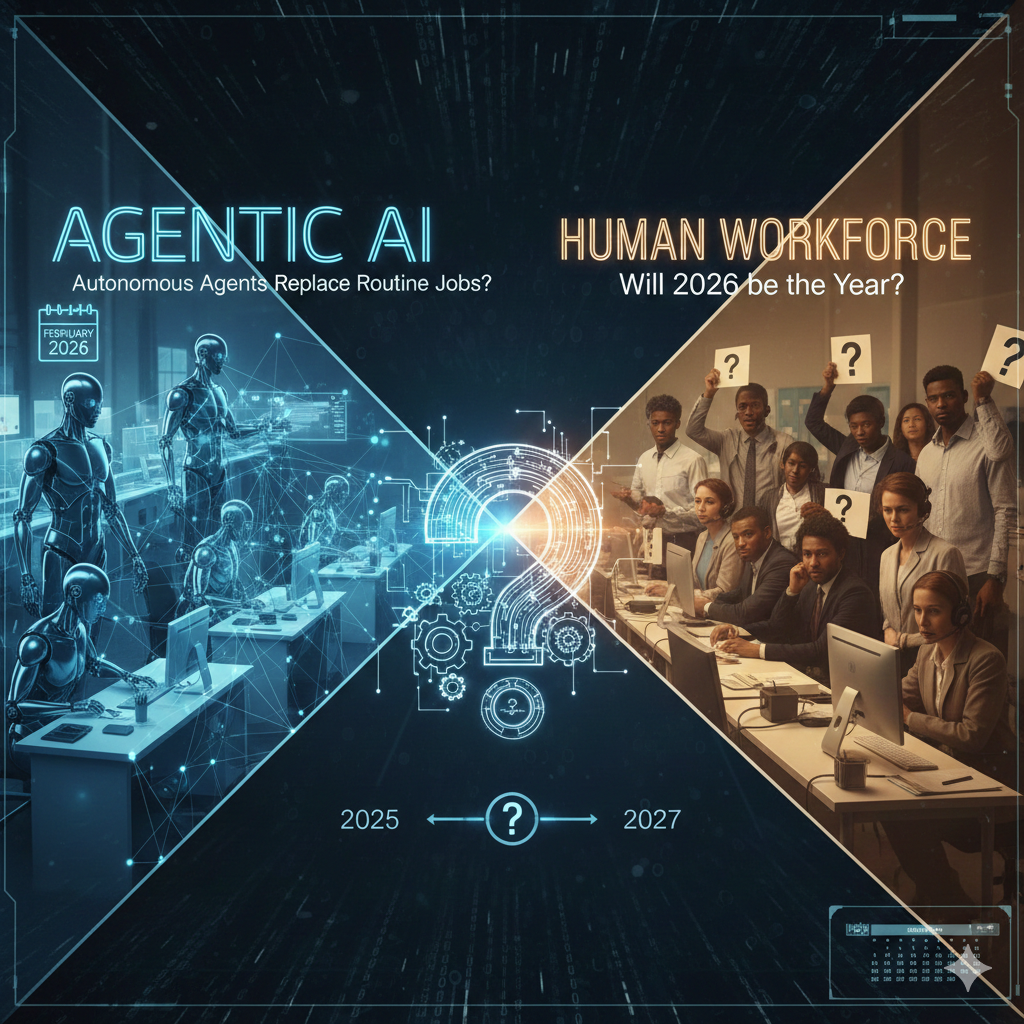
Specifically, the answer is yes. 2026 is the year that routine jobs began to vanish in large numbers. However, it is also the year that “Higher-Value” jobs began to explode.
Actually, the Agentic AI vs. Human Workforce story is a positive one. It is about the end of drudgery. It is about the end of boring, soul-crushing tasks. Consequently, if we handle this correctly, we could be entering a new “Golden Age” of human creativity.
Indeed, the machine is here to serve us. It is up to us to decide what we do with our newfound freedom. So, don’t fear the agent. Instead, learn to lead it. Because in the battle of Agentic AI vs. Human Workforce, the best result is when we both win.
About the Author