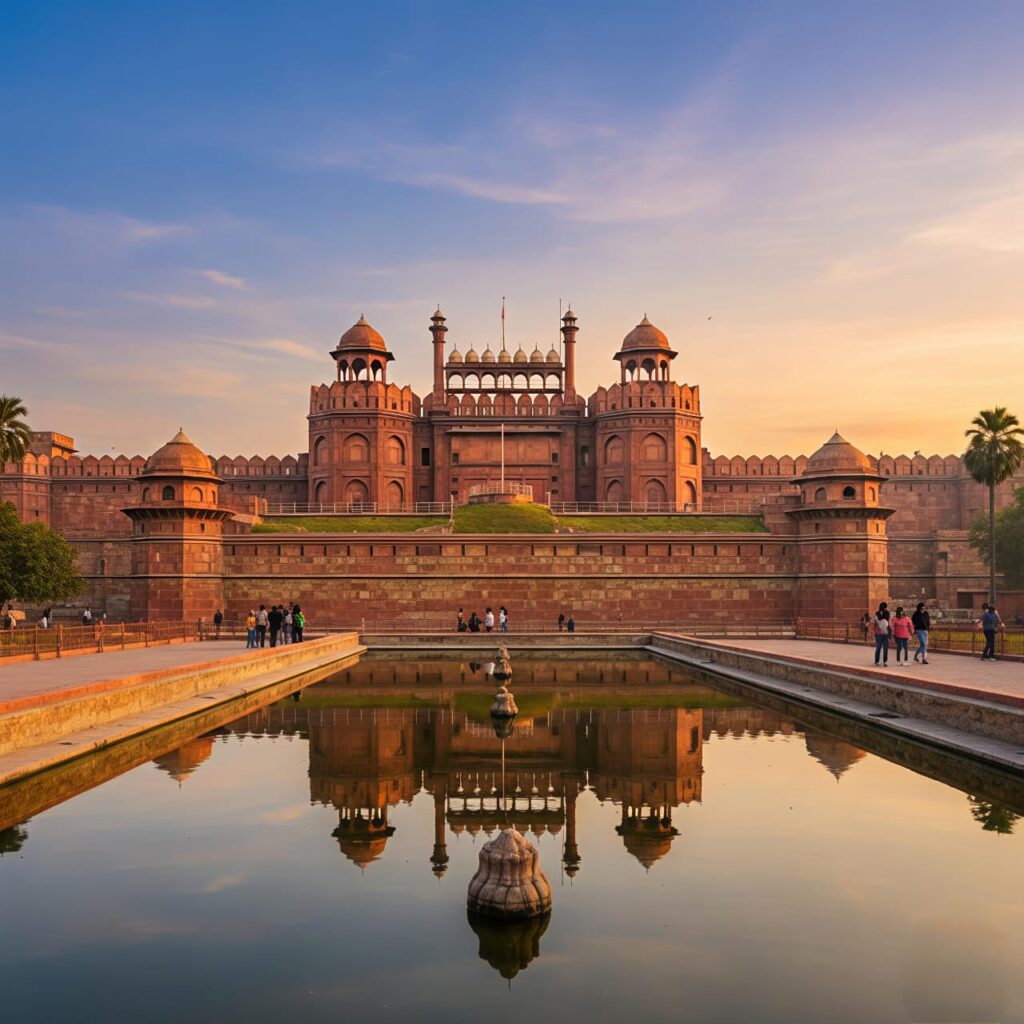
The Red Fort stands as a magnificent testament to India’s golden age. While many people see it as just a monument, it actually represents the peak of Mughal creativity. Emperor Shah Jahan commissioned this massive structure in 1638. Since then, the fort has witnessed the rise and fall of empires. Today, it remains a powerful symbol of national pride and architectural brilliance.
Why the Red Fort Matters Today
You might wonder why this 17th-century fortress still captures the world’s imagination. Firstly, its vibrant red sandstone walls dominate the skyline of Old Delhi. Secondly, the fort serves as the primary stage for India’s Independence Day celebrations. Consequently, it bridges the gap between ancient royal traditions and modern democratic values.
Historians often describe the Red Fort as the “Lal Qila.” This name perfectly captures its fiery aesthetic. However, the fort is much more than a military defensive structure. It was a self-contained city that housed thousands of people. Therefore, understanding the Red Fort requires looking beyond the walls and into the daily lives of its former inhabitants.
The Vision of Shah Jahan: A New Capital
When Shah Jahan decided to move his capital from Agra to Delhi, he wanted a palace that reflected his divine right to rule. Consequently, he chose a site along the banks of the Yamuna River. This location provided both a natural defense and a reliable water source.
The Construction Process
Architects Ustad Ahmad Lahori and Ustad Hamid led the design team. Interestingly, they are the same geniuses who designed the Taj Mahal. They blended Persian, Timurid, and Hindu traditions to create a unique “Mughal style.” Because they used high-quality red sandstone, the fort earned its iconic name.
Construction took nearly a decade to complete. During this time, workers carved intricate marble and laid precious gemstones into the walls. As a result, the interior of the fort originally shimmered with gold and silver accents. Although much of this wealth was later looted, the architectural skeleton remains breathtaking.
Exploring the Majestic Gates
Every visitor enters the Red Fort through its massive gateways. These entrances served as the first line of defence against invaders.
Lahori Gate: The Main Entrance
The Lahori Gate is the most famous entrance. It faces the city of Lahore, which is now in Pakistan. Nowadays, the Prime Minister of India addresses the nation from the ramparts of this gate every August 15th.
Delhi Gate: The Southern Entry
Conversely, the Delhi Gate served as the public entrance. It features two large stone elephants that guard the passage. While it is less famous than the Lahori Gate, its intricate carvings are equally impressive. Because of its southern orientation, it linked the fort to the older parts of the city.
Inside the Royal Enclosure
Once you pass through the gates, a world of luxury unfolds. The Mughals designed the interior to resemble a “Paradise on Earth.”
Chatta Chowk: The Royal Market
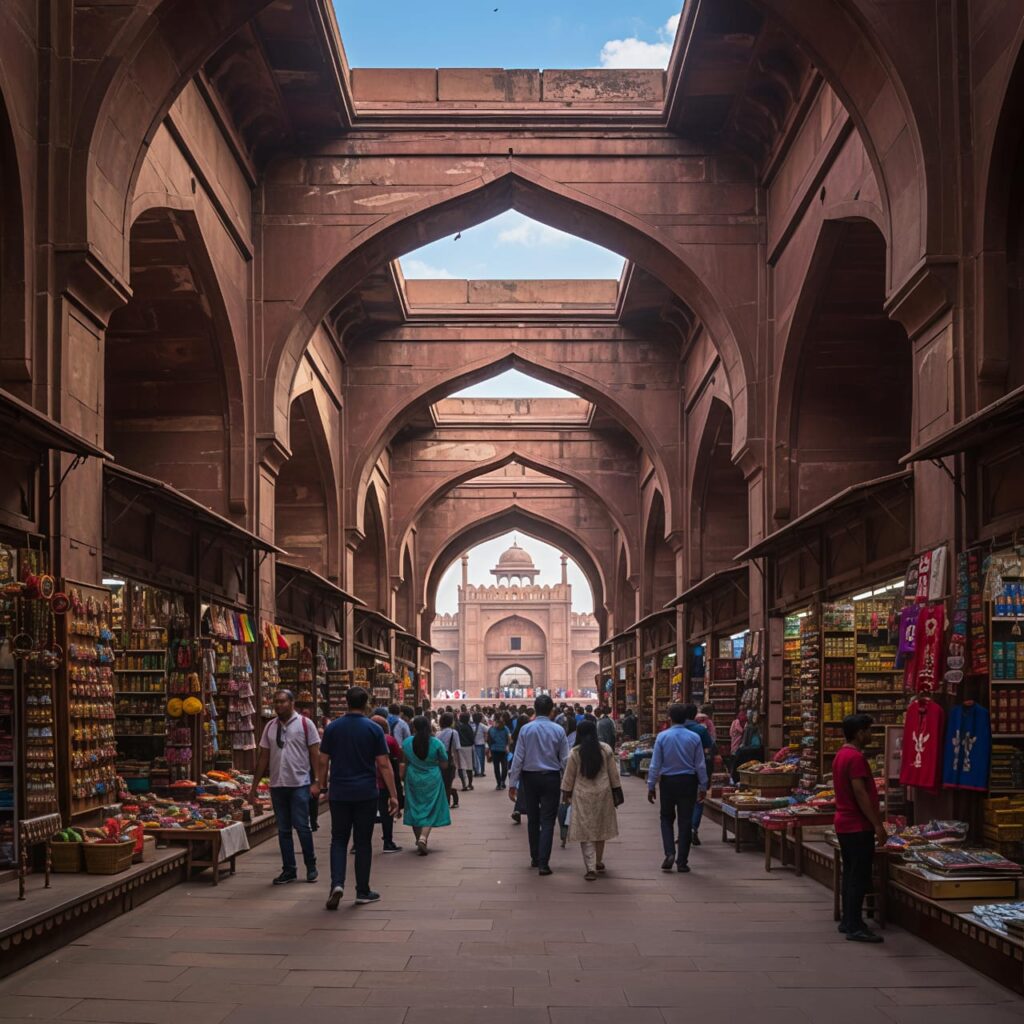
Immediately after the entrance lies the Chatta Chowk. Historically, this was a covered bazaar for the royal family. Today, vendors still sell handicrafts and souvenirs here. However, in the 1600s, merchants sold only the finest silks, jewels, and perfumes.
Diwan-i-Aam: The Hall of Public Audience
Moving further inside, you will find the Diwan-i-Aam. This is where the Emperor met with his subjects. The centerpiece is a magnificent marble throne. Because the Emperor wanted to be seen as a fair ruler, he sat in this elevated balcony to hear the grievances of the common people.
The Private Palaces: A Glimpse into Royalty
The private area of the fort consists of a row of pavilions. These buildings overlook the Yamuna River. Each palace had a specific purpose, ranging from entertainment to relaxation.
Diwan-i-Khas: The Hall of Private Audience
The Diwan-i-Khas is perhaps the most beautiful room in the entire complex. Here, the Emperor met with his ministers and foreign dignitaries. It once housed the legendary Peacock Throne, which was made of solid gold and encrusted with diamonds.
“If there is a heaven on earth, it is here, it is here, it is here.”
This famous Persian inscription is carved into the walls of this hall. It perfectly summarizes the opulence of the Mughal court.
Rang Mahal: The Palace of Colores
The Rang Mahal served as the residence for the Emperor’s wives. It was famous for its painted ceilings and a marble lotus-shaped fountain. Furthermore, a small canal called the Nahr-i-Bihisht (Stream of Paradise) flowed through the centre of the palace. This water system acted as a natural air conditioner, keeping the rooms cool during the scorching Delhi summers.
The Engineering Marvel: Nahr-i-Bihisht
The Mughals were master engineers. They designed a sophisticated water system that connected all the main pavilions. By drawing water from the Yamuna River, they created lush gardens and flowing streams inside the fort.
This system didn’t just provide beauty. It also served a practical purpose. Because the water was constantly moving, it remained fresh. Consequently, the air inside the palaces stayed significantly cooler than the air outside the fort walls.
The Decline and Colonial Impact
Unfortunately, the glory of the Red Fort did not last forever. In 1739, the Persian invader Nadir Shah plundered the fort. He took the Peacock Throne and many other treasures back to Iran. Later, the British took control of the fort after the 1857 Rebellion.
During the British occupation, many palace structures were demolished. They replaced the beautiful gardens with ugly colonial barracks. Despite this destruction, the core structures survived. Today, the Archaeological Survey of India (ASI) works tirelessly to restore these areas to their former splendour.
Practical Information for Travelers
If you plan to visit the Red Fort, you should keep a few things in mind.
Timing: The fort is open from Tuesday to Sunday. It remains closed on Mondays.
Best Time to Visit: Arrive early in the morning during the winter months (October to March).
Light and Sound Show: Every evening, a light and sound show narrates the history of the fort. It is a fantastic way to experience the stories of the past.
Entry Fees: Prices vary for Indian citizens and international tourists. Ensure you carry a valid ID.
Key Architectural Features to Watch For
When you walk through the fort, look for these specific details:
Pietra Dura: This is a technique of inlaying polished coloured stones into marble. You can see it clearly in the Diwan-i-Khas.
Jali Work: These are intricately carved stone screens. They provided privacy while allowing light and air to pass through.
Chhatris: These are umbrella-shaped domes that are typical of Indian architecture.
Conclusion: A Living Monument
The Red Fort is not merely a relic of the past. Instead, it is a living symbol of India’s identity. From the artistic dreams of Shah Jahan to the struggles for independence, these walls have seen it all. By visiting the fort, you aren’t just looking at old stones; you are walking through the chapters of a grand epic.
Whether you are a local resident or a global traveller, the Red Fort offers something for everyone. Its blend of power, beauty, and history makes it a mandatory stop on any journey through India.
About the Author