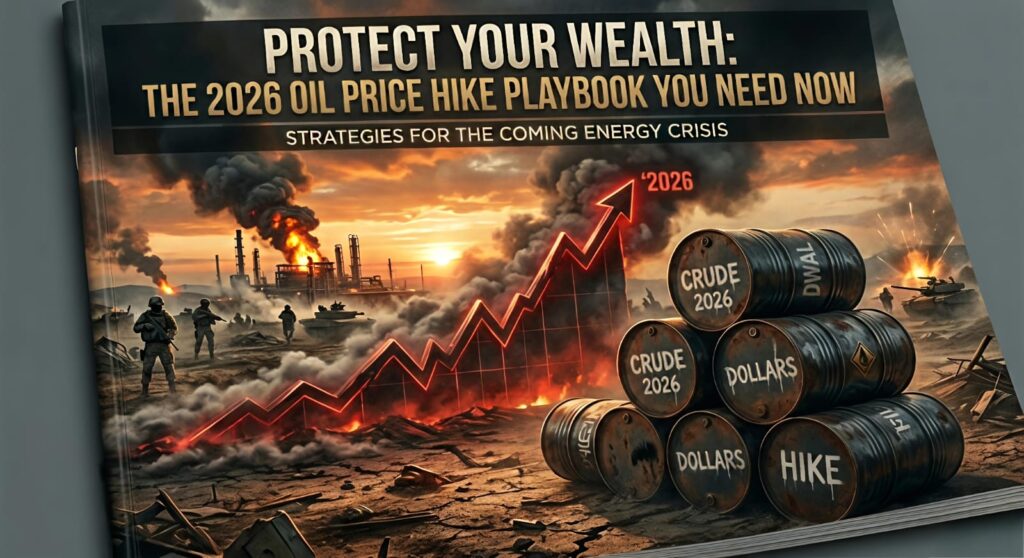
The morning of March 2, 2026, started with a shock for the world. Millions of people checked their phones to find a startling news alert. A massive crude oil price hike had just rocked the global markets. Within hours, the cost of Brent crude oil jumped past $90 per barrel. For the average person, this was not just a numbers game. It was a clear sign that life was about to get much more expensive.
In this guide, we will look deep into this crude oil price hike. We will explore why it happened and who is responsible. Furthermore, we will see how it changes the cost of your groceries and your commute. Most importantly, you will learn how to protect your bank account from this energy storm.
1. The Sudden Spark: Why Prices Jumped Today
Why did we see such a sharp crude oil price hike so quickly? To find the answer, we must look at a small strip of water. This is the Strait of Hormuz. Because nearly 20% of the world’s oil flows through this gap, any trouble there causes panic. This weekend, a series of military events closed the path for several hours.
The Fear Factor
Consequently, traders began to buy as much oil as possible. They feared that the supply would vanish. This “panic buying” is a main driver of the current crude oil price hike. Moreover, the tension between major nations in the Middle East is at a ten-year high. Because of this, the market is very jumpy.
Supply Chokepoints: The Strait of Hormuz and the Suez Canal are seeing delays.
War Premiums: Insurance for oil tankers has tripled this week.
Low Reserves: Many countries used up their emergency oil during the winter.
Therefore, the world has no safety net. When supply drops even a little, the crude oil price hike happens fast. It is a simple case of high demand meeting a very nervous supply chain.
2. The OPEC+ Decision: A Strategy for Profit
You might ask why other countries don’t just pump more oil. The answer lies with OPEC+. This group includes giants like Saudi Arabia and Russia. On March 1, they held a secret meeting. Instead of helping, they decided to keep their production low.
The Power of Scarcity
Specifically, they want to keep the crude oil price hike going. High prices mean more money for their national budgets. Consequently, they are ignoring the pleas from the US and Europe. Furthermore, they claim that the market is “volatile.” They argue that pumping more oil now could cause a crash later.
However, many experts disagree. They see this as a way to gain political leverage. Because the world still needs oil for 80% of its energy, OPEC+ holds all the cards. Thus, the crude oil price hike is partly a choice made in a boardroom.
3. How the Hike Hits Your Kitchen Table
The crude oil price hike is like a ghost. You cannot see it, but you can feel it everywhere. It starts at the gas pump. Then, it moves to the grocery store. Finally, it hits your utility bill.
The Hidden Cost of Transportation
Almost everything you own was once on a truck. Because trucks run on diesel, their costs are now much higher. Consequently, the company that ships your milk must charge more. Therefore, you pay an extra 50 cents for a gallon of milk.
Also, look at your plastic containers. Plastic comes from oil. Because of the crude oil price hike, the cost to make a shampoo bottle has gone up. Even your clothes are affected. Synthetic fibers like polyester are oil-based. Consequently, fast fashion will likely see a price jump by the summer.
4. The Inflation Trap: A Global Problem
Economists are worried about the “Wage-Price Spiral.” This happens when the crude oil price hike makes life too expensive. Because workers need more money to pay for gas, they ask for raises. Then, businesses raise prices again to pay for those raises.
Central Banks on Edge
The Federal Reserve is watching this closely. They had hoped to lower interest rates in 2026. However, this crude oil price hike might change their plans. Because high oil prices cause inflation, the Fed might keep interest rates high. Consequently, your credit card debt and mortgage could stay expensive for longer.
In contrast, some countries are trying to freeze prices. Specifically, France and Spain are considering new fuel subsidies. But these subsidies cost billions. Therefore, governments must borrow more money, which can lead to other long-term problems.
5. Regional Winners and Losers
The crude oil price hike does not hurt everyone equally. Some places are getting rich, while others are struggling to survive.
The Exporting Giants
Nations like the US, Saudi Arabia, and Brazil are seeing a boom. Because they produce more oil than they use, the crude oil price hike is good for their trade balance. Specifically, Texas is seeing a new “gold rush” as shale drillers return to the fields.
The Importing Victims
In contrast, India and Japan are in a tough spot. They import almost all of their oil. Consequently, the crude oil price hike drains their cash reserves. In India, the government is trying to balance the budget without making the public angry. This is a very difficult task. Moreover, many developing nations in Africa are facing blackouts because they cannot afford fuel for their power plants.
6. Survival Guide: Saving Money at Home
You cannot stop the crude oil price hike, but you can change how you live. Small changes add up to big savings over time.
Smart Commuting
Check Your Tires: Low tire pressure uses more gas. Because of this, you should check them every week.
Slow Down: Driving at 55 mph instead of 70 mph can save you 15% on fuel. Consequently, you will visit the gas station less often.
Car-Pool: If you share a ride with two people, your fuel bill drops by 66%.
Energy Efficiency at Home
Next, look at your heating and cooling. Most people waste energy because of poor insulation. Specifically, you should seal the gaps around your doors. Because the crude oil price hike also affects heating oil and natural gas, your winter bills will be high. Therefore, a $20 roll of weather stripping can save you $200.
7. The Plastic and Tech Connection
We often forget that oil is not just fuel. It is a raw material. Because of the crude oil price hike, the tech industry is bracing for impact.
Your Smartphone’s Secret
Your phone contains many plastic parts. Furthermore, the chemicals used to clean circuit boards often come from petroleum. Consequently, companies like Apple and Samsung might raise prices for their next models. Similarly, the medical field uses vast amounts of plastic for syringes and IV bags. Because of this, even healthcare costs are linked to the crude oil price hike.
8. Investment Strategies: Making the Best of a Bad Situation
Some people see the crude oil price hike as an opportunity. If you have a retirement account, you can adjust your strategy to profit from the trend.
Energy Stocks
Specifically, look at “upstream” companies. These are the firms that find and pump the oil. Their profits grow very fast when prices rise. However, you must be careful. Because oil prices can also crash, you should not put all your money in one place.
The Green Alternative
Moreover, the crude oil price hike makes solar and wind energy look much better. When gas is expensive, people buy more electric cars (EVs). Consequently, companies that build charging stations are a smart long-term bet. Therefore, you can use this crisis to help build a cleaner future for your portfolio.

9. History Repeating: Is 2026 Like 1973?
To understand the 2026 crude oil price hike, we should look at history. In 1973, there was a famous oil embargo. Prices quadrupled in a few months. Because of this, people had to wait in long lines for gas.
Key Differences
However, 2026 is different in one big way. We have more choices now. In 1973, everyone drove gas-guzzling cars. Today, we have hybrids and EVs. Furthermore, we have much better technology to find new oil. Consequently, while the crude oil price hike is painful, it is unlikely to destroy the economy like it did in the 70s. We are more resilient today.
10. The Psychological Toll: Scarcity Mindset
There is also a mental side to the crude oil price hike. When people see high prices, they get scared. Consequently, they stop spending money on fun things like movies or dinners out. This “scarcity mindset” can lead to a recession.
Staying Calm
Therefore, it is important to stay informed but stay calm. Most spikes in oil prices do not last forever. Usually, the high price eventually kills the demand. People drive less, and then the price drops. This is the natural cycle of the market. Because of this, the crude oil price hike of March 2026 will eventually fade into history.
11. The Impact on Small Businesses
Small business owners are the “canaries in the coal mine” for the crude oil price hike. Unlike big corporations, they do not have massive cash reserves.
The Florist and the Baker
Consider a local florist. Because they deliver flowers in a van, their daily costs have doubled. Similarly, a baker uses an oven that may run on gas. Consequently, the price of a croissant must go up. If they don’t raise prices, they will go out of business. But if they do, customers might stay away.
Action Steps for Owners
Be Transparent: Tell your customers why prices are rising. People appreciate the truth.
Optimize Delivery: Use software to find the shortest routes.
Go Local: Try to find suppliers who are closer to your shop. This reduces the shipping cost caused by the crude oil price hike.
12. The Future of Aviation: Why Flights are Costing More
If you have a vacation planned for late 2026, be prepared. The airline industry is very sensitive to the crude oil price hike. Fuel is often their biggest expense.
The Return of the Surcharge
Most airlines are now adding “fuel surcharges” to their tickets. Because they buy fuel months in advance, you might not see the full hike today. However, by the summer, tickets will be much more expensive. Therefore, if you see a good price now, you should book it quickly. Furthermore, expect fewer flights on some routes. Airlines will cancel flights that are not full to save on gas.
13. Is This the End of the Internal Combustion Engine?
Many experts believe this crude oil price hike is the “final nail in the coffin” for gas cars. For years, people were on the fence about switching to electric.
The Turning Point
Now, the math is simple. If gas stays above $5 per gallon, an EV pays for itself in just three years. Consequently, car dealerships are seeing a surge in demand for electric models. Moreover, governments are using the crude oil price hike as a reason to build more charging stations. Thus, this crisis might actually help the planet in the long run.
14. Global Politics: The New Energy Alliances
The crude oil price hike is changing how countries talk to each other. Specifically, we are seeing new “energy blocks” forming.
The East-West Divide
Countries in the East are trading more with each other. For example, China is buying more oil from Russia and Iran. Because they can trade in their own currencies, they bypass the US dollar. Consequently, the crude oil price hike is weakening the power of the dollar on the global stage. This is a massive shift in world power.
15. The Role of Technology: Can AI Solve the Hike?
In 2026, artificial intelligence (AI) is being used to fight the crude oil price hike. Specifically, oil companies are using AI to find oil in places they missed before.
Efficiency Through Data
Furthermore, AI helps refineries run more smoothly. Because they waste less energy during the refining process, they can keep costs a bit lower. Also, smart grids use AI to balance energy use across cities. This reduces the need for oil-burning power plants during peak hours. Therefore, technology is our best weapon against the crude oil price hike.
Conclusion: Staying Ahead of the Curve
The crude oil price hike of 2026 is a major challenge. It affects your car, your food, and your future. However, you are not helpless. By understanding the causes—like the Strait of Hormuz and OPEC+—you can see the “why” behind the numbers.
By taking small steps at home and making smart moves in the market, you can survive this spike. Furthermore, keep an eye on the transition to green energy. Because the world is moving away from oil, these hikes will eventually become a thing of the past. For now, stay informed, stay efficient, and keep your budget tight.
About the Author