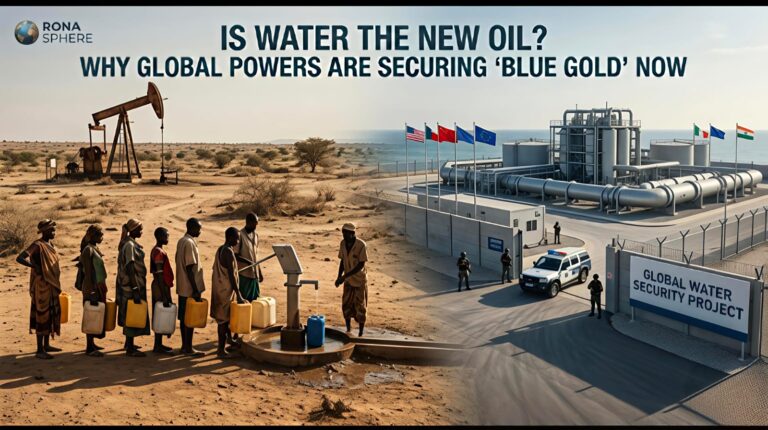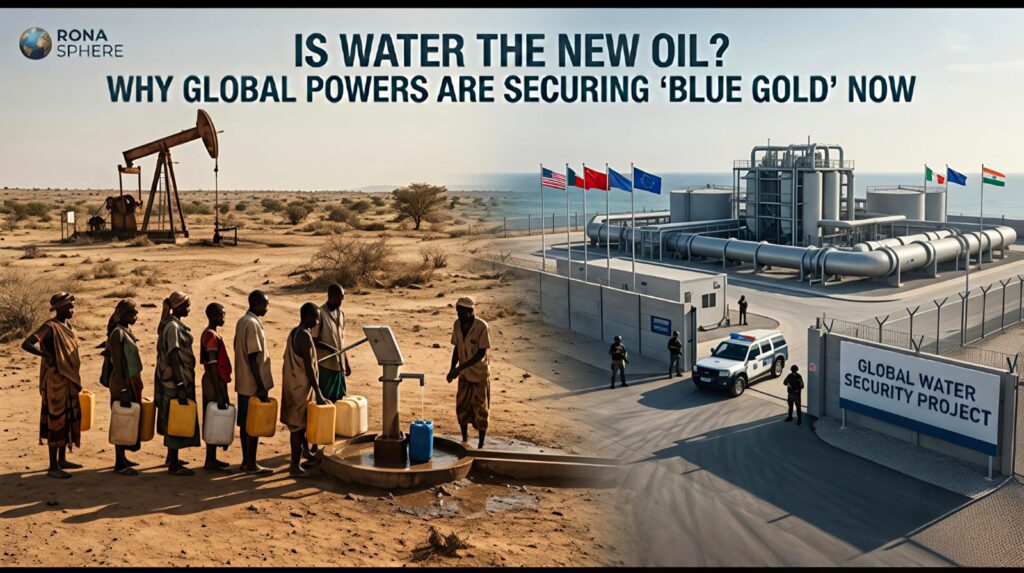
Imagine waking up to a world where a bottle of water costs more than a gallon of gas. Currently, this scenario is not just a bad dream. Specifically, a silent war is spreading across the entire globe. Experts now call this terrifying trend the Blue Gold Crisis. Furthermore, nations are no longer just fighting over oil or gold. Instead, global superpowers are hoarding fresh water faster than rare earth metals. Consequently, this hidden struggle will define the future of our planet. Therefore, you must understand why water has become the most valuable asset in the world today.
Ultimately, water represents life, wealth, and absolute power. Surprisingly, many people still view water as a free and infinite resource. However, the data shows a much more urgent and scary reality. Globally, usable fresh water is disappearing at a record pace. As a result, powerful countries are rushing to control every drop. Let us look deep into the Blue Gold Crisis to see why water is now more precious than any rare metal.
What is the Blue Gold Crisis?
To understand this problem, we must first look at how we value our resources. Unquestionably, water is the most basic need for every human. Yet, the Blue Gold Crisis turns this basic need into a high-stakes political tool.
Why We Call It “Blue Gold”
Essentially, “Blue Gold” is a nickname for clean and fresh water. Years ago, we thought water was a gift that would never end. Nowadays, massive droughts and huge populations have changed that view. Consequently, fresh water is now a rare prize that people trade on the stock market. Indeed, big investors watch water prices just as closely as they watch the price of gold. Therefore, the term Blue Gold describes how water has become a luxury item for the rich and powerful.
Moreover, true fresh water is very hard to find on our planet. Technically, water covers most of the Earth’s surface. Unfortunately, you cannot drink the salty water in the big oceans. Furthermore, salt water kills plants and ruins heavy machinery. In fact, less than 3% of the world’s water is actually fresh. Additionally, most of that small amount is locked in ice or buried deep underground. Ultimately, nations are fighting over a tiny sliver of the planet’s liquid. This scarcity makes the Blue Gold Crisis a global emergency.
Why Water Beats Rare Earth Metals
For a long time, the news focused on rare earth metals like lithium and cobalt. Obviously, we need these metals for our phones and electric cars. However, a major shift is happening in secret boardrooms. Suddenly, world leaders realized that metals are useless without water. Specifically, you cannot mine or clean a single gram of rare metal without using millions of gallons of fresh water.
Furthermore, the technology industry is incredibly thirsty. For instance, making computer chips requires water that is a thousand times cleaner than the water you drink. Consequently, if the water stops, the technology world dies instantly. In contrast to rare earth metals, there is no substitute for water. You can find new materials for batteries, but you cannot find a new liquid that keeps people alive. Therefore, superpowers are hoarding fresh water faster than rare earth metals because they know water is the only thing they cannot replace.
How Superpowers Are Hoarding Fresh Water
Nations are not just storing water in plastic bottles. Instead, they are using giant engineering projects to steal the flow of the world’s wealth. Here is exactly how superpowers are hoarding fresh water today.
The Power of Mega-Dams
First, powerful nations are building massive dams on major rivers. Usually, a river flows through many different countries. Consequently, the country at the top of the river has all the power. By building a mega-dam, they can turn the river off like a kitchen faucet.
Strategic Control: Upstream nations can stop the water during a political fight.
Energy Generation: These dams make huge amounts of power for the home country.
Storage: They keep the water in massive lakes to use while their neighbors suffer.
Ultimately, these dams are weapons in the Blue Gold Crisis. For example, countries along the Mekong River are constantly arguing over who owns the water. Thus, building a dam is the fastest way for a superpower to hoard fresh water.
The Secret of Land Grabbing
Secondly, wealthy nations are buying millions of acres of land in other countries. At first, this looks like a normal investment in farming. However, the real prize is the water hidden deep in the ground. Specifically, these countries want the aquifers that hold ancient water.
Finding Weak Rules: Superpowers buy land in poor countries with very few water laws.
Exporting the Water: They grow thirsty crops and ship them back to their own people.
Draining the Wells: This process leaves the local people with no water for their own kids.
Effectively, these nations are moving water across borders inside of food. Consequently, local farmers find their wells empty because a foreign company took it all. Therefore, land grabbing is a sneaky way superpowers are hoarding fresh water.
The Tech War for Every Drop
You might wonder why tech giants are so worried about the Blue Gold Crisis. Actually, the internet and your favorite apps are powered by water. Specifically, data centers generate a massive amount of heat. Consequently, they need millions of gallons of water to stay cool and keep your data safe.
Furthermore, making one smartphone uses nearly 3,000 gallons of water. If a factory runs out of water, the assembly line stops immediately. Therefore, tech-heavy nations are panicking. They realize their money depends on a steady stream of fresh water. Consequently, they are putting water security above everything else. This is a big reason why superpowers are hoarding fresh water faster than rare earth metals.
The Case of Microchip Hubs
Look at places like Taiwan or Arizona. These are hubs for the world’s most advanced chips. However, both places are facing massive water shortages. In Taiwan, the government sometimes has to cut off water to farmers just to keep the chip factories running. Consequently, the price of food goes up so that we can have new phones. Furthermore, this creates tension between the people and the government. Clearly, the Blue Gold Crisis is forcing leaders to make very hard choices.
The Economic Impact: Your Wallet is Next
The Blue Gold Crisis is not just a problem for governments. Specifically, the cost of water is starting to change the price of everything you buy. Consequently, your life is getting more expensive because of water hoarding.
Why Your Grocery Bill is Rising
First, let us look at the food you eat. Most of the world’s fresh water goes to farming. When water gets scarce, farmers have to pay more for it. Furthermore, many crops simply die during a long drought. Ultimately, this means you pay more for bread, milk, and fruit. Indeed, high food prices are often just a sign of the Blue Gold Crisis.
Water as a Financial Asset
Secondly, water is now a tool for profit on Wall Street. In 2020, people started trading water futures. This means banks can bet on the price of water. Consequently, big companies are now buying up water rights just like they buy stocks. Therefore, the Blue Gold Crisis has turned a human right into a game for the ultra-wealthy.
Global Hotspots: Where the War is Winning
To understand how superpowers are hoarding fresh water, we must look at the map. Specifically, certain regions are becoming “water fortresses” while others become deserts.
China: The Water Tower of Asia
China sits on top of the Tibetan Plateau. Historically, this area is the source of the biggest rivers in Asia. Consequently, China controls the water for billions of people in India, Vietnam, and Thailand. Furthermore, China is building more dams than any other country. By doing this, they ensure their own factories stay wet while their rivals stay dry. Indeed, this is a prime example of why superpowers are hoarding fresh water faster than rare earth metals.
The United States: A Divided Land
In the US, the Colorado River is drying up fast. This river supports millions of people and massive farms. Consequently, states are fighting each other for every gallon. Furthermore, the US is worried about its aging pipes. Many cities lose 20% of their water to leaks. Therefore, the US is spending billions to fix its infrastructure and keep its lead in the Blue Gold Crisis.
Russia: The Lake Baikal Fortress
Russia holds Lake Baikal, which is the deepest lake on Earth. This lake holds 20% of the world’s fresh surface water. Consequently, Russia has a massive advantage in the future. Furthermore, they are already looking at ways to pipe this water to other nations for a high price. Ultimately, Russia’s water might be more powerful than its oil in the long run.
Practical Guide: How You Can Survive the Crisis
Clearly, the Blue Gold Crisis is a huge global problem. However, you can still take steps to protect your home. By being smart and using real experience, you can navigate this thirsty future.
Step 1: Secure Your Own Supply
First, do not rely 100% on the city water. Generally, city systems are old and can break. Therefore, you should build your own backup.
Rain Barrels: Install a simple barrel to catch rain from your roof. Use this for your garden or to wash your car.
Storage Tanks: Keep a few days of clean drinking water in a dark place.
Filter Systems: Buy a high-quality filter that can clean water from any source.
By doing this, you create a safety net for your family. Consequently, you will not panic if the water main breaks or prices jump.
Step 2: Stop the Waste
Secondly, you must become a master of saving water. Most of us waste gallons without even thinking about it. Actually, saving water is the easiest way to fight the Blue Gold Crisis.
Check for Leaks: A single leaking toilet can waste 200 gallons a day. Fix it immediately.
Low-Flow Tools: Install showerheads that use less water. They work just as well but save a lot of money.
Smart Plants: Stop watering your grass. Instead, plant local flowers that do not need much water.
Ultimately, these small changes add up. Therefore, you protect the local supply while saving money on your monthly bills.
Step 3: Invest Wisely
Desalination Stocks: Companies that clean ocean water will be very important soon.
Smart Irrigation: Look for startups that help farmers use less water.
Infrastructure Firms: Companies that fix old city pipes are a safe bet.
Thirdly, look at where you put your money. Because superpowers are hoarding fresh water faster than rare earth metals, water tech is a growing field.
Consequently, you can grow your savings while helping to solve the global problem. Indeed, the best way to win the Blue Gold Crisis is to support the people fixing it.
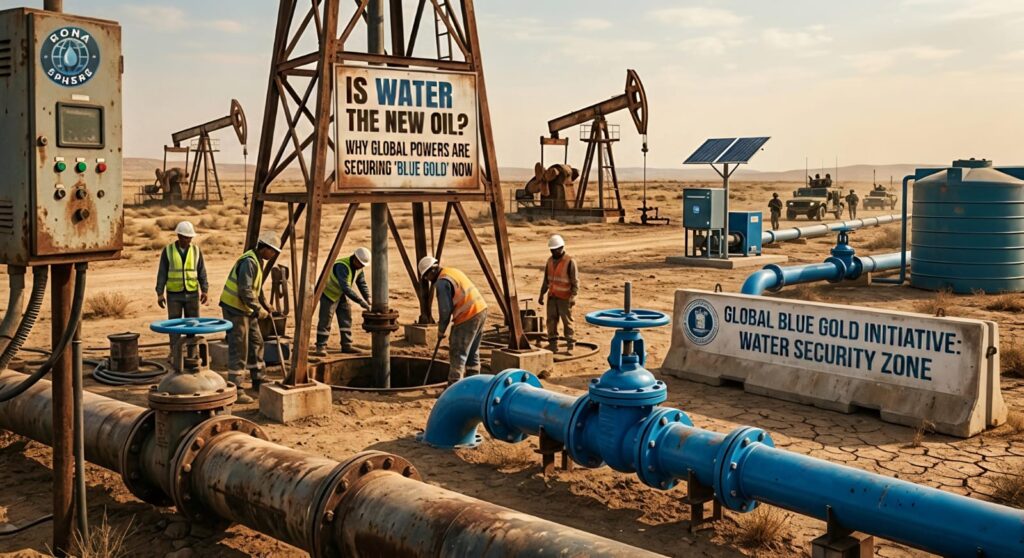
The Future of Water Warfare
Looking ahead, the Blue Gold Crisis will lead to more tension. As the world gets hotter, people will get more desperate. Therefore, we must prepare for a future where water is the main reason for international conflict.
The Risk of Real War
Many experts believe the next world war will be over a river. Unquestionably, we are already seeing small fights today. For example, farmers in dry areas often clash over who gets to pump from a shared well. Furthermore, nations are moving their armies closer to major dams. Consequently, the risk of a “Water War” is real and growing every day.
Can Technology Save Us?
Fortunately, humans are very good at inventing solutions. Specifically, new tech might help end the Blue Gold Crisis before it gets too late.
Air Water Machines: Some new devices can pull water right out of the air. This works even in the desert!
Recycling Sewage: Many cities are now cleaning wastewater so well it is safer than tap water.
Nano-Filters: These tiny filters can remove salt and toxins for almost no cost.
Ideally, these tools will become so common that nations stop hoarding water. However, until they are cheap enough for everyone, the struggle will continue.
Deep Dive: The Role of Climate Change
We cannot talk about the Blue Gold Crisis without talking about the weather. Specifically, climate change is moving the world’s water around. Consequently, some places get too much rain, while others get none at all. This unpredictability makes superpowers even more nervous. Therefore, they hoard even more water to be safe.
The Melting Glaciers
Most of our fresh water is stored in ice. Unfortunately, these glaciers are melting into the salty sea. Once that water hits the ocean, it is gone for us. Consequently, nations like India and China are losing their “frozen water banks.” Furthermore, this leads to massive floods followed by long droughts. Clearly, the environment is making the Blue Gold Crisis much harder to manage.
The Death of the Aquifers
Underground water is like a bank account. We have been spending it much faster than we save it. Specifically, we pump water out for farms that took thousands of years to collect. Consequently, the ground is literally sinking in places like California and Indonesia. Therefore, when the underground water is gone, there is no easy way to get it back. This is why superpowers are hoarding fresh water faster than rare earth metals today. They are looking for the last hidden pools.
The Human Side: Who Suffers Most?
The Blue Gold Crisis is not just about big countries and money. Actually, it is a story about people. Specifically, the poorest people in the world suffer the most when water is hoarded.
Women and Children First
In many parts of the world, women and girls spend hours every day walking to find water. Consequently, they cannot go to school or work. Furthermore, the water they find is often dirty and makes them sick. Therefore, the Blue Gold Crisis is a massive hurdle for human rights. If superpowers keep hoarding water, this cycle of poverty will never end.
The Urban Water Gap
Even in big cities, the gap is growing. Rich neighborhoods often have green lawns and pools. Meanwhile, the slums in the same city might not have a single working tap. Consequently, water becomes a symbol of status. Therefore, we must find a way to share Blue Gold more fairly, or the world will face constant social unrest.
Why “Virtual Water” is the Real Key
To really understand why superpowers are hoarding fresh water, you must understand “Virtual Water.” This is the water used to make things. You don’t see it, but it is there.
Beef: Making one pound of beef uses 1,800 gallons of water.
Cotton: Your favorite t-shirt took 700 gallons to grow and dye.
Chocolate: One chocolate bar uses about 450 gallons of water.
Consequently, when a country exports these things, they are really exporting their water. This is why superpowers buy land in other countries. They are “virtually” hoarding water by making other people grow their thirsty food. Therefore, the Blue Gold Crisis is hidden in every product you buy at the mall.
Summary: A World Defined by Water
In summary, we are living through a massive change. Undeniably, the Blue Gold Crisis is the most important story of our decade. Because water is needed for everything from survival to smartphones, superpowers are hoarding fresh water faster than rare earth metals. Consequently, they are using dams, land deals, and trade to win the race.
Ultimately, this affects your wallet, your food, and your safety. Therefore, you should not wait for someone else to fix it. Instead, start saving water today and learn about where your supply comes from. By understanding the Blue Gold Crisis, you can stay one step ahead of the rest of the world. The era of free water is over, but the era of smart water can save us all.
Final Thoughts: The Choice is Ours
The Blue Gold Crisis sounds scary, but it is also an opportunity. Specifically, it is a chance for us to value nature more. Furthermore, it pushes us to invent amazing new tools. Consequently, we might end up with a cleaner and smarter world. However, we must act now before the superpowers take it all.
Therefore, keep your eyes open. Watch the news for water deals. Pay attention to the dams being built. Most importantly, protect your own local “Blue Gold.” In a world where water is the new currency, being prepared is the only way to thrive.
FAQ: Quick Answers on the Blue Gold Crisis
1. Is water really more valuable than rare earth metals? Yes, in the long run. You can build tech without certain metals, but you cannot build tech or stay alive without water. This is why superpowers are hoarding fresh water faster than rare earth metals.
2. Can we just use desalination to solve the problem? It helps, but it is very expensive and uses a lot of energy. Also, it creates a lot of salty waste that can harm the ocean. It is not a perfect fix for the Blue Gold Crisis.
3. What can I do today to help? Start by fixing any leaks in your home. Then, talk to your local leaders about protecting your city’s water sources. Awareness is the first step to stopping the crisis.
4. Will water prices keep going up? Likely, yes. As demand grows and supply shrinks, the cost will rise. This is why hoarding is happening now. Everyone wants to lock in a low price while they still can.
5. Which superpower is winning the water race? China currently has a big lead because they control the headwaters of many major rivers. However, the US and Russia have huge natural reserves that keep them in the game.
About the Author