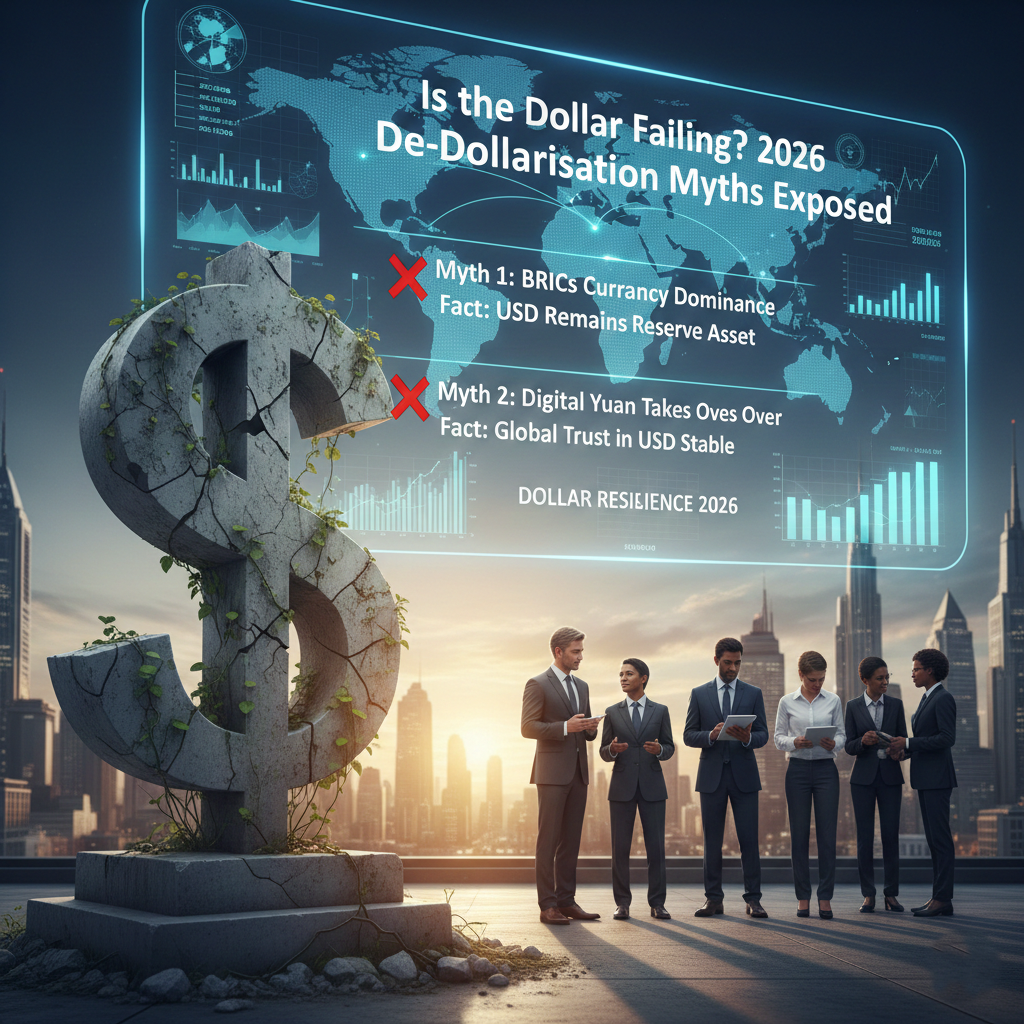
The world of money is changing fast in 2026. You might hear people say the US dollar is about to disappear. Others say nothing is changing at all. However, the truth lies right in the middle. To stay smart with your money, you must understand the economy: The 2026 De-Dollarisation Myth vs. Reality. For many years, the US dollar was the only king. If a country wanted to buy oil, they used the dollar. If they wanted to save for a rainy day, they bought US bonds. Consequently, the US had a lot of power over global trade. But today, that power is shifting. This shift is what we call “de-dollarisation”.
What is the 2026 de-dollarisation myth?
The biggest myth is that the dollar will vanish tomorrow. Many people online claim that a “gold-backed” BRICS currency will kill the dollar in one day. In contrast, real data shows that global systems move much slower.
Why the Myth Persists
People love a good scare. Stories about a “money reset” get a lot of clicks. Furthermore, many people feel the US economy is too far in debt. Therefore, they assume the dollar must fail soon.
The Reality of Dollar Strength
The dollar is still used in more than half of all global deals. Consequently, it is very hard to replace. Most countries still trust the US legal system. In contrast, they might not trust the systems in Russia or China as much. Therefore, the dollar stays on top for now.
The Reality: A World of Many Choices
The Economy: The 2026 De-Dollarisation Reality is not about a total fall. Instead, it is about “fragmentation”. This means the world is splitting into smaller groups.
Local Currency Trade
Nations are now trading with each other using their own money. For example, India is buying oil from the UAE using the rupee. Consequently, they do not need to buy dollars first. This saves them a lot of money on fees. Furthermore, China and Brazil are doing the same thing. They use the yuan and the real. As a result, the demand for dollars is slowly going down. This is not a “cliff” where the dollar falls off. It is more like a slow leak in a tyre.
Why Is This Happening Now in 2026?
Technology is the main reason for this change. In the past, you needed the US banking system to send money across the sea. However, new digital tools have changed the game.
The Rise of CBDCs
Many countries have built their own “Central Bank Digital Currencies” (CBDCs). Consequently, they can send money directly to each other without using US banks.
First, it is much faster.
Second, it is much cheaper.
Third, it is harder for the US to stop the trade with sanctions.
Therefore, technology is making it easy for nations to walk away from the dollar. This is a key part of the economy: The 2026 de-dollarisation reality.
The BRICS+ Power Play
In 2026, the BRICS group has grown very large. It now includes countries like Saudi Arabia and Iran. Consequently, this group controls most of the world’s oil and gas.
The “Unit” Project
BRICS is working on a new way to track trade called the “Unit”. However, this is not a paper currency you can hold. It is more like a digital points system for countries. Furthermore, it is partly backed by gold. As a result, it gives countries a safe way to trade if they don’t want to use the dollar.
How Does This Affect Your Wallet?
You might think this only matters to big banks. However, The Economy: The 2026 De-Dollarisation Myth vs. Reality affects everyone.
Inflation Risks
As the world uses fewer dollars, those dollars come back to the US. Consequently, this can cause prices to go up. You might notice that food and gas stay expensive. Therefore, your savings might not buy as much as they used to.
Investment Changes
In 2026, smart investors are moving money into “hard assets”. This means things like:
Gold: Because it has no “country” and always has value.
Real Estate: Because you can touch it and live in it.
Global Stocks: Companies that sell things in many different currencies.
In contrast, holding only US cash might be risky. Therefore, diversification is the best plan for 2026.
The Role of Gold in 2026
Gold has made a huge comeback. For a long time, people thought gold was “old-fashioned”. However, central banks are now buying more gold than ever before. Consequently, the price of gold has hit record highs this year. Countries buy gold because it cannot be “turned off” by a foreign government. Furthermore, it acts as a bridge between different currencies. If two countries don’t trust each other’s money, they can both agree that gold is valuable.
The “Petrodollar” Story
For decades, all oil was sold in dollars. This was the “Petrodollar” deal. However, in 2026, this deal is cracking. Saudi Arabia now accepts other currencies for some of its oil. As a result, the US dollar is losing its “anchor” in the energy market. This is a big part of the economy: The 2026 de-dollarisation reality. While the dollar is still the leader, it is no longer the only option at the gas pump of the world.
Why the US Still Has an Edge
We should not count the US out yet. The US still has the best technology and the strongest military. Furthermore, most of the world’s debt is still in dollars. Consequently, people still need to earn dollars to pay back their loans. Therefore, the dollar will remain very important for a long time. It is like a giant ship. Even if you turn off the engine, it will keep gliding for miles because of its weight.
What Should You Do Next?
The world of 2026 is complex. You do not need to panic, but you do need to be prepared. Consequently, you should keep an eye on how these global shifts happen.
Practical Steps to Take:
Don’t keep all your eggs in one basket. Spread your money across different types of assets.
Watch the news about BRICS. Their meetings often signal where the money is moving.
Learn about digital money. Stablecoins and CBDCs are becoming part of daily life.
In conclusion, the Economy: The 2026 De-Dollarisation Myth vs. Reality shows us that the world is becoming “multipolar”. This means many leaders, not just one. It is a new era for money, and those who adapt will win.
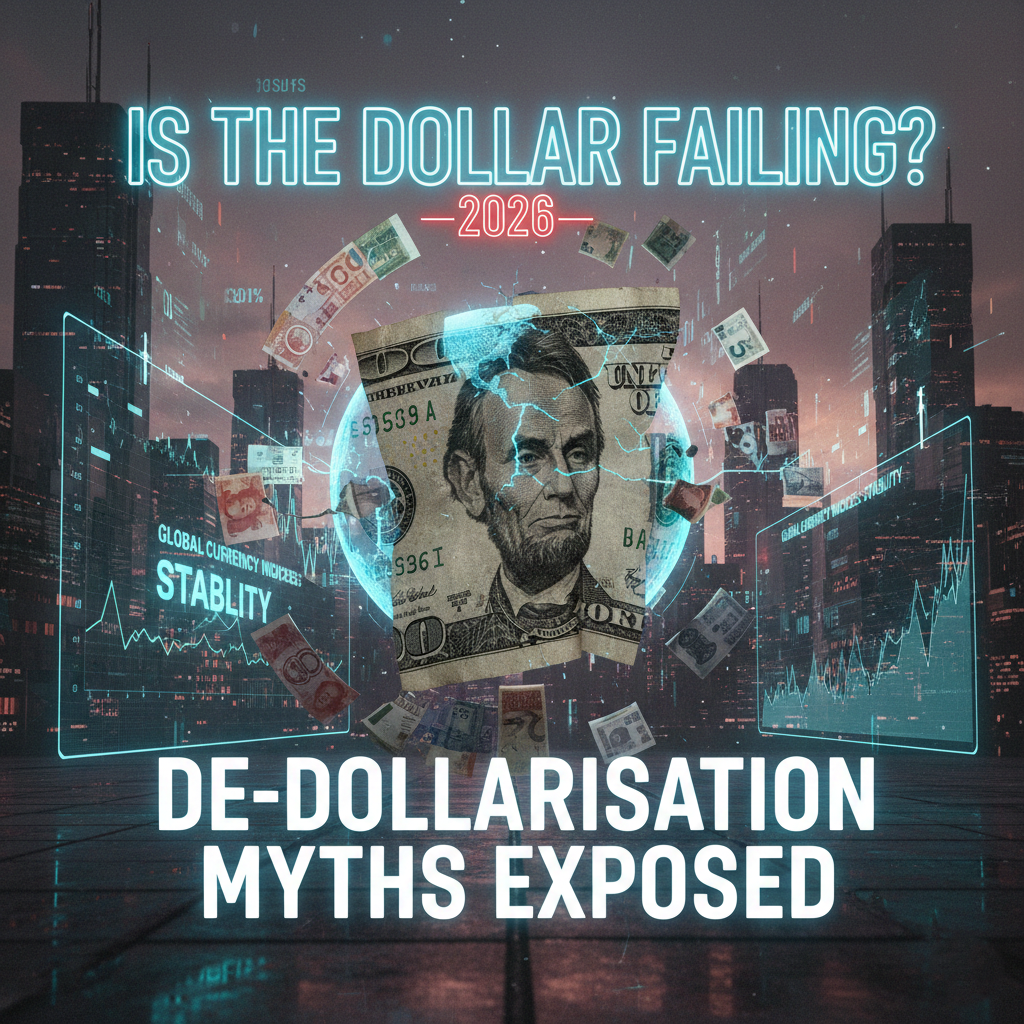
The Global Debt Problem
Another reason for the shift is the massive US debt. In 2026, the debt has reached levels that make other countries nervous. Consequently, they worry the US might print too much money to pay it off. Furthermore, high interest rates in the US make it hard for poor countries to survive. Therefore, these countries are looking for a way out. They want a system that doesn’t depend on what the US Federal Reserve decides to do.
The Transition Period
We are now in a “transition period”. This could last for ten or twenty years. As a result, we will see a lot of “zig-zagging” in the markets. Some days the dollar will look strong. Other days it will look weak. In contrast, the long-term trend is very clear. The world is moving toward a mix of many currencies. This makes the global economy more complex but also more stable in some ways. If one currency has a problem, the whole world doesn’t have to crash.
The mBridge Revolution
A big part of the economy: The 2026 de-dollarisation reality is a project called Bridge. This is a special digital road for money. Consequently, it allows countries to bypass the old US-led systems entirely. Furthermore, it uses blockchain to make sure every payment is safe and instant. As a result, the need for “intermediate” dollars is fading.
How Countries Protect Their Savings
Nations are now very careful about where they keep their wealth. In contrast to the past, they no longer keep everything in US Treasury bonds. Furthermore, they are buying tangible goods like copper, oil, and gold. Consequently, if the dollar loses value, their actual wealth stays safe. This is a smart move that you can also follow on a smaller scale.
Final Thoughts on 2026
As we look at the economy: The 2026 De-Dollarisation Myth vs. Reality, remember that change is normal. No currency stays the leader forever. The British pound was once the king, and before that, it was the Dutch guilder. Consequently, what we are seeing today is just the next chapter in history. It is not the end of the world. It is simply the start of a new way of doing business. Stay calm, stay informed, and stay diversified.
Summary Table: Myth vs. Reality
| Aspect | The Myth | The Reality |
| Speed | It happens overnight. | It takes decades of slow change. |
| Winner | One currency replaces the USD. | Many currencies share the power. |
| Gold | Money becomes 100% gold-backed. | Gold is used as a safety reserve. |
| Trade | The USD is banned. | The USD is just one of many options. |
Furthermore, you should remember that the US economy is very resilient. Consequently, while the dollar’s share might shrink, the total amount of trade in the world is growing. This means the dollar can still be very busy even if it isn’t the only player in town.
How to Talk to Your Family About This
It is easy to get scared by “doom” videos on social media. However, you can explain the economy: the 2026 de-dollarisation myth vs. reality simply. Tell them the world is just getting more “checkouts”. Before, everyone had to wait in one long line (the dollar). Now, the store is opening more lines (yuan, rupee, digital coins). Consequently, the store is still busy, but no single line is as crowded as it used to be. Therefore, the system is actually becoming more efficient.
Looking Forward to 2027
As we approach the end of 2026, we will see even more digital money tools. As a result, the way we think about “cash” will change forever. The dollar will survive, but it will have to work harder to stay popular. In contrast, the nations that embrace these new tools first will have a big advantage. This is the true story of the economy: the 2026 de-dollarisation myth vs. reality. It is a story of technology, choice, and a changing world.
About the Author