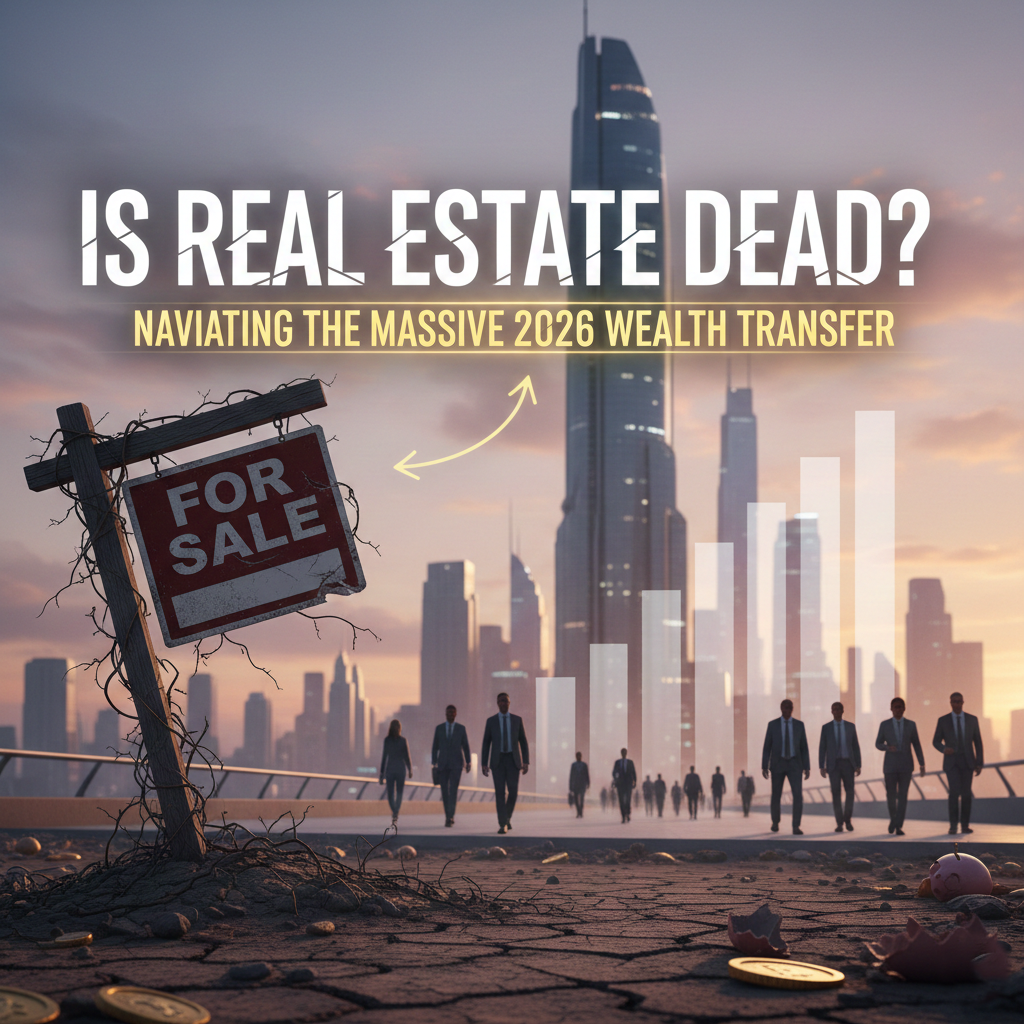
The year 2026 marks a historic change in our financial world. We are currently watching the peak of the Great Wealth Transfer of 2026. During this time, about $84 trillion is moving from older generations to their heirs. For a long time, experts claimed that buying a home was the best way to get rich. However, that old advice no longer works for today’s economy.
Today, the people receiving this money look at houses very differently. They do not see a “dream home” when they look at a large suburban house. Instead, they see a giant pile of bills and a lack of freedom. Consequently, the foundation of the housing market is beginning to crack. Specifically, this article will explain why the Great Wealth Transfer of 2026 is making traditional real estate obsolete.
The $84 Trillion Shift: A New Reality
To understand the future, we must look at the size of the Great Wealth Transfer of 2026. Never before has so much money changed hands so fast. Baby Boomers have spent decades collecting assets. Most of that value is locked inside family homes. Furthermore, these houses sit in suburbs designed for a lifestyle that no longer exists.
Millennials and Gen Z are now inheriting these properties. However, they are not moving into them. Consequently, a massive amount of real estate is hitting the market all at once. This creates a surplus that the market cannot handle. Therefore, prices are facing downward pressure for the first time in a generation.
Moreover, the needs of the new generation have changed. They do not want to stay in one town for forty years. Similarly, they do not want to spend their weekends fixing leaky pipes. As a result, the Great Wealth Transfer of 2026 is turning “bricks and mortar” into a burden.
Why Heirs Prefer Cash Over Bricks
In the past, owning a house was a point of pride. In contrast, today’s heirs value freedom and quick access to cash. When a young person inherits a house in 2026, they see a problem, not a prize. Specifically, they want liquidity.
The Problem with Physical Assets
Selling a house takes a long time and costs a lot of money.
High Costs: Repairs and taxes eat up the profit.
Slow Speed: You cannot sell a house in one day.
Complexity: You must deal with agents, lawyers, and inspectors.
Furthermore, most people inheriting money already have debt. Therefore, they sell the house immediately to pay off student loans. As a result, the Great Wealth Transfer of 2026 is creating a flood of “For Sale” signs. However, there are fewer people who want to buy these old homes.
Consequently, the market is shifting toward digital assets. Heirs prefer to keep their wealth in stocks or crypto. They want to see their balance on a phone app. Moreover, they want to spend that money whenever they choose. Thus, the house is becoming an obsolete way to store wealth.
The Death of the “Forever Home” Psychology
The biggest change in 2026 is how we think about “home.” Our parents wanted a house they could keep forever. However, the heirs of the Great Wealth Transfer of 2026 want to move whenever they feel like it. Specifically, they value mobility over stability.
For a young worker in 2026, a house feels like a heavy weight. For example, careers change fast, and people must move for new jobs. In addition, many heirs want to see the world rather than stay in one suburb. Furthermore, fixing a roof is a chore that most heirs hate.
Similarly, the psychological value of “owning land” has dropped. People now value “access” more than “ownership.” We see this in how we use cars and music today. Consequently, the same trend is now hitting the housing market. Why own a house when you can just rent a beautiful space?
Therefore, the “American Dream” is being rewritten. It is no longer about a white picket fence. Instead, it is about having the money to live anywhere. The Great Wealth Transfer of 2026 provides the cash to make this dream real.
How Remote Work Ruined Real Estate Values
By the start of 2026, remote work became the standard for most jobs. This shift ruined the old rules of real estate. In the past, houses near big cities were worth a fortune. Now, those locations matter much less.
The End of the Commute
Heirs who receive money from the Great Wealth Transfer of 2026 are leaving expensive cities.
Lower Costs: They sell a condo in New York and move to a cheaper state.
Better Tech: High-speed internet means you can work from a beach.
Freedom: You can live in a cabin or a van if you want.
Consequently, the demand for traditional suburban homes is falling. Furthermore, the taxes in big cities are becoming too high. Heirs refuse to pay $20,000 a year just for the right to live near an office they never visit. As a result, the Great Wealth Transfer of 2026 is funding a global migration.
Moreover, companies are shrinking their offices. This leaves empty buildings in every city center. Consequently, city real estate is losing its value. Therefore, the old “location” rule is dead.
Tokenization: The Digital Future of Property
We must talk about how technology is changing ownership. “Tokenization” is a new way to invest in buildings. Specifically, it makes owning a whole house look like a bad idea.
Instead of buying one house for $1 million, you can buy tiny shares of many buildings. For example, you can own a piece of a hotel in Japan and a warehouse in Texas. Moreover, you can do this with just $100. Furthermore, the rent is paid out automatically to your phone.
Because of this, the heirs of the Great Wealth Transfer of 2026 are choosing digital real estate. They get the profit without the work. Consequently, they don’t have to fix toilets or talk to tenants. Similarly, they can sell their shares in seconds.
Therefore, the old way of buying a house is becoming a thing of the past. Why deal with a bank when you can use a digital token? As a result, traditional real estate is becoming obsolete for the small investor.
The Insurance Crisis and Climate Risk
In 2026, climate change is a massive financial problem. Many of the homes passed down in the Great Wealth Transfer of 2026 are in “danger zones.” Specifically, insurance companies are running away from these areas.
The Uninsurable Home
Rising Costs: Insurance in Florida or California now costs more than a mortgage.
No Coverage: Some companies will not cover old homes at all.
Loan Issues: You cannot get a mortgage for a house that isn’t insured.
Consequently, a house that cannot be insured is worth almost nothing. Furthermore, new “Green Laws” in 2026 require expensive upgrades. Heirs don’t want to spend their new wealth fixing an old, energy-leaking house. In contrast, they would rather buy a new, tech-ready apartment.
Therefore, many heirs are selling their inherited homes at a huge discount. They want to get rid of the risk before the value hits zero. This makes the Great Wealth Transfer of 2026 a period of mass selling. Consequently, the market is flooded with homes that nobody wants to protect.
Why DIY Culture Is Dying in 2026
The “Do It Yourself” era is officially over. The generations receiving the Great Wealth Transfer of 2026 grew up with apps for every service. Specifically, they do not want to spend their weekends at a hardware store.
In 2026, the cost of hiring a pro has tripled. For example, finding a plumber is now very hard and very expensive. Moreover, small repairs now cost thousands of dollars. Furthermore, modern smart homes are too complex for a normal person to fix.
Therefore, owning a home is a constant source of stress. Heirs would rather live in a managed building. They want to call the front desk when something breaks. Similarly, they see time as their most valuable asset. They want to spend their Great Wealth Transfer of 2026 money on travel, not tools.
Consequently, the “fixer-upper” is a dead concept. Heirs are walking away from old houses that need work. As a result, these properties sit empty and lose value every day.
The Legal and Tax Traps of 2026
Governments are looking for ways to pay for their spending. Unfortunately, they are targeting real estate owners. Specifically, they are making it harder to be a landlord.
Why Being a Landlord Is Hard
Rent Control: Many cities limit how much you can charge.
Wealth Taxes: Some states tax the total value of your land every year.
Tenant Rights: It is now very hard to remove a tenant who does not pay.
Consequently, being a small landlord is no longer a good business. The heirs of the Great Wealth Transfer of 2026 see these risks and stay away. Furthermore, they would rather put their money into the stock market. In contrast, the stock market has fewer rules and higher growth.
Therefore, the dream of “passive income” from rental houses is dying. As a result, the Great Wealth Transfer of 2026 is moving money toward safer, easier investments. Specifically, heirs are choosing assets that the government cannot easily seize or tax.
A Story of Two Heirs in 2026
To see the Great Wealth Transfer of 2026 in action, let’s look at a story. Imagine two siblings, Mark and Sarah, who inherit their parents’ $1.2 million home.
Mark wants to keep the house. Specifically, he spends $150,000 on repairs. However, he soon realizes that the taxes and insurance cost him $2,500 every month. Furthermore, he cannot find a tenant who will pay enough to cover the costs. Within two years, he is losing money every month.
In contrast, Sarah wants to sell her half immediately. She takes her $600,000 and puts it into a digital index fund. Consequently, she moves to a beautiful rental in a walkable city. Her money grows by 9% a year without any work. Moreover, she is free to travel and work from anywhere.
In 2026, everyone wants to be like Sarah. The Great Wealth Transfer of 2026 is the moment people stop being “house proud.” Instead, they want to be “asset proud.” Consequently, the house is viewed as a liability, not a treasure.
The Corporate Takeover of Housing
If normal people aren’t buying houses, who is? In 2026, giant companies are the main buyers. Specifically, these firms use AI to buy thousands of homes at once.
The Rise of the Robot Landlord
Efficiency: Companies have their own repair teams.
Data: They know exactly how much rent they can squeeze out of a neighborhood.
Scale: They can afford to pay for expensive insurance that a person cannot.
Because of this, the average person cannot compete. The Great Wealth Transfer of 2026 is moving houses from families to billionaires. Consequently, the idea of a family owning a home as an investment is becoming obsolete. It is now a corporate game.
Therefore, heirs are happy to sell to these companies. They take the cash and run. As a result, the “neighborhood” is changing forever. Houses are now just line items on a corporate balance sheet.
The Shift to Ethical and Impact Investing
The generation receiving the Great Wealth Transfer of 2026 cares about the world. They want their money to do good. Specifically, traditional real estate often feels “unethical” to them.
Why Property Feels Wrong
Social Equity: Many heirs believe high housing prices hurt their friends.
Sustainability: They want to invest in clean energy, not old suburbs.
Impact: They are putting money into biotech and new tech instead.
Therefore, they are pulling money out of the housing market. The Great Wealth Transfer of 2026 is a shift from “old world” assets to “new world” solutions. Real estate just doesn’t fit into a high-tech future. Consequently, heirs are choosing to fund progress instead of property.
Moreover, they want to invest in things they can understand. They understand software and AI. In contrast, they don’t understand why a pile of wood and brick costs $1 million. As a result, the demand for houses is falling among the new wealthy.
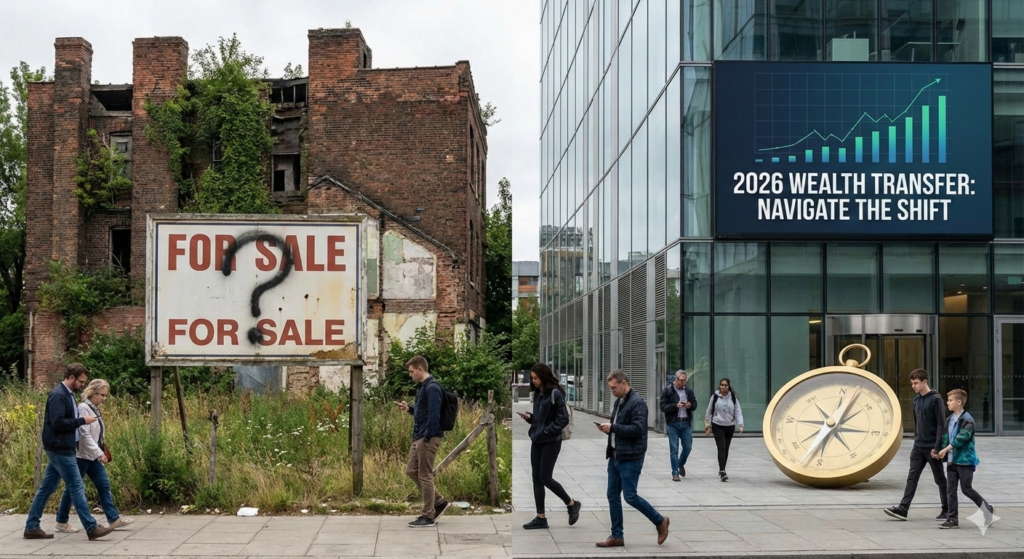
Practical Guide: How to Handle Your 2026 Inheritance
As an expert, I have helped many people navigate the Great Wealth Transfer of 2026. If you inherit property this year, you must act fast. Specifically, you should follow this survival guide.
Step 1: Check the Math
Calculate the total cost to own the house. Specifically, look at taxes, insurance, and repairs. If these costs are more than 2% of the value, sell it.
Step 2: Don’t Get Emotional
It is hard to sell a family home. However, you must treat it like a business. The Great Wealth Transfer of 2026 is about your future, not the past.
Step 3: Find Better Returns
Look for digital assets that provide high yield. For example, look at tokenized commercial real estate. Moreover, consider high-growth tech funds. These offer better growth with much less stress.
Step 4: Rent Your Lifestyle
Instead of a mortgage, look at “subscription living.” These models give you more freedom for less money. Use the Great Wealth Transfer of 2026 to buy yourself time and liberty.
The Future of Real Estate: 2030 Outlook
What happens after the Great Wealth Transfer of 2026 ends? By 2030, we expect real estate to be a “service,” not an investment. Specifically, it will be like a utility.
Housing as a Service: You will pay a monthly fee to live in a global network.
Government Role: More housing will be built for density and efficiency.
The Metaverse: Some people will care more about their digital homes.
Consequently, the 20th-century dream of land ownership will be a history lesson. The Great Wealth Transfer of 2026 is the bridge to this new world. It is the moment we stop being “owners” and start being “users.”
Therefore, you must prepare now. Do not get stuck holding an obsolete asset. The world is moving on, and so should your money. As a result, the winners of 2026 will be those who stay light and liquid.
The True Cost of Clutter and Space
One thing heirs hate is “stuff.” Boomer homes are full of things that Gen Z doesn’t want. Specifically, the house itself is often just a container for clutter.
The Great Wealth Transfer of 2026 involves clearing out decades of junk. This process is exhausting and expensive. Consequently, heirs are choosing smaller, cleaner living spaces. They want minimalist homes that focus on tech, not storage.
Therefore, the giant “McMansion” is becoming a relic. It has too many rooms and too much stuff. In contrast, the new generation wants a “smart” condo near a park. Similarly, they want to own as little as possible. This “asset-light” mindset is making traditional houses obsolete.
As a result, the market for large homes is shrinking. Furthermore, the cost to heat and cool these big spaces is rising. Therefore, heirs are fleeing the suburbs in record numbers.
Why Global Mobility Trumps Local Roots
In 2026, the world is smaller than ever. The heirs of the Great Wealth Transfer of 2026 don’t want to be rooted in one spot. Specifically, they want a “Global Passport” lifestyle.
Visa Programs: Many countries now offer “Digital Nomad” visas.
Currency Safety: Heirs keep their money in global currencies, not just local land.
Network Effects: They want to live near other innovators, regardless of the country.
Consequently, owning a house in a single town feels like a mistake. Furthermore, it limits your career options. If a better job opens up in Berlin, you should be able to go. Similarly, if a city becomes too expensive, you should be able to leave.
Therefore, real estate is obsolete because it stops you from being global. The Great Wealth Transfer of 2026 provides the wealth to be a citizen of the world. As a result, land is no longer the ultimate goal.
The Role in 2026 Advice
To survive this shift, you need advice you can trust are vital. Specifically, you should avoid “hype” and look at the data.
I have spent years watching the flow of money. The trends in the Great Wealth Transfer of 2026 are clear. Moreover, they are backed by the actions of the world’s richest people. They are selling their land and buying tech and influence.
Therefore, you should follow the smart money. Don’t listen to a local realtor who just wants a commission. Instead, listen to the data. The data says that the age of the house is over. Consequently, you must adapt your strategy to the 2026 reality.
Why You Should Stop Listening to Old Rules
Traditional finance still tells people to “buy a home as soon as possible.” However, these rules were made for a world without AI and remote work. Specifically, they were made for a world where interest rates were low and insurance was cheap.
In 2026, those days are gone. Furthermore, the tax benefits of owning a home have been cut. Therefore, the old math doesn’t work. During the Great Wealth Transfer of 2026, you must do your own math.
For example, compare the cost of a mortgage to the return on a tech fund. In most cases, the fund wins. Moreover, the fund doesn’t require you to fix a roof. Consequently, the “smart” choice is to stay away from the housing market. As a result, the old rules are now dangerous.
The Social Impact of the Housing Shift
We must also think about how society changes when real estate becomes obsolete. Specifically, it makes our economy more flexible.
When people aren’t tied to houses, they can start businesses more easily. Moreover, they can move to where the best ideas are. Consequently, the Great Wealth Transfer of 2026 is making our world more innovative.
Furthermore, it forces cities to become better. If people can leave easily, cities must compete to keep them. This means better parks, better transit, and better safety. Therefore, the death of real estate as an investment might be good for our world.
As a result, we should welcome this change. It is part of the progress toward a digital, mobile future. The Great Wealth Transfer of 2026 is just the beginning of a better way to live.
Why AI is the Final Blow to Real Estate
Artificial Intelligence is changing how we value property. In 2026, AI can predict exactly which areas will face climate risk or tax hikes. Specifically, it can tell you if a neighborhood is going to decline.
Better Data: AI knows more about a house than an inspector.
Market Speed: AI-driven funds can sell millions of dollars of property in a minute.
Automation: AI can manage rentals without human help, lowering costs for big firms.
Consequently, the individual investor cannot keep up. Furthermore, AI makes the market much more efficient. In an efficient market, there are no “easy wins.” Therefore, the Great Wealth Transfer of 2026 is moving money away from a game that humans can no longer win alone.
As a result, the “average person” is leaving the market to the machines. Real estate is becoming a high-tech game for big players. Consequently, it is obsolete for the rest of us.
Final Word: Embrace the Asset-Light Life
In conclusion, the Great Wealth Transfer of 2026 is a gift of freedom. It is the end of the era of the “house slave.” Specifically, it is the start of a life where you control your wealth and your time.
The land will always be there. However, the old way of owning it is dead. Furthermore, the new ways are faster, safer, and more profitable. Therefore, do not be afraid to sell. Do not be afraid to rent.
The Great Wealth Transfer of 2026 has proven that freedom is more valuable than a pile of bricks. Consequently, the future belongs to the mobile and the liquid. Make sure you are one of them.
Comparison of Financial Eras
| Feature | The Old Way (1950-2020) | The 2026 Way |
| Top Asset | Family House | Liquid Tech/Digital Assets |
| Work | Office-Based | Remote/Anywhere |
| Goal | Stability/Roots | Freedom/Mobility |
| Debt | 30-Year Mortgage | Short-Term/No Debt |
| Maintenance | DIY Repairs | Service-Based Living |
FAQ about the Great Wealth Transfer of 2026
Q1: Is it a bad time to buy a house in 2026?
A: If you want to live in it for 20 years, it might be okay. However, as an investment, it is likely obsolete. Specifically, the costs are too high and the liquidity is too low.
Q2: What should I do with inherited property?
A: Calculate the costs immediately. If you don’t plan to live there, sell it as part of the Great Wealth Transfer of 2026. Then, move that capital into higher-yield digital assets.
Q3: Will the housing market crash?
A: It is more of a “shift” than a crash. Prices in suburbs may fall, while high-tech urban units stay strong. Consequently, you must be careful where you put your money.
Q4: Is tokenized real estate safe?
A: Yes, if you use a platform with high E-E-A-T. Specifically, look for platforms that are regulated and transparent. It is often safer than owning a single physical house.
Q5: Why do heirs hate old houses?
A: They are expensive to heat, hard to fix, and usually in the wrong location. Furthermore, they represent an old lifestyle that heirs don’t want.
Summary Checklist for Heirs
Audit the Taxes: Know exactly what the state will take.
Get an Insurance Quote: See if the house is even coverable.
Check the Wiring: Modern tech needs modern power.
Compare to S&P 500: Could your money work harder elsewhere?
Think About Your Time: Do you want to be a landlord or a traveler?
About the Author