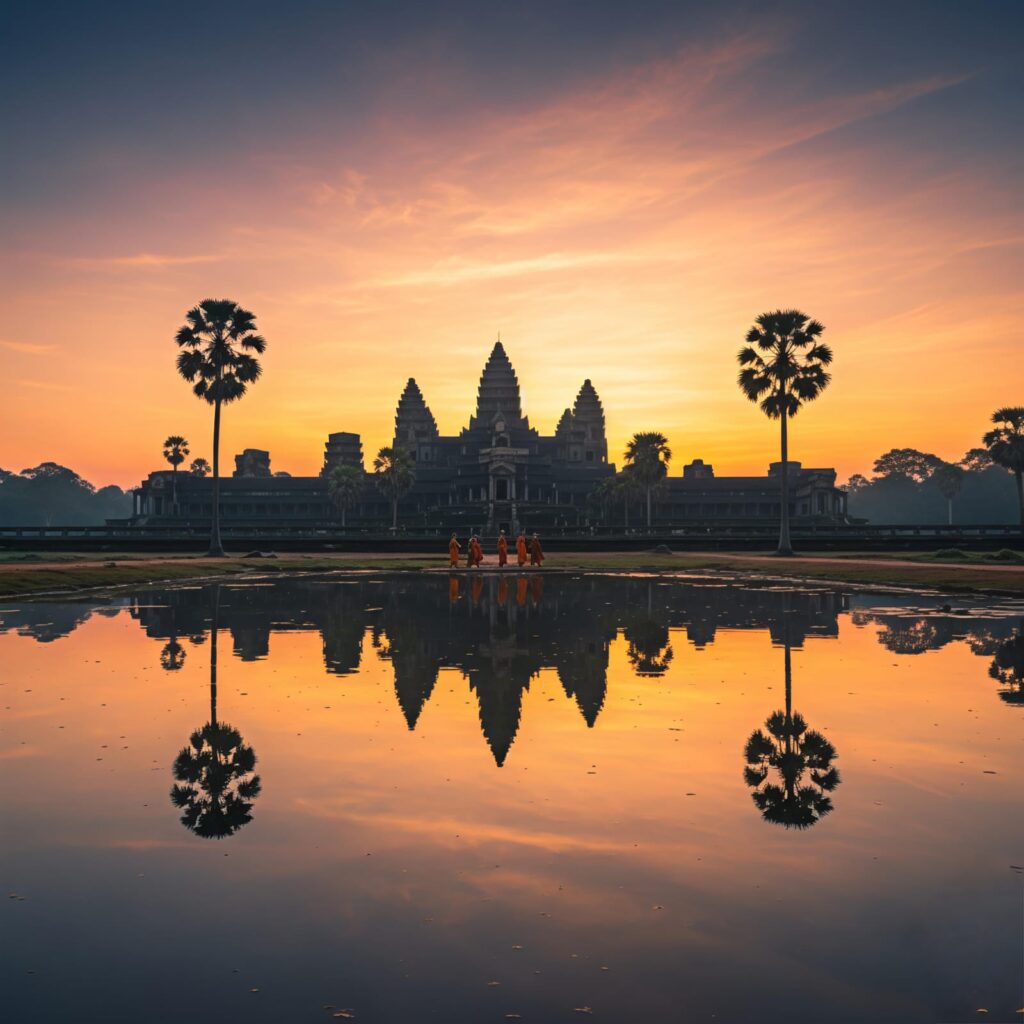
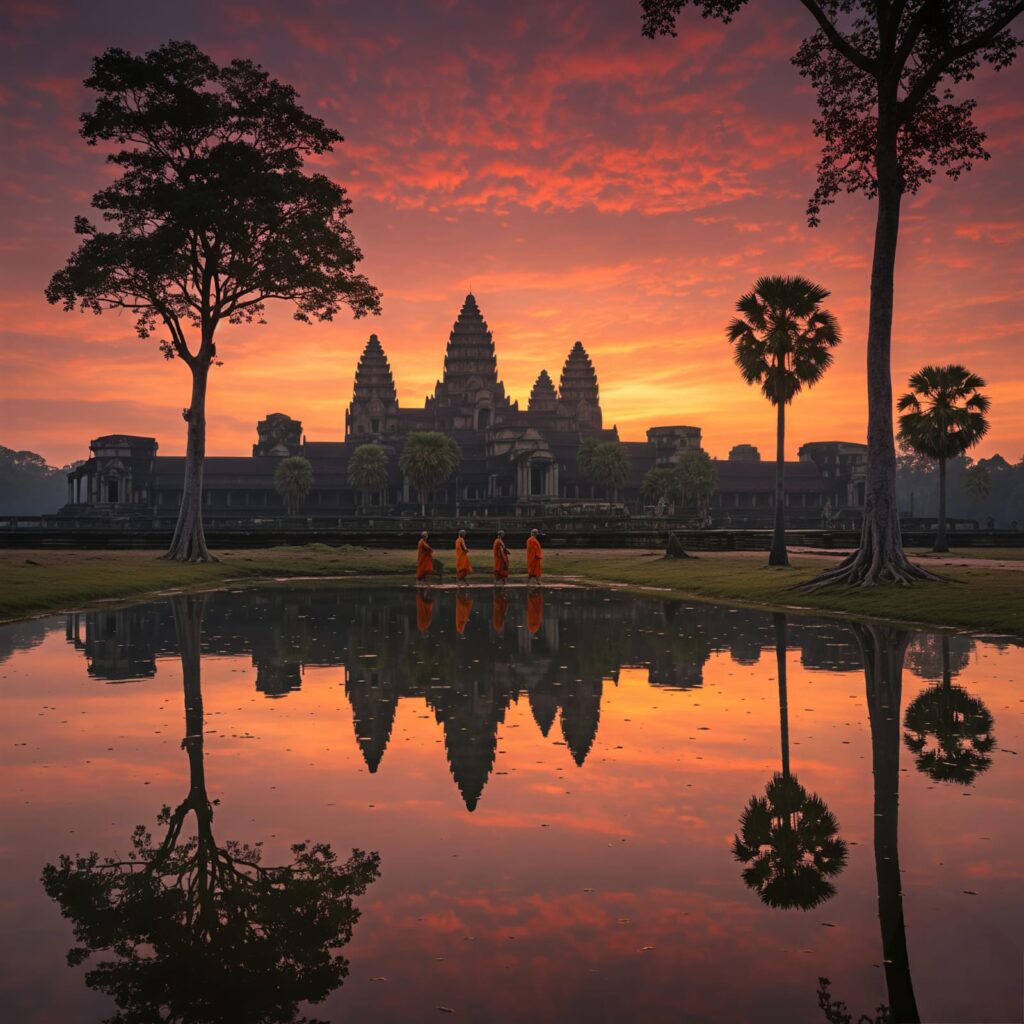
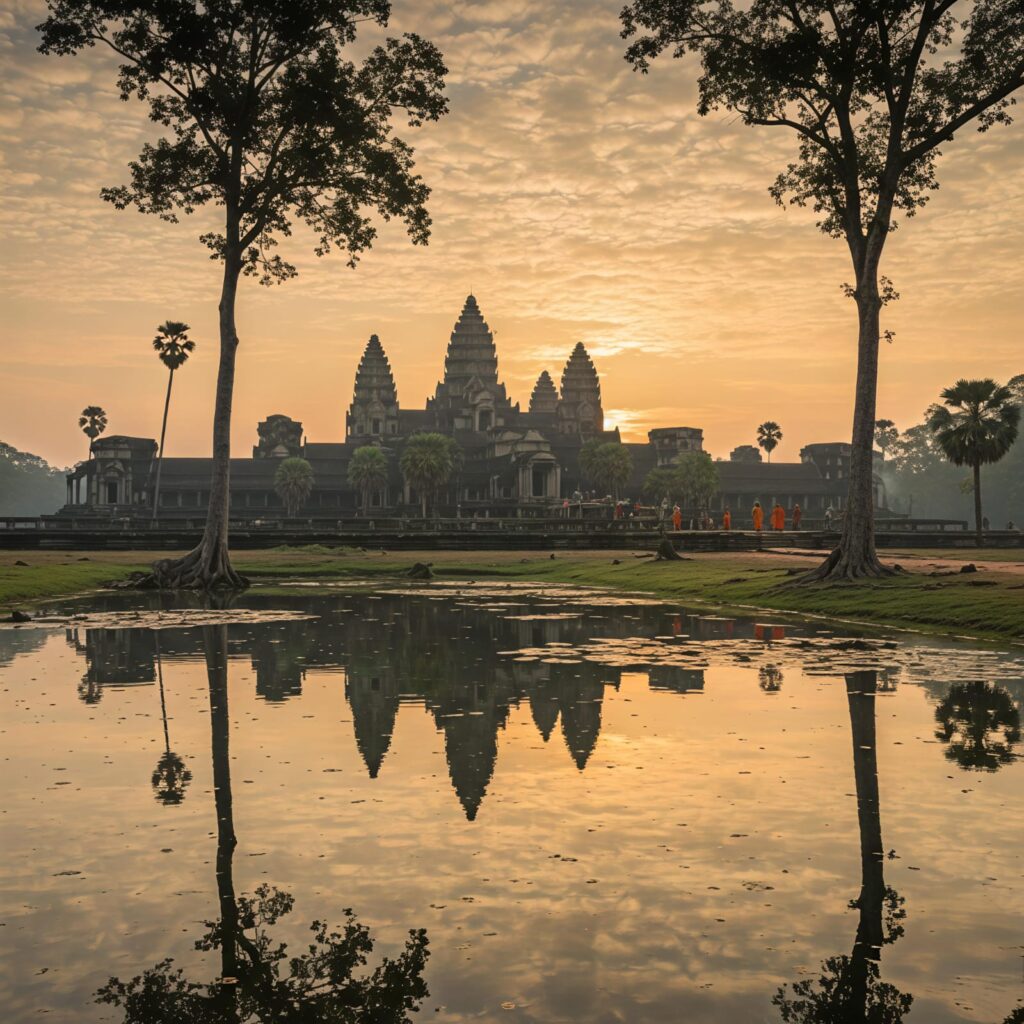
Imagine standing in the heavy, jasmine-scented air of the Cambodian dawn. Suddenly, the sky bleeds into shades of bruised violet and molten gold. Silhouetted against this celestial fire stand five iconic towers, shaped like budding lotuses. This is Angkor Wat, a place where stone breathes and every corridor whispers a thousand years of secrets.
However, many travellers treat this UNESCO World Heritage site as a mere photo opportunity. Consequently, they miss the spiritual depth and architectural genius that makes this the largest religious monument on Earth. To truly understand this masterpiece, you must look beyond the surface level. This guide serves as your strategic partner in navigating the history, the crowds, and the sheer majesty of the Khmer heartland.
Why Angkor Wat Remains the Pinnacle of Human Ambition
King Suryavarman II commissioned this massive complex in the early 12th century. Initially, he dedicated the temple to the Hindu god Vishnu, breaking the long-standing tradition of previous kings who focused primarily on Shiva. Eventually, the site transitioned into a Buddhist shrine, reflecting the shifting cultural tides of The Khmer Empire. This dual identity creates a unique spiritual atmosphere that persists today.
The Engineering Feats of the Khmer
Furthermore, the sheer scale of the construction justifies its reputation as the “Eighth wonder of the world.” The builders moved an estimated five million to ten million tons of sandstone from a quarry 25 miles away. Because they lacked modern machinery, they utilized a complex system of canals to float the massive blocks to the site during the monsoon seasons.
The Moat: A 650-foot-wide rectangular moat surrounds the temple, representing the cosmic ocean of Hindu mythology.
The Central Tower: This 213-foot peak symbolizes Mount Meru, the golden mountain at the centre of the universe.
The Bas-Reliefs: Miles of intricate carvings wrap around the outer walls, depicting epic battles and celestial dancers.
Strategic Planning: How to Outsmart the Crowds
Planning a trip to Angkor Wat requires more than just buying a ticket and showing up. Since the archaeological park covers over 400 square kilometres, poor planning inevitably leads to exhaustion. Therefore, you should approach your itinerary with the mindset of an explorer rather than a tourist.
1. Navigating the Ticket System
You cannot buy tickets at the temple gates. Instead, you must visit the official Angkor Enterprise ticket centre.
1-Day Pass ($37): Best for those on a tight schedule who only want to see the “Big Three” temples.
3-Day Pass ($62): The most popular choice, allowing for a relaxed pace over a full week.
7-Day Pass ($72): Ideal for photographers and history buffs who want to explore remote jungle ruins.
2. The “Reverse” Strategy
While most people flock to the main gate at 5:00 AM for sunrise, you can actually find a more profound experience by starting elsewhere. For instance, the east gate offers a much quieter entry point during the early hours. Consequently, you can enjoy the transition of light without thousands of selfie sticks blocking your view.
The “Big Three” Temples: A Journey Through Time
While Angkor Wat is the star, the surrounding park contains hundreds of structures. To maximize your energy, focus on the primary circuit which showcases the evolution of Khmer art.
Angkor Wat: The Crown Jewel
This temple faces west, which is highly unusual for Khmer architecture. Scholars suggest this orientation signifies its role as a funerary temple. While exploring, pay close attention to the Apsaras (celestial nymphs). You will find nearly 2,000 unique carvings, each featuring different hairstyles, jewelry, and expressions. Furthermore, the symmetry of the galleries is designed to lead your eyes toward the heavens.
Bayon Temple: The Enigma of Faces
Located in the centre of Angkor Thom, Bayon features 54 towers adorned with over 200 massive, smiling stone faces. These faces likely represent the King or the Bodhisattva of Compassion. Because the galleries are narrow and multi-levelled, you should visit Bayon during the “golden hour” just before sunset. Consequently, the low sun creates dramatic shadows that make the stone faces appear to move.
Ta Prohm: Where Nature Reclaims History
Made famous by various adventure films, Ta Prohm remains in a state of “managed neglect.” Giant silk-cotton trees and strangler figs wrap their roots around the crumbling masonry like giant wooden tentacles. Consequently, this site offers a visceral reminder of nature’s inevitable power over human endeavor. It is a hauntingly beautiful graveyard of sandstone and greenery.
Hidden Gems: Escaping the Tourist Loop
If you want a deeper connection to the Khmer spirit, you must venture beyond the main circuit. Small detours often yield the most profound memories.
Banteay Srei: Located about 20 miles north, this “Citadel of the Women” features pink sandstone and the most intricate carvings in the park. Because the stone is harder than the gray sandstone used elsewhere, the details remain razor-sharp.
Beng Mealea: This unrestored temple feels like a true discovery. You can scramble over fallen blocks and explore darkened hallways filled with vines. It provides a “raw” temple experience without the railings and walkways.
Preah Khan: This massive complex served as a university and monastery. Because it is less visited, you can often find quiet corners for meditation or photography among the moss-covered corridors.
Practical Survival Guide for the Cambodian Heat
The Cambodian sun is relentless and unforgiving. Therefore, your physical comfort directly impacts your ability to appreciate the history. Use these “pro-tips” to stay energized throughout your trek.
Dress Code and Respect
Respect is paramount in Khmer culture. Since Angkor Wat remains an active religious site where monks pray daily, you must cover your shoulders and knees.
Avoid: Tank tops, short skirts, or sleeveless shirts.
Choose: Lightweight linen pants and breathable cotton t-shirts.
Footwear: Wear sturdy walking shoes with good grip. You will climb steep, uneven stone stairs that become dangerously slippery when wet.
Hydration and Energy
Furthermore, humidity levels often exceed 80% in the jungle. Consequently, you must drink significantly more water than you think you need.
Carry a Reusable Bottle: Most high-end hotels offer refill stations to reduce plastic waste in the park.
Eat Local: Try Fish Amok at small stalls near the temples. The coconut milk and turmeric provide a much-needed energy boost.
The Mid-Day Break: Most experts recommend returning to your hotel in Siem Reap between 12:00 PM and 3:00 PM. This allows you to avoid the peak heat and the largest tour bus groups.
Understanding the Bas-Reliefs: A Story in Stone
To truly appreciate Angkor Wat, you must learn to read its walls. The galleries contain the world’s longest continuous bas-reliefs. Specifically, the Churning of the Ocean of Milk is a masterpiece of storytelling.
In this scene, 88 gods and 92 demons engage in a cosmic tug-of-war. They use a giant serpent as a rope to churn the ocean and extract the elixir of immortality. If you look closely, you can see the detail in their faces—the calm determination of the gods versus the frantic desperation of the demons. Consequently, this carving provides a window into the 12th-century Khmer worldview of balance, struggle, and the pursuit of the divine.
Photography Secrets for the Modern Explorer
Every traveller wants that perfect Angkor photo. However, capturing the majesty of the site requires more than just a high-end camera. You need to understand the behaviour of light in the tropical canopy.
The Reflection Pond Mastery
The classic “mirror” shot of Angkor Wat happens at the northern pond inside the main gate. To get the best reflection, you must arrive early and position yourself at the very edge of the water. Because the water is often stillest at dawn, your reflection will look like a perfect glass image.
Using Natural Frames
Instead of taking wide-angle shots of every temple, look for doorways and windows. The Khmer architects used “false windows” and stone pillars to create natural frames. Consequently, these elements add depth and a sense of mystery to your images, drawing the viewer’s eye into the heart of the ruins.
Ethical Travel and Long-Term Conservation
As a visitor, you play a vital role in preserving this site for future generations. Because millions of people visit annually, the stone suffers from erosion and “touch damage.”
Don’t Touch the Carvings: The oils and acids from your skin can degrade the sandstone over time.
Respect the Monks: If you see monks praying, ask permission before taking a photo. Often, a simple bow is appreciated.
Support Local Guides: Hiring a licensed guide provides you with deep historical context. Furthermore, it ensures your money stays within the local community. These guides spend years studying Khmer history and provide insights that no guidebook can offer.
The Legacy of a Sunken Empire
While the empire eventually declined due to climate change and shifting trade routes, the legacy of Angkor Wat persists. It serves as a symbol of national pride, appearing on the Cambodian national flag. Furthermore, its “rediscovery” by the Western world in the 19th century sparked a global fascination with lost civilizations.
In reality, the city was never truly lost. Local Khmer people always knew of its existence and continued to worship there through the centuries. However, the scale of the surrounding city—recently revealed by LiDAR technology to be much larger than previously thought—proves that Angkor was once the most populous urban center in the pre-industrial world. This technology has rewritten history books, showing us that the “jungle” was once a sprawling, high-tech metropolis of canals and farms.
Final Thoughts for the Modern Explorer
Visiting Angkor Wat is more than a vacation; it is a rite of passage for any serious traveler. It challenges your physical endurance while rewarding your spirit with unparalleled beauty. By following a strategic plan, respecting the local culture, and looking beyond the main tourist paths, you will find a version of Angkor that feels personal and profound.
Consequently, you will leave Cambodia not just with photos, but with a deeper understanding of human ambition and the fleeting nature of empires. The stone towers may be silent, but they have a lot to say to those willing to listen.
Summary Checklist for Your Trip
Buy your pass the afternoon before your start date to catch an “extra” sunset for free.
Hire a Tuk-Tuk driver for the day ($15–$25) to save your legs and support the local economy.
Pack a portable fan and plenty of high-SPF sunscreen.
Download an offline map to navigate the lesser-known jungle paths between the smaller temples.
About the Author