Look at the phone in your hand right now. In fact, that small device holds a very big secret. It contains the seeds of the trillion-dollar resource war. You might not see it, but a global battle is happening. Every day, big nations fight over tiny bits of metal. These metals are the keys to our future. Because of this, Western markets are hoarding rare earth minerals. They want to make sure they do not run out. Consequently, this race is changing the world as we know it.
The Hidden Power in Your Pocket
First, let us talk about what is inside your tech. Your phone needs special metals to work. For example, it needs them to vibrate. It also needs them to show bright colors on the screen. These metals are called rare earth minerals. In reality, they are not actually rare. You can find them in the dirt in many places. However, they are very hard to get out of the ground. Furthermore, the process is very messy and can hurt the earth. Therefore, most countries did not want to do it for a long time.
Why These Metals Are Like Magic
Actually, these minerals have special powers. Some can act like very strong magnets. Others can handle a lot of heat without melting. Because of these powers, we use them in everything. For instance, they are in electric cars. They are also in wind turbines. Without them, we cannot have green energy. Consequently, the demand for them is going up every single day. This high demand is the main cause of the trillion-dollar resource war.
What is the Trillion-Dollar Resource War?
So, what does this war look like? It is not a war with guns. Instead, it is a war of money and rules. For many years, one or two countries controlled all these metals. They dug them up and sold them to the rest of the world. But recently, things changed. Western leaders got scared. They realized that if those countries stopped selling, the West would be in trouble. Consequently, they started a new plan. Now, Western markets are hoarding rare earth minerals to stay safe.
The Fear of Empty Shelves
Imagine if you could not buy a new car or computer. This could happen if we run out of these metals. Therefore, the West is trying to build its own supply. They are opening new mines. They are also building big warehouses. In fact, they are spending billions of dollars to do this. This is the heart of the trillion-dollar resource war. Everyone wants to be the boss of these resources.
Why Western Markets Are Hoarding Rare Earth Minerals
You might wonder why this is happening now. There are three big reasons. First, the world is moving away from oil. We want to use sun and wind power. But, to do that, we need these minerals. Second, there is a lot of tension between big nations. No one wants to depend on a rival. Third, tech is getting more advanced. AI and robots need even more of these special metals. Consequently, Western markets are hoarding rare earth minerals to make sure they can keep growing.
Breaking the Old Chains
For a long time, the West was lazy. They let other countries do the dirty work of mining. But now, they see that was a mistake. So, they are trying to break their old habits. They are bringing the work back home. This is a very big shift in how the world works. Furthermore, it costs a lot of money. But, leaders think it is worth it. They want to win the trillion-dollar resource war at any cost.
Meet the 17 Magic Metals
To understand the war, you should know the players. There are 17 of these minerals. Let us look at a few of the most important ones.
Neodymium: The Magnet King
First, we have Neodymium. This metal makes the strongest magnets in the world. You can find these magnets in your computer’s hard drive. You can also find them in the motors of electric cars. Because these magnets are so strong, they make machines work better. Therefore, everyone wants as much Neodymium as they can get. It is a top prize in the trillion-dollar resource war.
Dysprosium: The Heat Guard
Next, there is Dysprosium. This metal is very special because it likes heat. Most magnets stop working when they get too hot. But, if you add a little Dysprosium, they stay strong. Consequently, it is vital for fast cars and big jets. This is another reason why Western markets are hoarding rare earth minerals. They need to keep their engines running.
Terbium: The Color Maker
Third, let us look at Terbium. This metal helps your TV show beautiful colors. It is also used in low-energy light bulbs. In fact, it helps us save power every day. So, as we build more screens, we need more Terbium. This adds more fuel to the trillion-dollar resource war.
The Green Energy Trap
We all want a cleaner planet. We want to stop using coal and gas. However, there is a catch. Green tech needs a lot of minerals. For example, one big wind turbine needs tons of these metals. An electric car needs much more than a gas car. Consequently, the “green revolution” is actually driving the war. It is an ironic situation. To save the earth, we have to dig it up more than ever. This is a big part of why Western markets are hoarding rare earth minerals.
The Problem with Electric Cars
Electric cars are great for the air. But, their batteries and motors are a challenge. They use a lot of Lithium, Cobalt, and rare earth metals. Right now, the West does not have enough of these for everyone. Therefore, they are racing to find more. If they fail, electric cars will stay too expensive. This would mean we lose the fight against climate change. So, winning the trillion-dollar resource war is a must for the planet.
How Laws Become Weapons
Nations do not just use shovels to win this war. They also use laws. In the last few years, many new rules have been made. These rules help Western companies. At the same time, they make it hard for others to compete. This is a key way that Western markets are hoarding rare earth minerals.
The US Plan for Success
In America, a new law was passed recently. It gives a lot of money to companies that mine at home. It also gives tax breaks to people who buy cars made with local minerals. Consequently, companies are rushing to build factories in the US. This is a giant move in the trillion-dollar resource war. It forces the whole world to change how they trade.
Europe’s Strict Rules
Europe is also making its own moves. They made a list of “critical” minerals. Then, they set a goal. They want to get at least 10% of their minerals from their own soil. Also, they want to recycle 15% of what they use. These rules are very tough. But, they are necessary. They show that Western markets are hoarding rare earth minerals to protect their people.
The Cost to Our Earth
Mining is not pretty. It uses a lot of chemicals. These chemicals can leak into the water. In some places, it has created “toxic lakes.” This is the dark side of the trillion-dollar resource war. As we move mining to the West, we have to deal with these problems. People do not want a toxic mine in their backyard. Consequently, there are many protests.
Can Mining Be Clean?
Actually, scientists are working on this. They are looking for ways to mine without the poison. Some use special bacteria to “eat” the rock and leave the metal. Others use new types of filters. If they can make mining clean, the West will have a big advantage. It would help them win the trillion-dollar resource war without making people angry. This is why research is so important right now.
How You Can Win the War
You might feel like this war is too big for you. But, you can actually help. You have “gold” in your junk drawer. Most people have old phones and tablets they don’t use. These are full of rare earth minerals.
The Power of Recycling
Instead of throwing them away, you should recycle them. This is called “urban mining.” In fact, it is often easier to get metals from an old phone than from the ground. Consequently, if everyone recycled, the need for new mines would go down. This is a simple way to help stop the hoarding. It is your personal role in the trillion-dollar resource war.
How to Recycle Correctly
Find your old tech. Look in drawers and boxes.
Clear your data. Make sure your personal info is gone.
Find a pro. Take it to a store that recycles electronics.
Tell your friends. Spread the word so they do it too.
The Next Frontier: Oceans and Stars
Since the land is getting crowded, we are looking elsewhere. The first place is the bottom of the sea. There are millions of small rocks on the ocean floor. These rocks are rich in minerals. Consequently, companies want to send robots down to get them. This is a new front in the trillion-dollar resource war. But, it might hurt the fish and whales. So, we must be careful.
Mining the Asteroids
Believe it or not, we are also looking at space. Some asteroids are basically giant balls of metal. In fact, one asteroid could have more minerals than all of Earth. Therefore, space mining is a real goal for the future. If we can grab a space rock, the trillion-dollar resource war might finally end. Scarcity would be a thing of the past. But, we are still many years away from this.
The Rise of the Machine: AI in Mining
Technology is also helping us find minerals. We now use Artificial Intelligence (AI) to look for mines. AI can look at maps and satellite photos very fast. It can find patterns that humans miss. Consequently, we are finding more minerals than ever before. This helps the West catch up. It is a high-tech tool in the trillion-dollar resource war.
Robots in the Deep
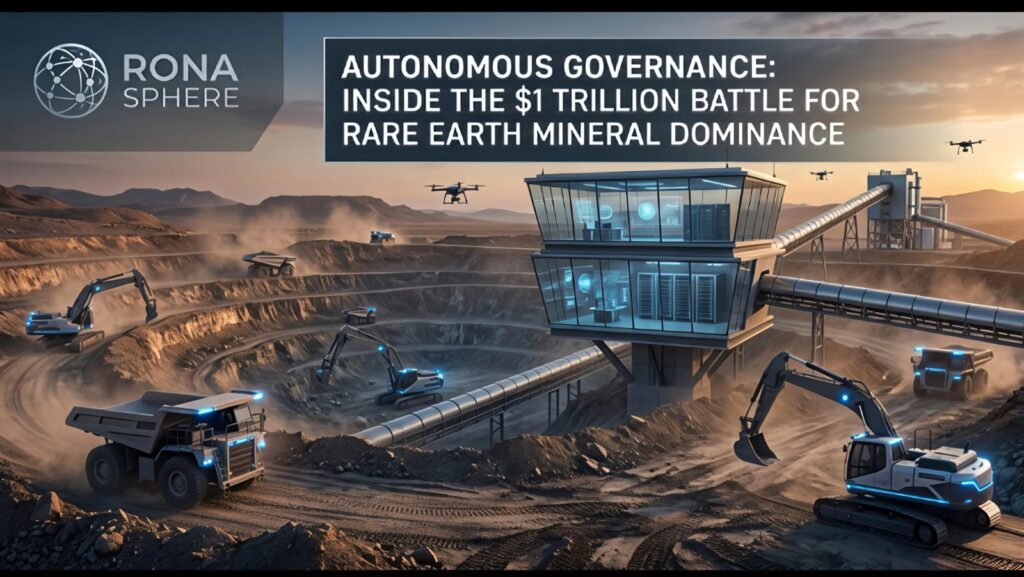
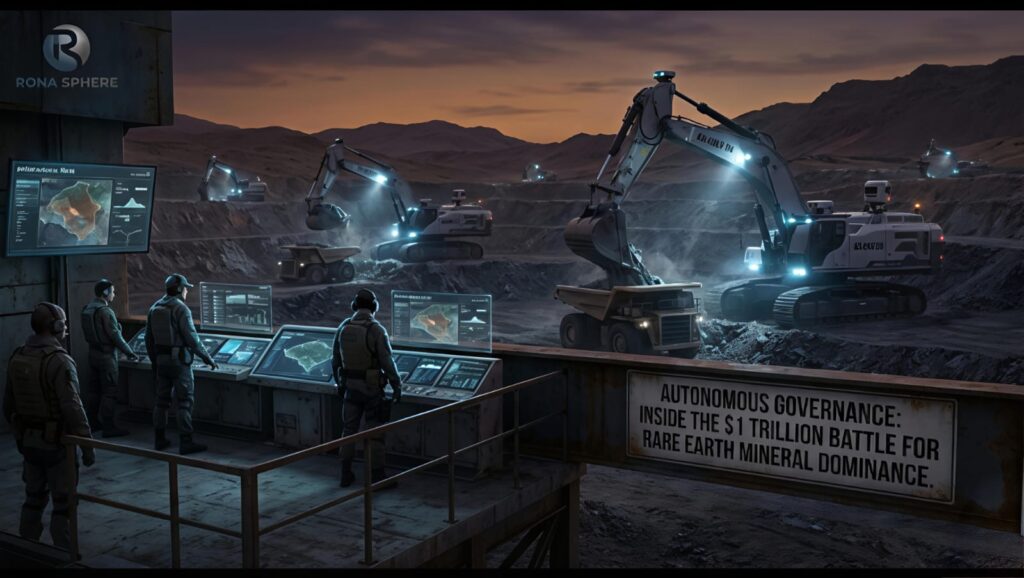
Furthermore, we are using robots to do the dangerous work. In the old days, miners had to go deep into the earth. It was very risky. Now, we can send machines. These machines don’t get tired and don’t get sick. Therefore, mines can stay open 24 hours a day. This is another reason why Western markets are hoarding rare earth minerals. They have the best robots to get the job done.
The Story of the Mountain Pass Mine
To see this war in action, look at a place in California. It is called Mountain Pass. For a long time, it was the biggest mine in the world. But then, it closed because it was too expensive. Now, it is open again. Why? Because the US needs it. They are spending millions to make it work. This is a perfect example of the trillion-dollar resource war. It shows that the West is willing to pay more for its own stuff.
Why Mountain Pass Matters
This mine is a symbol of hope for the West. It proves that they can be independent. Also, it creates a lot of jobs for local people. Consequently, other towns are asking for their own mines. This is how Western markets are hoarding rare earth minerals while also helping their own workers. It is a win-win for them.
The Global Resistance
Not everyone is happy about the West’s new plan. Other countries are starting to fight back. They are making their own rules. For example, some have banned the export of raw minerals. They say, “If you want our metals, you must build your factory here.” Consequently, this creates more tension. It is making the trillion-dollar resource war even more complex.
The Rise of Resource Nationalism
This is called “resource nationalism.” It means countries want to keep their own riches. They are tired of being the world’s “dirt box.” Therefore, they are asking for more money and more respect. This is a big challenge for the West. They have to learn how to be better partners. If they don’t, they will lose access to the minerals they need.
The Supply Chain Secret
You might hear the term “supply chain” a lot. But what does it mean? Think of it like a long line of people passing a ball. If one person drops the ball, the game stops. In our case, the ball is a mineral. The line goes from the mine to the factory to the store. The trillion-dollar resource war is about making sure no one drops the ball.
Why the Chain is Breaking
Right now, the chain is very long. A mineral might be dug up in Africa. Then, it is sent to Asia to be cleaned. After that, it goes to Europe to be made into a part. Finally, it goes to America to be put in a phone. Because the chain is so long, it is easy to break. Consequently, Western markets are hoarding rare earth minerals to make the chain shorter. They want the whole line to be in their own backyard.
The Economic Impact on You
All this hoarding has an effect on prices. When everyone wants the same thing, the price goes up. This is basic math. Therefore, you might notice that tech is getting more expensive. Your next car or phone might cost more than the last one. This is a direct result of the trillion-dollar resource war.
Inflation and Your Wallet
In fact, this can lead to inflation. Inflation is when the price of everything goes up. Because minerals are in so many things, their price affects everything else. For example, even the price of food can go up if the trucks that carry it cost more. Consequently, we all pay a price for this global battle. This is why we need to find a way to end the hoarding soon.
The Education Gap: We Need More Engineers
We have a big problem. We don’t have enough people who know how to mine. For years, students did not want to study rocks. They wanted to study apps and websites. But now, we need rock experts more than ever. This is a hidden part of the trillion-dollar resource war.
A New Career Path
If you are a student, you should look into this. Mining engineers are in high demand. They get paid very well. Furthermore, they get to work with the coolest tech in the world. Consequently, universities are starting to offer new scholarships. They want to train the next army of experts. These people will be the ones to help Western markets are hoarding rare earth minerals in a smart way.
How Collaboration Can End the War
Is there a way to stop the fighting? Yes, there is. It is called collaboration. Instead of fighting, nations could work together. They could share their tech and their minerals. This would make everything cheaper for everyone. However, trust is hard to find right now. Consequently, the trillion-dollar resource war continues.
The Idea of a Global Mineral Bank
Some experts suggest a “Global Mineral Bank.” This would be a place where every country puts some of their minerals. Then, if there is a shortage, everyone can use the bank. This would stop the need for hoarding. In fact, it would make the world much more stable. But, it requires a lot of teamwork. We are not there yet.
The Cultural Impact: Tech in the Future
The minerals we fight over will decide what our future looks like. Will we have flying cars? Will we have robots that clean our houses? It all depends on these 17 elements. Consequently, the trillion-dollar resource war is a fight for our imagination.
Sci-Fi is Coming to Life
We are seeing things today that used to be in movies. For example, we have glasses that show you the internet. We also have cars that drive themselves. All of these need rare earth minerals. If Western markets are hoarding rare earth minerals, they get to decide who gets this tech first. This is a very powerful position to be in.
A Day in the Life of a Mineral
Let us follow a single atom of Neodymium.
From the Dark Earth
First, it sits in a dark rock for millions of years. Then, a giant drill wakes it up. It is crushed and washed in acid. Consequently, it is finally free from the rock. Next, it is turned into a fine powder.
To the Bright City
After that, it is shipped to a factory. There, it is pressed into a small magnet. That magnet is put into a tiny motor. Finally, that motor goes into your phone. Now, every time your phone vibrates, that atom is working for you. This journey is what the trillion-dollar resource war is all about.
The Ethical Dilemma
We must ask ourselves some hard questions. Is it okay to hurt the earth to get these metals? Is it okay to hoard them while others go without? These are the ethical parts of the trillion-dollar resource war.
Thinking About the Future
We want our kids to have a clean world. But we also want them to have cool tech. Finding a balance is the hardest part. Therefore, we must hold companies and leaders accountable. We should support those who mine fairly and cleanly. This is how we can ensure that Western markets are hoarding rare earth minerals for the right reasons.
Summary: The State of the War
Right now, the war is in a high-speed phase. New mines are opening every month. New laws are being signed every week. Consequently, the map of world power is being redrawn. The trillion-dollar resource war is the biggest story that no one is talking about.
Key Takeaways
Rare earth minerals are the vitamins of tech.
The trillion-dollar resource war is a race for control.
Western markets are hoarding rare earth minerals to be safe.
Green energy cannot happen without these metals.
Recycling is a great way for you to help.
Looking Forward: 2030 and Beyond
What will happen in ten years? Most experts think the war will still be going on. However, we might have better ways to find and use these metals. Consequently, the hoarding might slow down. We might even find a way to replace some of these minerals with common things like carbon or iron.
The Ultimate Goal
The best outcome is a world where we don’t need to hoard anything. A world where tech is cheap and the earth is clean. This is the goal we should all work toward. Even if Western markets are hoarding rare earth minerals now, it should only be a temporary step. Ultimately, we want a shared future.
Final Advice for Business Owners
If you own a tech business, you need to be smart. Don’t put all your eggs in one basket. Try to find different suppliers. Also, look into using recycled materials. This will protect you from the ups and downs of the trillion-dollar resource war. Furthermore, it makes your brand look good to customers. People love to support “green” and “smart” companies.
Staying Informed
The world moves fast. Keep an eye on the news about mining and trade. Consequently, you won’t be surprised when things change. Being informed is your best weapon in the trillion-dollar resource war.
Conclusion: The Final Verdict on the Resource Race
In conclusion, the hidden metals inside your pocket represent the most critical geopolitical battle of our time. Clearly, the trillion-dollar resource war dictates the future of global power, green energy, and everyday technology. Furthermore, we now understand precisely why Western markets are hoarding rare earth minerals with such fierce intensity. As a result, consumers, investors, and business leaders must stay alert to these massive shifts. Ultimately, navigating this complex landscape requires sharp foresight, smart recycling, and continuous innovation.
About the Author