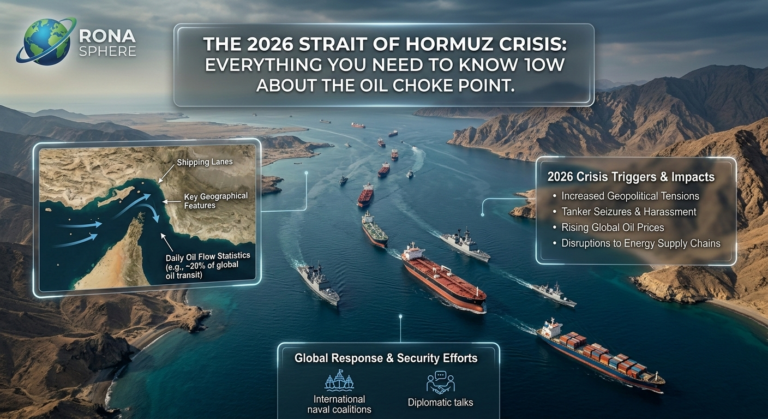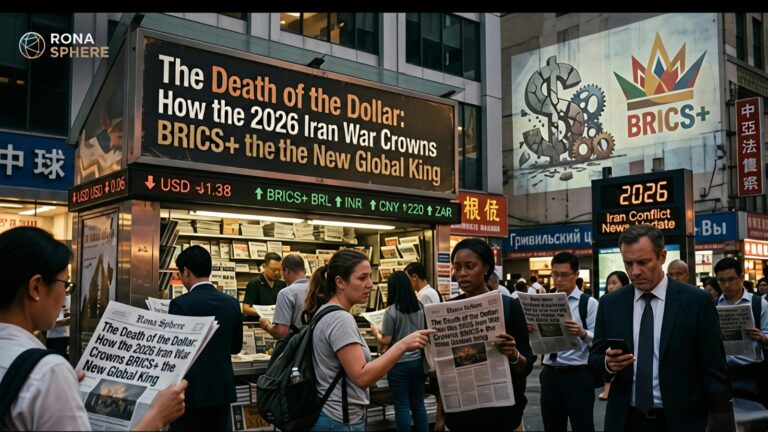
For over fifty years, the United States dollar ruled the world trade . It was the undisputed king of every market. Furthermore, this power did not happen by accident. It grew from a specific system called the petrodollar. However, that system is now falling apart. We are entering the De-Dollarisation Endgame.
In this guide, we will look at the hidden shifts in global power. We will see how secret global trade deals are cutting the dollar out of the loop. Consequently, the way you save, spend, and invest is about to change forever. As of March 2026, the signs of this shift are no longer just theories; they are facts on the ground.
1. The Foundation: What Was the Petrodollar?
To understand the De-Dollarisation Endgame, we must look back to 1974. Back then, the U.S. made a massive deal with Saudi Arabia. Specifically, the U.S. promised to protect the Saudi kingdom. In exchange, the Saudis agreed to sell all their oil for U.S. dollars.
The Global Need for Greenbacks
Because every country needs energy, every country needed dollars. Furthermore, nations had to keep huge piles of U.S. cash in their banks just to keep the lights on. Consequently, this gave the U.S. “exorbitant privilege.” They could print money to pay for anything, and the rest of the world would soak up the inflation. This arrangement was the bedrock of American power for half a century.
2. Why the System is Breaking in 2026
The De-Dollarisation Endgame started slowly, but it is moving fast now. In 2022, the U.S. used the dollar as a weapon. They froze Russia’s money after the war in Ukraine started.
A Lesson for the World
This move scared many other nations. Specifically, they realized that if they disagree with Washington, their money could vanish. Consequently, countries like China, Brazil, and India began looking for a “Plan B.” They want to trade without using a system that the U.S. controls. Furthermore, they are signing secret global trade deals to make this happen. By early 2026, trust in the “neutral” dollar has hit an all-time low.
3. The Rise of the BRICS Alliance
The most famous part of the De-Dollarisation Endgame is the BRICS group. This club started with Brazil, Russia, India, China, and South Africa. Recently, it grew even larger.
New Members, New Rules
Now, big oil players like the UAE and Iran are joining. Furthermore, these countries are tired of the dollar’s high costs. Consequently, they are testing new ways to pay each other. In contrast to the old days, they are using their own local coins. India is buying oil with Rupees. China is buying gas with Yuan. Every time this happens, the petrodollar loses a bit of its soul. In 2026, the BRICS nations represent a larger share of global GDP than the G7.
4. Secret Global Trade Deals: The Silent Killers
While we watch the news, the real action happens in private rooms. Secret global trade deals are building a new financial world.
The mBridge Project
One of the most important tools in the De-Dollarisation Endgame is called mBridge. This is a digital system for central banks. Specifically, it lets countries send money instantly without touching a U.S. bank. Furthermore, it uses “blockchain” tech to keep things safe. Consequently, it makes U.S. sanctions impossible to enforce. As of March 2026, mBridge has processed over $55 billion in trade, with 95% of it in digital yuan and local currencies.
The Saudi Pivot
For a long time, Saudi Arabia was the dollar’s best friend. However, that is changing. They are now joining these secret global trade deals. They are talking to China about pricing oil in Yuan. This is the ultimate sign that the De-Dollarisation Endgame is reaching its final stage. In February 2026, Saudi oil exports to China hit a multi-year high, and much of the “talk” is turning into real settlement changes.
5. How This Impacts Your Wallet
You might think this is just for politicians. Nevertheless, the De-Dollarisation Endgame will hit your bank account.
Higher Prices at Home
When the world stops needing dollars for oil, those dollars will flow back to America. Specifically, this creates “too much money chasing too few goods.” Consequently, prices for food, gas, and rent will likely go up. Furthermore, the government will find it harder to borrow money.
Interest Rate Shocks
To keep people buying U.S. debt, the Fed must keep interest rates high. In March 2026, the federal funds rate sits between 3.5% and 3.75%. Therefore, your mortgage and car loans could stay expensive for a very long time. In contrast to the “cheap money” era of the past, the future looks much more costly.
The Role of Gold and Hard Assets
As the dollar weakens, people are running back to “real” money. Central banks are buying gold at record speeds. In early 2026, gold prices broke $4,600 per ounce for the first time in history.
Why Gold is Winning
Gold has no “cancel” button. Furthermore, no government can print more of it into thin air. Consequently, it is the perfect hedge for the De-Dollarisation Endgame. Many believe the new global trade system will be backed by gold or other commodities like oil and copper. In 2025, central banks added over 850 tonnes of gold to their vaults.
Bitcoin: The Digital Lifeboat?
In the middle of the De-Dollarisation Endgame, many see Bitcoin as a solution. Specifically, it is a currency that no single country can control. Furthermore, it works 24/7 across every border. Consequently, it is becoming a digital version of gold for the modern age. Even the U.S. government discussed a “Strategic Bitcoin Reserve” in 2025, showing that even the dollar’s guardians are worried.
The Fragmented Future
We are not moving to a world with one single king currency. Instead, the De-Dollarisation Endgame leads to a “multipolar” world.
Regional Blocks
The East: Led by the Yuan and local trade networks like CIPS.
The West: Still using the Dollar and Euro, but with less power.
The Digital Zone: Using CBDCs and mBridge for fast settlement.
Furthermore, this means trade will be more complicated. In contrast to the simple “dollar-only” world, businesses will need to be much smarter.
Steps to Protect Your Wealth
You don’t have to be a victim of the De-Dollarisation Endgame. Furthermore, there are ways to stay safe.
Diversify: Don’t keep all your savings in one currency.
Buy Hard Assets: Consider physical gold, silver, or real estate.
Stay Informed: Watch for new secret global trade deals in the energy sector.
Look Abroad: Invest in companies that earn money in multiple different currencies.
Consequently, if the dollar drops, your other assets can help keep you afloat.
Deep Dive: The Petro-Yuan and Pipeline Power
Furthermore, we must look at how energy moves. China is building huge pipelines across Asia. These are the physical veins of the De-Dollarisation Endgame.
Avoiding the Sea
The U.S. Navy controls the oceans. Consequently, China wants to move energy over land. Specifically, pipelines from Russia and Central Asia allow them to trade without fear. Furthermore, these secret global trade deals are settled in Yuan. This means the dollar is never even part of the conversation. Russia and China now settle 99% of their trade in national currencies.
Understanding the Technical “Kill Switch”
The De-Dollarisation Endgame is not just about politics; it is about code.
SWIFT vs. CIPS
The U.S. uses the SWIFT system to watch global money. However, China built CIPS. It is a rival system. Furthermore, Russia has its own version called SPFS. Consequently, these systems are now talking to each other. They are creating a “dark” financial network where the U.S. has no power.
The Commodity Connection
In the De-Dollarisation Endgame, the focus is shifting from “paper” to “stuff.”
Resources Rule
Nations that have oil, lithium, and gold are the new winners. Furthermore, they are making secret global trade deals to swap these resources directly. Consequently, the “middleman” (the dollar) is being fired. This is a massive change in how the world values money. By 2026, resource security is the top priority for every major nation.
Why the Dollar is Losing Its “Soft Power”
For years, people wanted dollars because they wanted to be like America. However, that charm is fading.
A Shift in Culture
The Global South is now proud of its own path. Furthermore, they see the U.S. debt as a sign of weakness. Consequently, they are more willing to sign secret global trade deals with other emerging powers. This loss of trust is the heart of the De-Dollarisation Endgame.

The U.S. Debt Crisis: The Engine of Change
The American debt is now approaching $39 trillion. Furthermore, the interest on that debt is costing the U.S. billions every single day.
The Trust Gap
Investors are starting to ask if the U.S. can ever pay it back. Specifically, if the U.S. prints more money to pay the debt, the dollar’s value drops. Consequently, other countries want out before the “bubble” pops. This fear is a major driver of the De-Dollarisation Endgame. In March 2026, the average interest rate on federal debt has climbed to 3.35%.
The “Triffin Dilemma” Explained Simply
To understand why this is happening, we look at Triffin’s Dilemma. Specifically, it says that the country with the world’s reserve currency must run big deficits.
The Breaking Point
However, those deficits eventually make the currency weak. Furthermore, the world becomes flooded with too many dollars. Consequently, nations start to look for safer options. This is exactly where we are in the De-Dollarisation Endgame. The system is reaching its logical limit.
How China is Leading the Charge
China is not just waiting for the dollar to fail. Instead, they are pushing it.
The Digital Yuan
China has the most advanced digital currency in the world. Furthermore, they are using it in secret global trade deals across Africa and Asia. Consequently, small businesses in those regions can now trade with China without ever needing a bank account in New York. This is the “plumbing” of the De-Dollarisation Endgame.
The Indian Strategy: Pragmatic Autonomy
India is playing a smart game in the De-Dollarisation Endgame. They are not trying to destroy the dollar. Instead, they want “strategic autonomy.”
Rupee Settlement
India is setting up systems to trade in Rupees with over 22 countries. Furthermore, they are linking their digital payment system (UPI) to other nations. Consequently, they are building a world where the dollar is just one of many options. This makes them more resilient to U.S. policy changes. In 2026, India is leading the push for a BRICS payment system that rivals SWIFT.
The Impact on Global Security
The dollar was the “glue” that held the global order together. Furthermore, it allowed the U.S. to police the world without firing a shot.
A New World Order
In the De-Dollarisation Endgame, that glue is dissolving. Consequently, we are seeing more regional conflicts. Furthermore, nations are forming new military alliances to match their new economic ones. This makes the world a more dangerous but also a more diverse place.
Case Study: The UAE’s Bold Move
The UAE is a key player in the mBridge project. Furthermore, they conducted their first government transaction using the “Digital Dirham” in late 2025.
Neutral Ground
They are positioning themselves as a hub for the De-Dollarisation Endgame. Specifically, they want to be the place where East meets West. Consequently, they are trading oil for Yuan, Rupees, and Gold. This shows that even traditional U.S. allies are preparing for a post-dollar future.
Conclusion: The Final Act
The De-Dollarisation Endgame is the biggest story of our time. Specifically, it is the end of an era that lasted for half a century. Furthermore, it is being fueled by secret global trade deals that are changing the rules of the game.
Consequently, the world is becoming more divided. While the petrodollar is not going to disappear tomorrow, its best days are behind it. Therefore, you must be proactive. In contrast to those who ignore the signs, you can prepare for the new financial frontier.
The era of the single king is over. The era of the network has begun. Stay alert, stay diversified, and keep an eye on the secret global trade deals that are rewriting history
About the Author