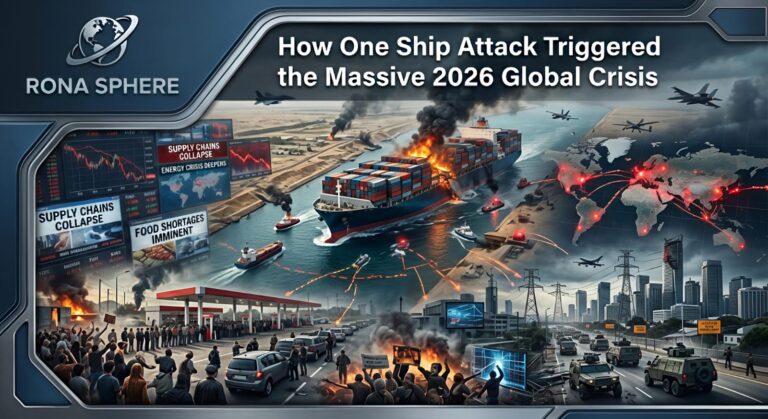
The world changed forever on the morning of February 28, 2026. Suddenly, news alerts flashed on every phone across the globe. A massive conflict broke out in the Middle East. Consequently, a vital waterway was blocked. This event is now known as The Strait of Hormuz Crisis.
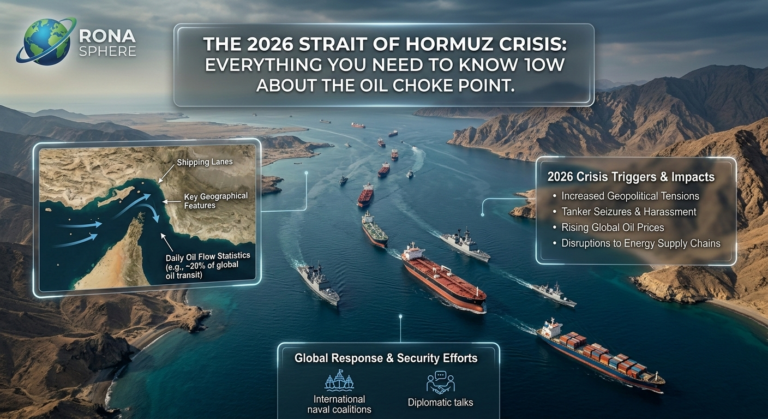
Furthermore, this tiny strip of water is the most important spot on Earth for energy. Indeed, our 2026 map of the global oil choke point shows why it matters. One-fifth of the world’s oil flows through this narrow gap. Therefore, when the gap closes, the global economy stops moving. As a result, gas prices at your local station began to climb instantly.
Next, we will look at exactly what is happening on the ground. Moreover, you will learn how The Strait of Hormuz Crisis changes your daily life. Most importantly, I will show you how to protect your money. This guide is for everyone—from parents at home to business owners in the city.
What is the Global Oil Choke Point?
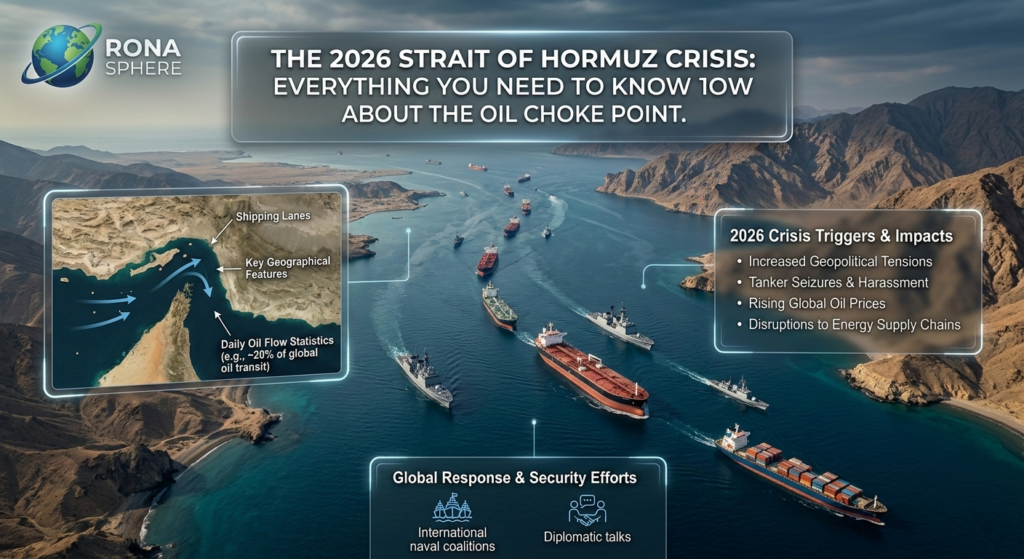
First, let’s look at the map. Geographically, the Strait of Hormuz sits between Iran and Oman. Specifically, it connects the Persian Gulf to the open ocean. However, it is very narrow. At its tightest point, it is only 21 miles wide.
Consequently, this creates a bottleneck. Therefore, we call it a global oil choke point. Indeed, a 2026 map of the global oil choke point reveals that ships have no other way out. If you want to move oil from Saudi Arabia, Kuwait, or Iraq by sea, you must go through this tiny gate.
Why This Spot is So Vital
Moreover, the numbers are huge. Every single day, about 21 million barrels of oil pass through here. Consequently, that is about 20% of all the oil used on Earth. Furthermore, 20% of the world’s natural gas also uses this route.
Huge Volume: 21 million barrels of oil daily.
Gas Power: 20% of global liquefied natural gas (LNG).
No Backup: Most ships cannot take another path.
Therefore, a closure creates a global panic. Ultimately, The Strait of Hormuz Crisis is a threat to every person who drives a car or heats a home.
How the 2026 Crisis Started: A Timeline of Trouble
Historically, people always feared this would happen. Eventually, the fear became real. In early 2026, political tensions in the region reached a boiling point. Consequently, on February 28, 2026, strikes hit targets in the Middle East.
Next, Iran’s military leaders made a bold move. They told all ships to stay away from the strait. Specifically, they warned that any ship entering would be in danger. Furthermore, they backed up these words with action. For example, drones and missiles hit several large tankers.
Real Damage on the Water
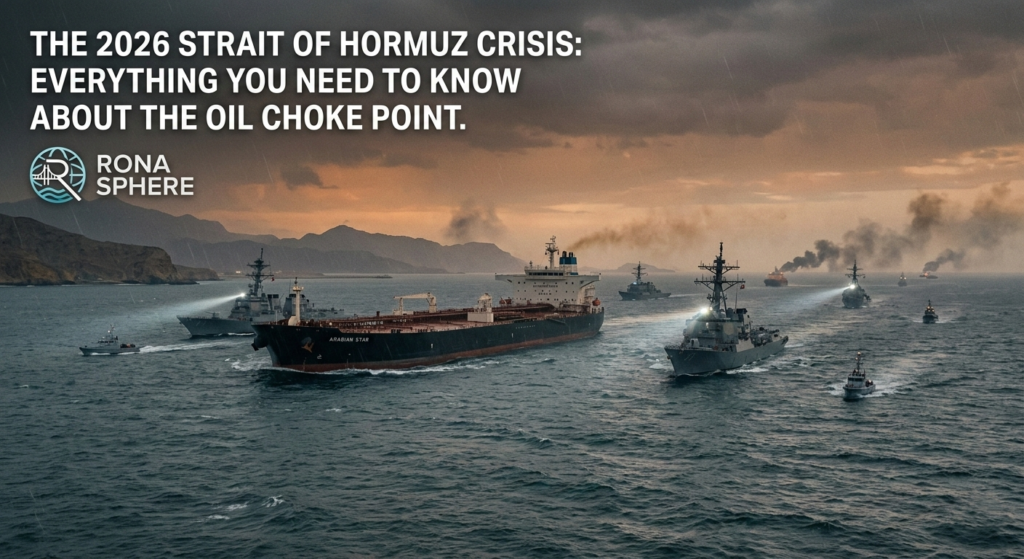
Indeed, the attacks were violent. On March 1, a missile hit a tanker. Sadly, two crew members died in the blast. Shortly after, another ship caught fire. Consequently, the sea lanes became a “no-go” zone. Ship traffic fell by nearly 95% in just 48 hours. Thus, The Strait of Hormuz Crisis turned into a total blockade.
The 2026 Map of the Global Oil Choke Point: The Blockade
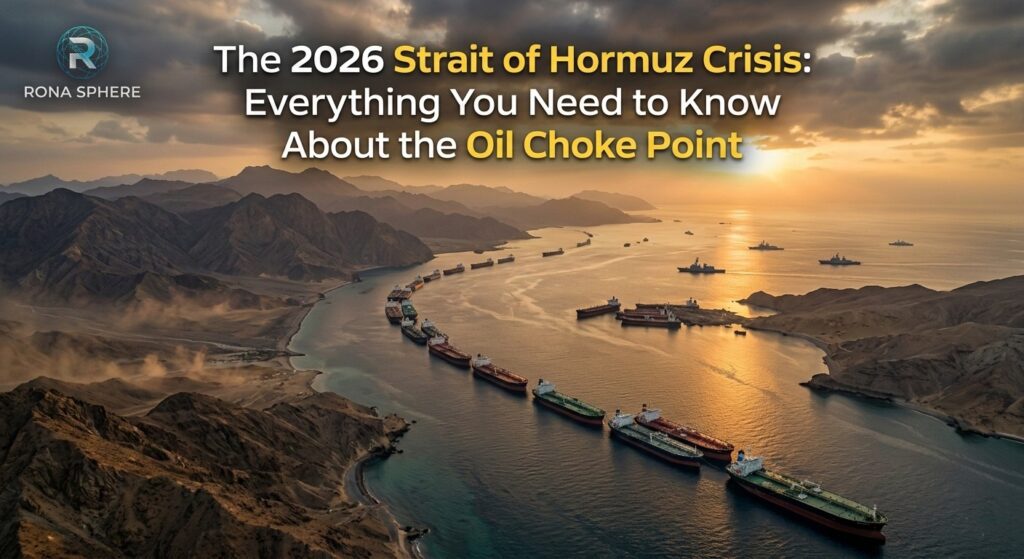
Currently, our 2026 map of the global oil choke point shows a sea of red. Specifically, hundreds of massive ships are stuck. They are sitting in the water with nowhere to go. Furthermore, the map shows where sea mines have been dropped.
Consequently, no captain wants to risk their ship. Therefore, the oil stays in the ground or in the tanks of the ships. Meanwhile, the world’s energy supply is dropping fast. Because of this, every country is looking for a way to fix the problem.
Who Gets Hurt the Most by the Crisis?
Naturally, you might think the United States is the main target. However, the 2026 map of the global oil choke point shows that Asia is in much more danger. Specifically, China, India, Japan, and South Korea buy over 80% of this oil.
India’s Energy Emergency
For instance, India buys almost all its oil from other countries. About 40% of India’s crude oil comes through the Strait of Hormuz. Therefore, India only has enough oil in storage for about ten days. Consequently, a long Strait of Hormuz Crisis could leave India without power. Furthermore, India relies on the Gulf for cooking gas.
China’s Industrial Nightmare
Similarly, China needs this oil to run its factories. While China has more oil stored than India, it still faces a huge risk. Ultimately, China needs the global oil choke point to open up soon. Otherwise, their economy will slow down. This would mean fewer products being made for the rest of the world.
How the Crisis Hits Your Wallet Every Day
Perhaps you live far away from the Middle East. Still, The Strait of Hormuz Crisis will cost you money. Consequently, the global market connects us all. Therefore, a problem in one place causes prices to rise everywhere.
1. Higher Prices at the Gas Pump
First, you will see gas prices go up. Right after the blockade started, the price of crude oil jumped. Furthermore, it could soon reach $120 or even $150 per barrel. Consequently, it will cost much more to fill your tank. In some cities, gas prices spiked by 50 cents in one morning.
2. Grocery Store Inflation
Second, food will become more expensive. Trucks need diesel to bring food to your store. Therefore, when diesel costs more, the price of bread and milk goes up. Furthermore, the Middle East makes a lot of fertilizer. Because the global oil choke point is closed, fertilizer is now hard to get. As a result, farmers must charge more for their crops.
3. Shipping and Freight Costs
Third, moving goods is now more expensive. Shipping 2 million barrels of oil from the U.S. to Asia now costs a record amount. Furthermore, freight rates doubled in just two weeks. Consequently, anything that comes on a ship will cost you more soon. This includes clothes, toys, and electronics.
How to Protect Your Money: A Survival Guide
Fortunately, you can take steps to stay safe. You do not have to just wait for prices to rise. Instead, use these tips to protect your family during The Strait of Hormuz Crisis.
Step 1: Fix Your Home Budget Right Now
First, expect your bills to go up by 15% or more. Therefore, you should look at your spending now. Specifically, cut out things you do not need. For example, cancel a streaming service you don’t watch. Keep that extra cash for gas and food.
Step 2: Lock in Your Power Rates
Next, check your electric bill. If you can sign a contract for a fixed price, do it today. Consequently, you will not have to pay more if natural gas prices spike. Indeed, the Strait of Hormuz Crisis makes natural gas very expensive.
Step 3: Change How You Drive
Furthermore, try to use less gas. For instance, see if you can work from home more often. Also, make sure your car tires have enough air. Consequently, your car will use less fuel. Ultimately, every gallon you save is money in your pocket.
Step 4: Shop Smart for Food
Finally, change how you buy groceries. Because prices are rising, buy non-perishable food now. Specifically, stock up on rice, beans, and canned goods. This helps you avoid higher prices next month. Furthermore, look for store brands to save even more.
Looking for Other Shipping Routes: Why It’s Hard
Naturally, you might ask: “Can’t ships just go another way?” Unfortunately, the 2026 map of the global oil choke point shows that it is very hard to skip the strait.
Pipelines are Not Enough
Indeed, countries like Saudi Arabia built pipelines over land. These pipes carry oil to the Red Sea. However, they can only move a small amount of oil. Specifically, they can only handle about 40% of the normal flow. Therefore, pipes cannot solve the problem entirely.
The Long Way Around Africa
Furthermore, ships can sail all the way around Africa. But this adds 10 to 15 days to the trip. Consequently, it costs much more money for fuel and crew. Therefore, bypassing the global oil choke point only makes things more expensive.
The Strategic Importance of the Strait
To understand The Strait of Hormuz Crisis, we must look at who controls the water. Officially, the water is divided between Iran and Oman. However, international law says ships have “transit passage.” This means they should be allowed to pass through safely.
Iran’s Leverage in 2026
Historically, Iran has used the strait as a tool. Specifically, they threaten to close it when they are under pressure. Consequently, this creates fear in the global market. In 2026, this threat became a reality. By blocking the global oil choke point, Iran aims to cause “maximum global economic pain.”
Impact on Global Natural Gas (LNG)
Oil is not the only problem. The Strait of Hormuz Crisis also stops natural gas. Specifically, Qatar is one of the world’s top gas exporters. Almost all of Qatar’s gas goes through the strait.
Europe’s Energy Fear
For instance, Europe relies on this gas for heating and factories. Because the global oil choke point is shut, European gas prices spiked by 20% in one day. Consequently, people in Europe may face very high heating bills this winter.
Investing During the Crisis: A Guide for Your Portfolio
If you have money in the stock market, you may be worried. Indeed, the 2026 map of the global oil choke point shows that many industries will struggle. However, some companies may do well.
Energy Stocks: Companies that pump oil in the U.S. or South America are gaining value.
Renewable Energy: Solar and wind companies are seeing more interest.
Defense Companies: Because of the conflict, defense spending is rising.
Conversely, you should be careful with airline stocks. Higher fuel costs make it hard for them to make a profit. Furthermore, car companies may sell fewer vehicles as gas prices stay high.
The Role of Technology in the 2026 Crisis
In this crisis, we are seeing new technology being used. Specifically, drones are being used to attack and protect ships. Furthermore, satellite imagery allows us to see the 2026 map of the global oil choke point in real time.
Consequently, we know exactly where every ship is. This helps military forces try to keep things safe. However, it also means that attackers can see their targets more clearly. Therefore, technology is a double-edged sword in The Strait of Hormuz Crisis.
Why Food Security is a Major Concern
We often talk about gas, but food is just as important. Because the global oil choke point is closed, the price of fertilizer has skyrocketed. Furthermore, many countries in the Middle East import most of their food.
Consequently, a long blockade could lead to food shortages in the region. Therefore, The Strait of Hormuz Crisis is not just an energy problem. It is a human problem. Ultimately, we need the water to open so that food can move freely again.
A Comparison to Past Crises
Historically, we have seen this before. For example, during the 1980s, there was a “Tanker War.” Many ships were attacked during that time. However, the 2026 map of the global oil choke point shows a much more serious situation.
Specifically, the weapons used today are much more accurate. Furthermore, the world relies on this oil more than it did 40 years ago. Therefore, The Strait of Hormuz Crisis has a much bigger impact on our lives today.
The Path to Energy Independence
Currently, the world is in a tough spot. However, this crisis is a wake-up call. Indeed, we cannot rely on one single global oil choke point forever.
More Solar and Wind Power
Consequently, governments are moving faster toward green energy. Specifically, they want to make power at home. Therefore, expect more subsidies for solar panels and wind turbines. Ultimately, the more energy we make at home, the safer we are from global shocks.
Better Battery Tech
Furthermore, we need better ways to store energy. Consequently, companies are spending billions on battery research. If we can store solar power for use at night, we won’t need as much oil or gas. This would make The Strait of Hormuz Crisis much less scary.
Practical Tips for Small Businesses
If you own a small business, you are likely feeling the pinch. The Strait of Hormuz Crisis makes everything from shipping to electricity more expensive. Here is how to survive:
Review Your Suppliers: See if you can buy supplies closer to home to avoid shipping delays.
Raise Prices Slowly: You may need to charge more, but be honest with your customers about why.
Audit Your Energy Use: Turn off lights and machines when not in use. Small savings add up over time.
The Long-Term Effects of the Blockade
Will the global oil choke point open soon? We hope so. However, even if it opens tomorrow, the damage is done. Specifically, the “risk premium” will stay for a long time.
Higher Insurance for Years
Indeed, insurance companies will not forget this crisis. They will charge ships more to go through the strait for years. Consequently, shipping costs will stay higher than they were in 2025. This means prices at the store may not go back down quickly.
Shift in Global Trade
Furthermore, countries will change who they buy from. For example, India is now looking to buy more oil from Russia and the U.S. to stay safe. Ultimately, the 2026 map of the global oil choke point is forcing a total redraw of world trade.
Understanding the “Tanker War” of 2026
During the Strait of Hormuz Crisis, many people are using the term “Tanker War.” This refers to the specific attacks on oil ships. Specifically, these ships are the largest in the world. They can carry millions of barrels of oil.
Consequently, hitting one ship causes a massive environmental disaster. Therefore, the crisis is also a threat to the ocean. Furthermore, clean-up efforts are hard to do in a conflict zone. This adds another layer of trouble to the global oil choke point.
Why Maritime Insurance Matters
You might not think about insurance often. However, it is a huge part of the Strait of Hormuz Crisis. Specifically, ships cannot sail without insurance. Furthermore, insurance companies have stopped covering ships in the strait.
Consequently, even if a captain is brave, the ship stays put. Therefore, the insurance industry has as much power as a military. Ultimately, we need the insurance companies to feel safe before the oil can flow again.
How to Talk to Your Family About the Crisis
It can be scary to hear about wars and rising prices. Consequently, it is important to talk to your family. Specifically, explain that while things are more expensive, you have a plan.
Furthermore, use this as a lesson in budgeting and energy saving. For example, involve your kids in turning off lights. This helps them feel like they are part of the solution. Ultimately, staying calm and working together is the best way to handle The Strait of Hormuz Crisis.
The Geopolitical Chess Match
Currently, world leaders are meeting every day. Specifically, they are trying to find a way to open the global oil choke point without a larger war. Furthermore, China is playing a big role. Because China needs the oil so much, they are pressuring all sides to stop the fighting.
Consequently, we might see a diplomatic solution soon. However, it is a very delicate situation. Therefore, the 2026 map of the global oil choke point could change at any moment.
What a “Sustainable” Future Looks Like
Ultimately, we want a world where we don’t worry about one narrow waterway. Specifically, this means moving toward electric cars and local power. Furthermore, it means building more pipelines that don’t go through conflict zones.
Consequently, the Strait of Hormuz Crisis might be the push we need to get there. While it is hard now, it could lead to a safer energy future. Therefore, keep an eye on new energy projects in your area.
The Impact on Tourism and Travel
Another victim of the crisis is the travel industry. Because jet fuel is made from oil, plane tickets are much more expensive. Furthermore, cruise ships are avoiding the region.
Consequently, your summer vacation might cost more this year. Therefore, you might want to consider a “staycation” or a trip closer to home. Ultimately, the global oil choke point affects how we see the world.
How Technology is Helping Consumers
In 2026, we have apps for everything. Specifically, there are apps that help you find the cheapest gas. Furthermore, some apps help you track your electricity use in real-time.
Consequently, technology can help you save money during The Strait of Hormuz Crisis. Use these tools to your advantage. Therefore, check your app store for “gas trackers” and “energy monitors” today.
A Final Look at the Map
As we look at the 2026 map of the global oil choke point one last time, we see the challenge ahead. Specifically, the blockade is still in place. Furthermore, the world is still hungry for energy.
Consequently, we must be patient and prepared. Therefore, follow the tips in this guide. Ultimately, The Strait of Hormuz Crisis is a test of our strength. But by working together and making smart choices, we can pass that test.
Summary of the 2026 Oil Crisis
In short, the world changed in early 2026. The closure of the global oil choke point hurt the whole world. Furthermore, the 2026 map of the global oil choke point shows how much we depend on this one spot.
Consequently, we must all deal with higher costs and more stress. However, you now have the facts. By planning your budget and saving energy, you can get through The Strait of Hormuz Crisis. Indeed, being prepared is the best way to handle global change.
Key Takeaways for 2026:
Geography Matters: A 21-mile gap controls 20% of the world’s oil.
Prices are Rising: Gas, food, and shipping are all more expensive.
Preparation is Key: Save fuel, fix your budget, and look for home energy options.
Long-Term Change: This crisis will speed up the move to green energy.
Ultimately, the Strait of Hormuz is more than just a place on a map. It is the heart of the global energy system. When that heart stops, we all feel the pain. But by staying informed, we can navigate these choppy waters together.
About the Author